
Surveillance
-
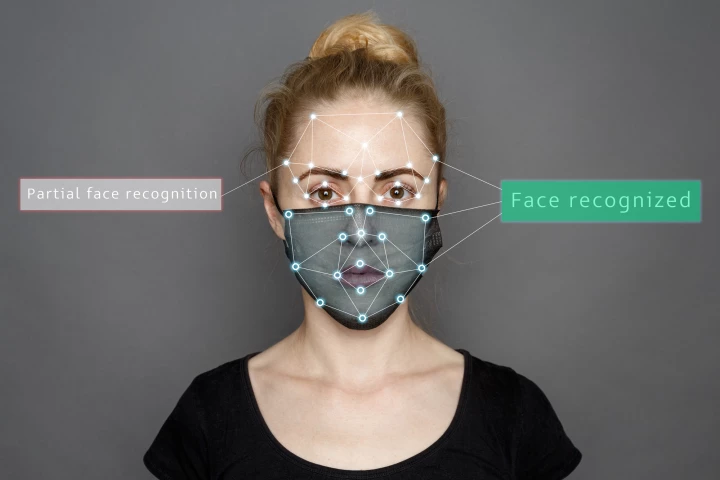 A new study from NIST has tested how accurately commercial facial recognition algorithms can identify people wearing protective face masks, revealing some commercially used systems fail at authenticating masked faces up to 50 percent of the time.
 -
 Researchers from Ben Gurion University and the Weizmann Institute of Science in Israel have developed a new way of working out what's being said inside a room without actually hearing the audio: by monitoring the vibrations of a light bulb.
 -
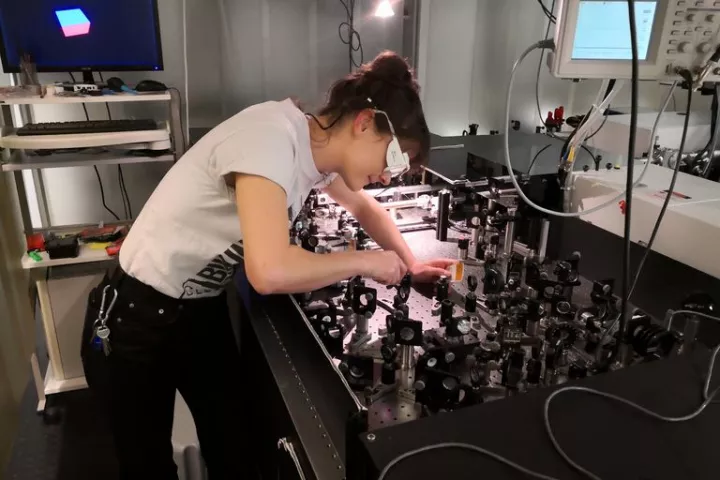 Terahertz radiation is extremely useful but, traditionally, tricky and expensive to generate. Scientists at TU Wien have come up with a new source of terahertz radiation that they claim breaks records for efficiency and the breadth of its spectrum.
 -
 In what may be seen as a worrying development to those troubled by the growth of the surveillance state, researchers at the University of California have demonstrated that they can count people through walls using only Wi-Fi signals.
 -
 A team of scientists led by MIT has created a "visual microphone" that uses a computer algorithm to analyze and reconstruct audio signals from objects in a video image.
 -
 A study just carried out by Dr. Rob Jenkins of the University of York and Christie Kerr of the University of Glasgow, both in the UK, has found that the picture of a high-end camera is capable of seeing images reflected from the corneas of a subject being photographed.
 -
 Researchers have been able to non-invasively control the walking paths of turtles.
 -
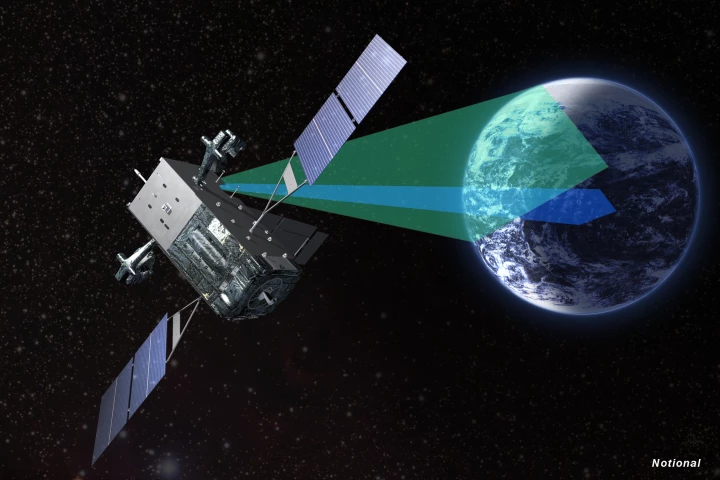 The first Space Based Infrared System, geosynchronous satellite has begun delivering infrared imagery. The system will detect missile launches around the globe, improve intelligence gathering, and increase situational awareness on the battlefield.
 -
 After many delays Airbus Military’s all-new A400M four-engine turboprop military transport, designed as a replacement for the C-130 Hercules and Transall C-160, has taken to the air for the first time in the skies above Seville, Spain.
 -
 Researchers at the University of Missouri are developing software that would enable computers to perform video analysis tasks, such as alerting emergency services if a video surveillance camera detects a person falling and not getting up.