
Sulfur
-
 Deep underground in a dark, sulfuric cave, scientists have made an incredible discovery – a giant communal spider web spanning more than 1,000 square feet, home to an estimated 110,000 spiders that defy nature to coexist in harmony.
 -
 Venus may be a hellscape, but there’s a chance some forms of life could evolve there. A new MIT study has now found that the building blocks of life are surprisingly stable in highly concentrated sulfuric acid – which Venus’ clouds are made of.
 -
 The James Webb Space Telescope has made the first direct analysis of clouds on a nearby alien world. These aren’t just made of water vapor but also sand, which would move around the planet much like Earth’s water cycle.
 -
 One thing that will definitely ruin a wine is an unpleasant aroma. Such malodorous wines could soon be saved, however, with a little bit of help from gold nanoparticles.
 -
 The James Webb Space Telescope has provided the most detailed look at an exoplanet atmosphere ever. Studying data from four instruments astronomers compiled a complete molecular and chemical profile of the planet, including signs of active chemistry.
 -
 Sulfur is often chemically "scrubbed" from the flue-gas emissions of coal-burning power plants. Gypsum (aka calcium sulfate) is produced as a byproduct of the process, and typically ends up in landfills. According to new research, however, it could be used to boost crops in a number of ways.
 -
 Billions of years ago, the Great Oxygenation Event wiped out most life on Earth at the time. This ramped up about 2.5 billion years ago, but now scientists have discovered signs of the oldest known “oxygen oasis” in South Africa, showing that the process started almost half a billion years earlier.
 -
 Electric vehicles are hitting the roads in greater numbers every year, but in the meantime, scientists are working on ways to clean up existing fossil fuels. A new refining process uses a potassium catalyst to reduce the amount of sulfur in gasoline and diesel to a fraction of their current levels.
 -
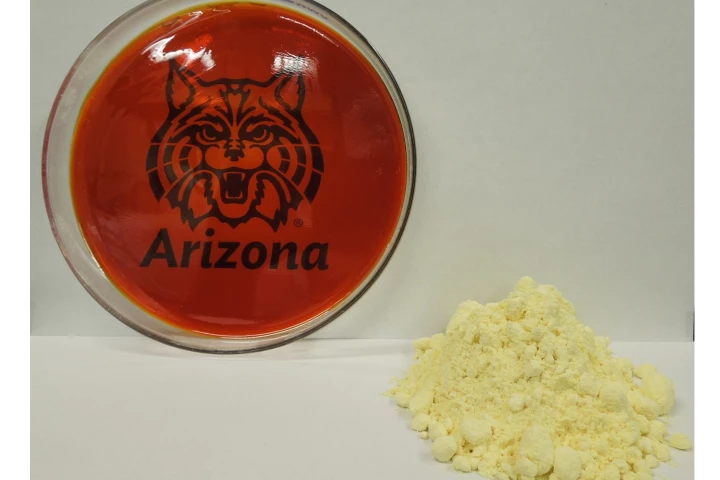 Researchers at the University of Arizona have developed a new sulfur-based polymer that performs well in battery applications.