
Spiders
-
 It's that time of year – and my personal favorite corner of science to look back on – when we recap the many fascinating discoveries in the plant and animal kingdom in 2025. Orcas have again made news, but no luxury yachts were hurt in the process.
 -
 Step aside, Van Gogh. New research shows that several orb-weaving species create giant web-mounted “doppelgängers” convincing enough to confuse potential predators. It’s a clever form of deception that nudges the line between instinct and ingenuity.
 -
 Deep underground in a dark, sulfuric cave, scientists have made an incredible discovery – a giant communal spider web spanning more than 1,000 square feet, home to an estimated 110,000 spiders that defy nature to coexist in harmony.
 -
 Forget flowers and chocolate – in the spider world, courtship survival is the ultimate gift. Scientists have discovered a new genus of tarantula and its defining feature is a supersized sperm-delivery arm nearly four times the length of their body plate.
 -
 Researchers have genetically modified spiders for the first time using the CRISPR gene-editing process. Adding a single gene to unfertilized eggs resulted in the creation of a spider that could produce red, fluorescent silk.
 -
 Scientists have discovered how an Australian jumping spider's semi-hydraulics allows it to speed jump long distances with precision while experiencing g-forces higher than those of fighter pilots. Their insights might help robotics research.
 -
 A new zombie pathogen has been discovered in Ireland. This insidious fungus infects cave spiders and alters their behavior to help spread its spores to new victims.
 -
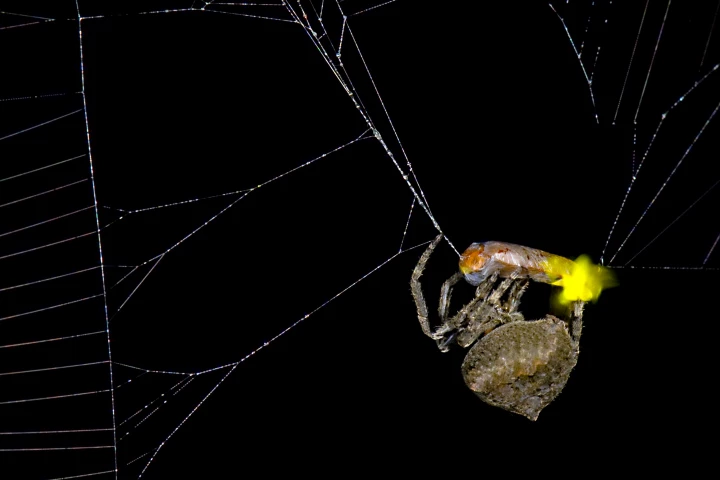 Some species have an incredible knack for hacking others to get what they want. Scientists have now discovered a fascinating new example – some spiders have been seen manipulating fireflies’ flashes to attract more bugs to their webs.
 -
 The first drug to prevent heart attack and stroke cell damage is now one step closer to reality, after the K’gari funnel-web spider venom molecule Hi1a got a green light from independent safety studies, and more is learnt about its unique efficacy.
 -
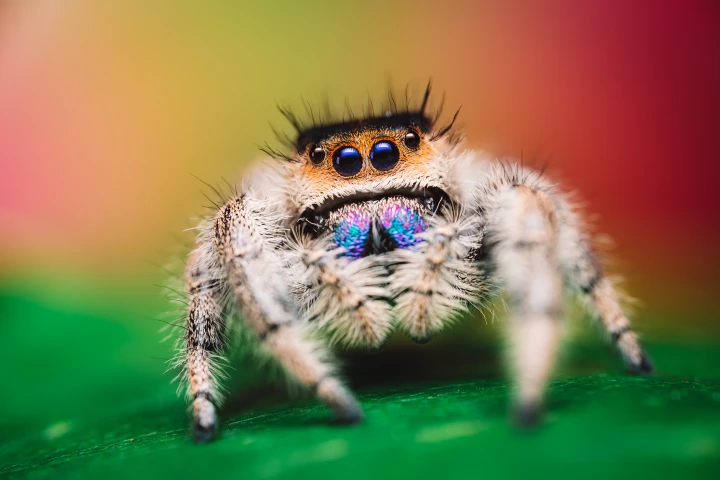 Age-related macular degeneration is a debilitating eyesight loss, that robs nearly 20 million Americans of their independence. What if understanding this incurable condition and creating better therapies for it starts in the eyes of jumping spiders?
 -
 Last year, we heard how anole lizards are able to breathe underwater from an air bubble on their nose. One of the scientists involved in that study has now documented a spider doing something similar – although the bubble covers its whole body.
 -
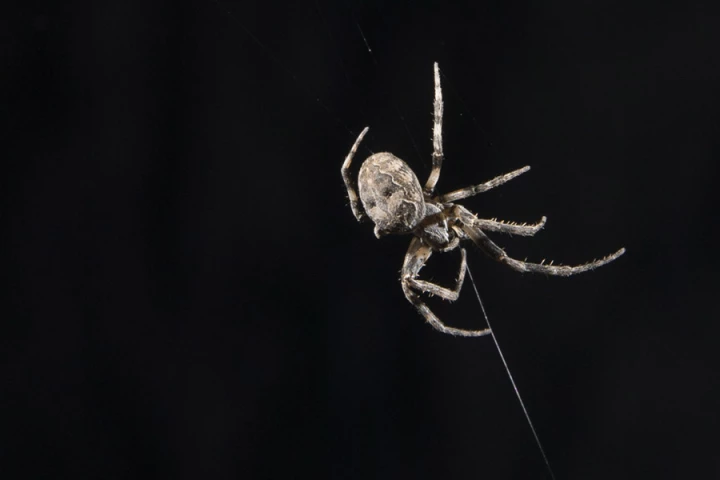 Scientists have made another extraordinary discovery concerning spider silk, finding that orb-weaving spiders use their webs as an array to extend their sense of hearing, a finding that could lead to advanced new forms of audio hardware.
Load More