
Speech
-
 US brain-computer-interface startup Paradromics is establishing itself as a major player in the neural-device space, with the Food and Drug Administration green-lighting a human trial to test its ability in restoring speech to people with paralysis.
 -
 In another advancement in the field of brain-computer interfaces, a new implant-based system has enabled a paralyzed person to not only talk, but also 'sing' simple melodies through a computer – with practically no delay.
 -
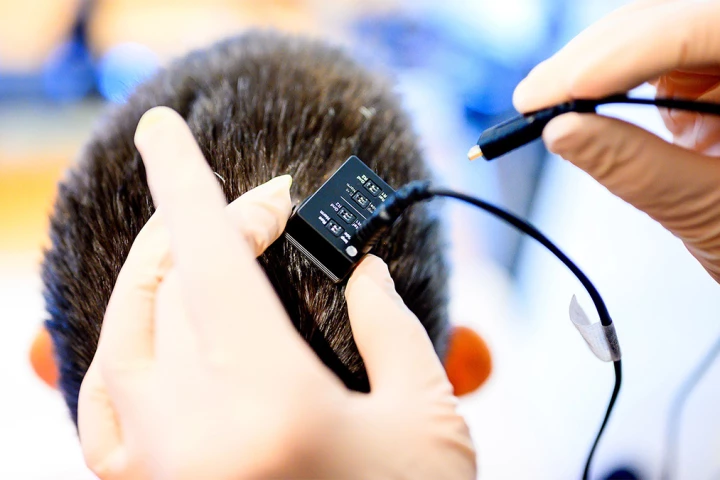 A team of California-based researchers has developed an incredible AI-powered system to restore natural speech for paralyzed people in real time and using their own voices.
 -
 A study has found that a six-week acupuncture treatment significantly improved language function, quality of life, and neurological impairment in people with speech difficulties following a stroke, with improvements maintained for six months.
 -
 Sure, they're from a long time ago in a galaxy far, far away, but words and phrases from Star Wars have taken on a life of their own in modern English. For the first time, a study reveals how deep-rooted offerings like "to the dark side" truly are.
 -
 Researchers have developed an implant that records brain signals to decode what people are trying to say. While still early days, the device may provide people who’ve lost speech due to neurodegenerative disease with the ability to communicate.
 -
 Researchers have developed a self-administered smartphone app to screen for Alzheimer’s disease by analyzing speech patterns. With subtle speech disturbances being an early indicator, this may be an easy way to obtain a diagnosis quicker.
 -
 There's a belief that when someone loses one ability, another improves correspondingly. New research bears this out – in one scenario, at least – as it indicates that blind people remember spoken information better than their sighted counterparts.
 -
 Researchers have demonstrated, for the first time, a brain implant turning neural activity into full words. The first participant in the trial, a paralyzed man, can now speak with a vocabulary of 50 words by simply thinking about vocalizing words.
 -
 A new proof of concept study, led by researchers at University of California San Diego School of Medicine, has demonstrated how speech-analyzing artificial intelligence tools can effectively predict the level of loneliness in older adults.
 -
 Researchers have turned their attention to the subtle differences in the language of Alzheimer's sufferers, and have developed an AI tool they say can pick up on these as a way of potentially screening for the disease.
 -
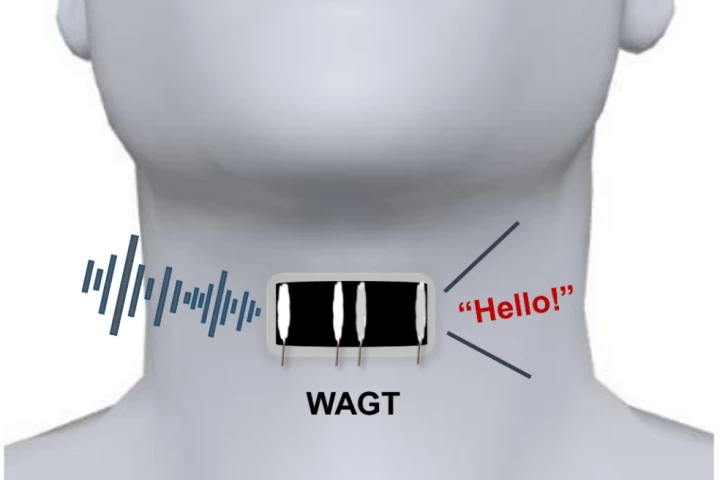 Fans of the Mission Impossible movies may recall the agents' use of a slim, throat-mounted device that changes the user's voice. Well, Chinese scientists have now developed something similar, that could one day allow the mute to speak … in a manner of speaking.
Load More