
Solar Cell
-
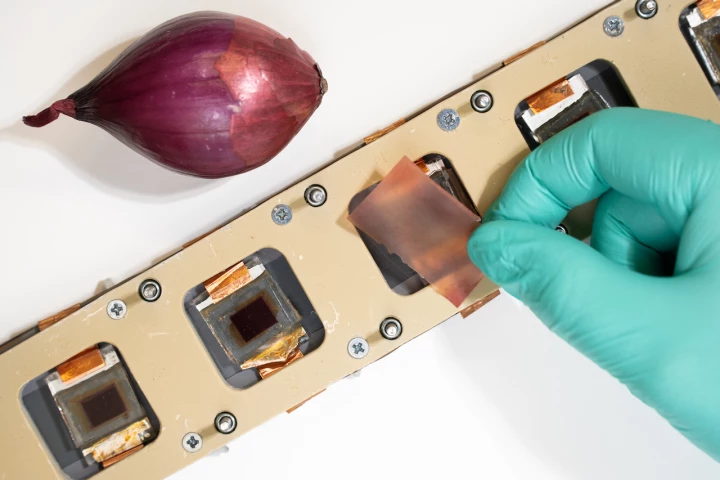 Solar cells are subjected to a lot of harmful ultraviolet light, as they're typically placed for maximum sunlight exposure. A new eco-friendly coating could help protect them from those UV rays, and its active ingredient is extracted from onion skin.
 -
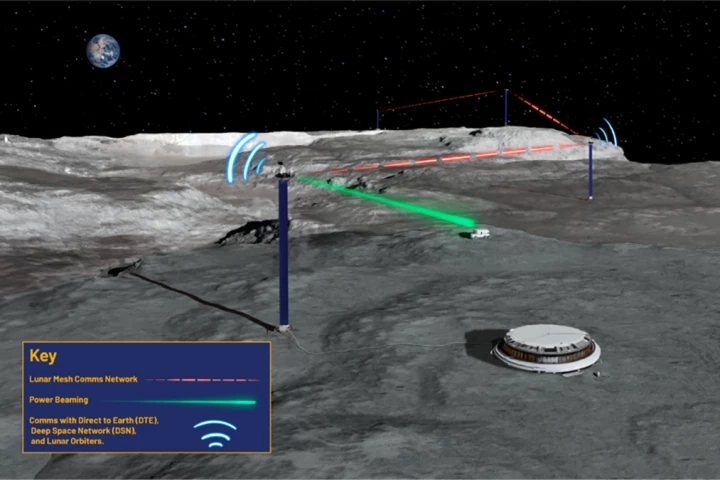 Honeybee Robotics has outlined a plan to build a kind of power grid on the Moon, with a network of Statue of Liberty-sized towers containing solar panels and batteries that provide power and communications, and even act as streetlights.
 -
 Implanting tiny solar panels into people's eyeballs may sound like science fiction, but that's exactly what a team of Australian scientists are working on. The next-gen tech could vastly improve quality of life for people with incurable eye diseases.
 -
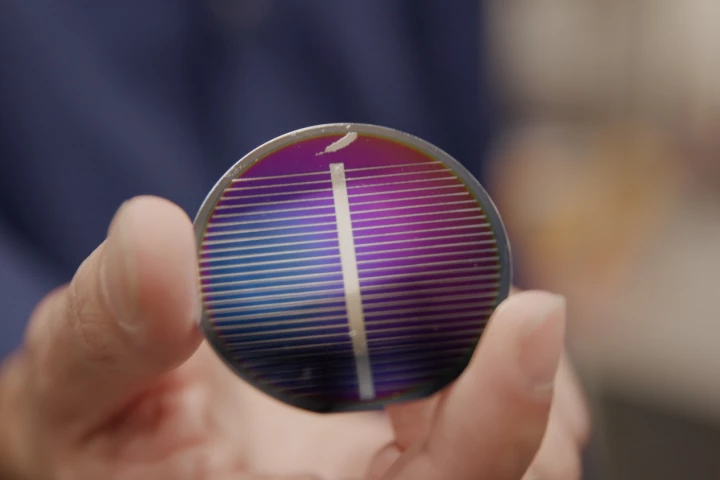 With the aim of allowing astronauts to live off the land as much as possible when they return to the Moon, NASA has awarded Blue Origin a US$35-million contract to develop the company's Blue Alchemist process to make solar cells out of lunar soil.
 -
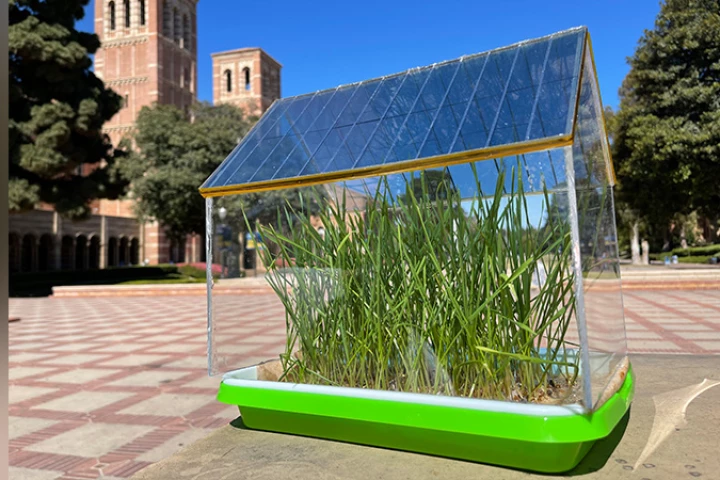 Solar farms and agriculture are competing for land. UCLA Scientists have now tested a way to combine the two by placing semi-transparent solar cells on the glass roofs of greenhouses, finding that they actually improve the growth of plants inside.
 -
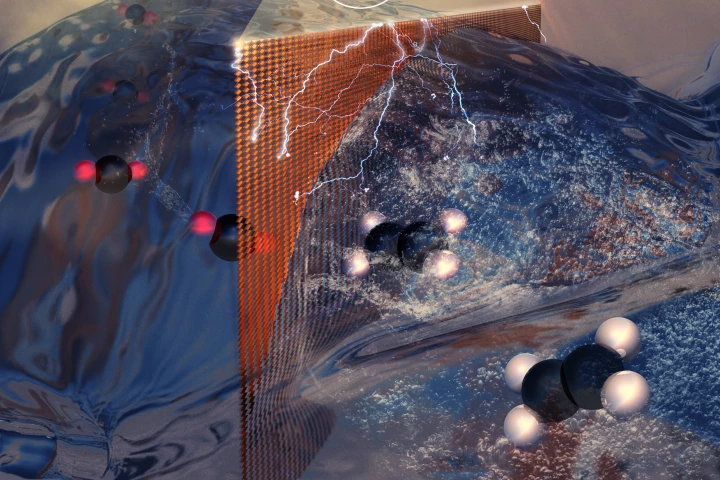 Engineers at UIC have developed a device that can efficiently convert captured carbon dioxide into ethylene, a plastic precursor material. When run using renewable energy, the technique could make for net negative emissions in plastic production.
 -
 Radio waves don't travel well through water, which is why devices such as ROVS have to be linked to their operator via a communications cable. According to a new study, however, solar panels may soon allow for practical light-based communications.
 -
 A simple home test for breast cancer and a UV energy-harvesting window made of recycled materials are the big winners of this year’s James Dyson Awards. The annual competition encourages university students to develop innovative solutions to problems.
 -
 If you're using the sun to power a mobile device, it only makes sense to put the solar cells on something you're wearing that will be receiving a lot of sunlight. With that in mind, researchers have created a pair of sunglasses that generate electricity via solar cells that double as their lenses.
 -
 While not quite as significant as the one-time accidental discovery of penicillin, 2016 did have its share of chance findings in the scientific community. Here we take a look at five of them.
 -
 Strides have been made in the last few years to develop solar windows. Known as luminescent solar concentrators, these haven’t proven efficient or scalable, but now researchers have demonstrated a new technique that could make for larger, more practical solar energy-harvesting windows.
 -
 If you look at a cicada wing under a microscope, you'll see that it's covered in nanoscale spikes. Now, researchers have replicated those spikes' antireflective properties, and the resulting technology could be used to create more efficient solar cells.
Load More