
Software
-
 Warp drives are among the more plausible of science fiction concepts, at least from a physics perspective. Now, a group of scientists and engineers has launched open-source software that lets you design and test scientifically accurate warp drives.
 -
 The largest prime number known has been discovered by the Great Internet Mersenne Prime Search (GIMPS) citizen science project. It’s been dubbed M77232917 – and if you’re wondering why it needs a codename, well, we’d be here all day typing out the 23 million digits that make it up.
 -
 New software has been developed that incorporates all the complexities of the equations of Einstein's general theory of relativity to help produce models of the cosmos far more complex and detailed than ever before constructed
 -
 NASA engineers are busy at work developing and testing the internal display and control components of the spacecraft that will one day carry crews into lunar orbit and, eventually, to Mars.
 -
 New software based on an algorithm developed in an open competition hosted by NASA, improves the detection rate of potentially hazardous near-Earth asteroids. It transforms any amateur astronomer into a seasoned asteroid hunter.
 -
 Over a number of years, researchers at Germany's Fraunhofer Institute have developed software to measure human emotion through face detection and analysis. Now the team has repurposed the software as an app for Google Glass, with a view to bringing its emotion-detecting technology to life.
 -
 Intel has announced the winners of its 2014 International Science and Engineering Fair (ISEF). Intel says it is the world's largest high-school science research competition. The top prize went to 15-year-old Nathan Han for his software that studies the mutations of a gene linked to breast cancer.
 -
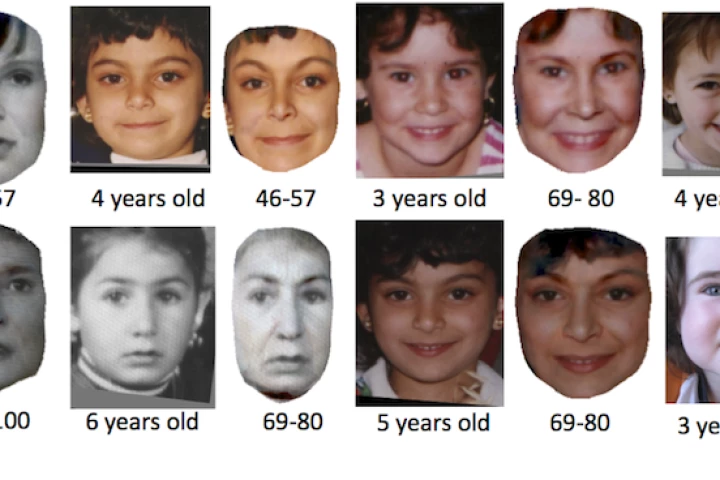 New software from the University of Washington is claimed to accurately predict what your child will look like as an adult. This tool could prove particularly useful in missing person cases.
 -
 Hedonometer is a new web platform that crunches Twitter data to measure levels of happiness across the English-speaking world
 -
 Scientists at UC Berkley and the University of British Columbia have created a computer program which reconstructs “proto-languages."
 -
 New software developed at Georgia Tech improves the Clock Drawing Test commonly used to diagnose cognitive impairment.
 -
 Finland-based computer scientists have developed new software for automatically composing music from sleep measurements.
Load More