
Snoring
-
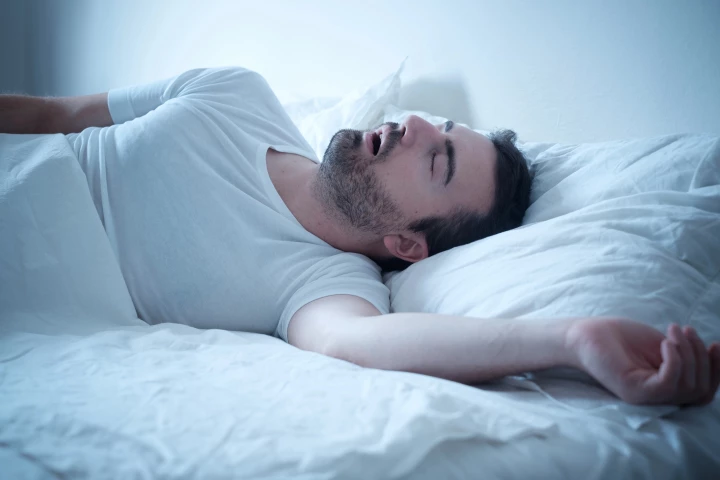 People living in areas of higher air pollution are at risk of more serious sleep apnea events, according to a large study spanning multiple countries. However, being aware of air quality means you can mitigate that risk to improve sleep and health.
 -
 A common childhood epilepsy drug has the potential to change the lives of millions of people who suffer from sleep apnea, as a clinical trial has delivered surprising results in reducing breathing interruptions and improving daytime alertness.
 -
 We've already heard about earbuds known as Sleepbuds, that are designed to mask the sound of snoring. Now, however, there's a different Sleepbud earbud on its way, and it's intended to STOP its user from snoring.
 -
 When someone is suspected of suffering from sleep apnea, they're often sent for a sleep study. This involves their spending the night at a clinic, with numerous electrodes hard-wired to their head. By contrast, the new SomnaPatch is quite simple, and almost as accurate as a sleep study.
 -
 We've seen some interesting approaches to the stopping of snoring, ranging from self-inflating pillows to noise-emitting nose pieces. One of the latest devices to take on sleep apnea, called the Snore Circle, goes about doing the job by buzzing you in the head.
 -
 These days, there are several solutions to cure apnea and help people who snore too much. The Silent Partner smart patch takes a different route: it doesn't solve the snoring per se. Instead, it tackles the noise problem.
 -
 Night Shift is a new device designed to help people with sleep apnea and snoring issues. These problems are aggravated by sleeping on the back, so the device, which is worn at the back of the neck, vibrates and prompts wearers to move position.
 -
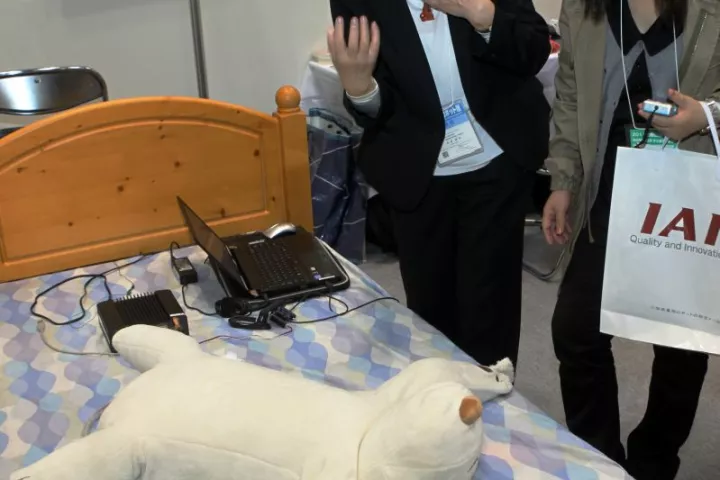 Jukusui-Kun is a polar bear-shaped robotic pillow equipped with a pulse-oxygen meter and a moving paw that gently touches the sleeper's face to stop snoring.
 -
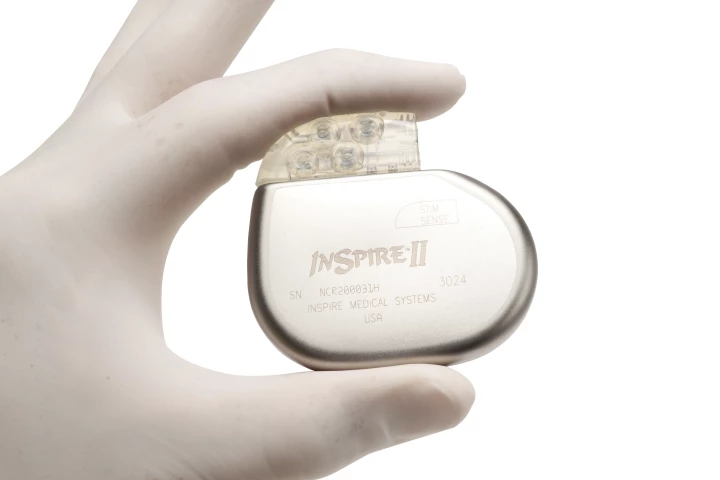 Inspire Medical Systems has developed a new system for sufferers of obstructive sleep apnea which sends low power electric shocks to a nerve at the base of the tongue to keep it from blocking the airway