
Signal
-
 Researchers have developed a new technique to better detect extraterrestrial radio signals by weeding out the interference caused by Earth-based devices. It’s hoped that the technique will lead to the first evidence of alien life.
 -
 Scientists have been unable to figure out what fast radio bursts are or where they’re even coming from. Now, a team of astronomers has finally managed to trace one of the signals back to its home galaxy billions of light-years away, meaning we’re closing in on the culprit.
 -
 Fast radio bursts (FRBs) are strange, extremely bright and mysterious signals from space. Now, astronomers at Australia’s Parkes Observatory have recorded three new signals in relatively quick succession – one of which is the brightest FRB ever detected.
 -
 Gamma ray bursts are mysterious signals blasting in from the deepest reaches of space, and we still don’t have much of an idea about what causes them. In order to help unlock the secrets, researchers have managed to recreate mini gamma ray bursts in the lab for the first time.
 -
 In August 1977, the Ohio State University Radio Observatory picked up a radio transmission that was so strong it inspired the astronomer who discovered it to write “Wow!” in the margin of the data printout. Almost 40 years later, researchers have solved the mystery.
 -
 New research from scientists at the Weizmann Institute’s Neurobiology Department suggests that women's tears may be a chemo-signal that discourage sexual arousal in men.
 -
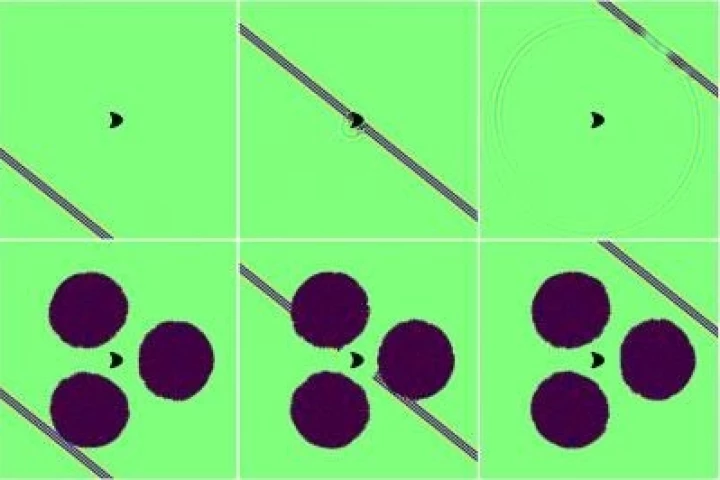 Active cloaking, a newly theorized approach to invisibility, brings us one step closer to achieving invisibility in the visible light spectrum.