
Sharks
-
 Everyone's favorite prehistoric shark may have been much sleeker and much larger than previously thought. A new study suggests that the megalodon wasn't as stocky as the great white shark, and that it could have reached over 24 m (80 ft) in length.
 -
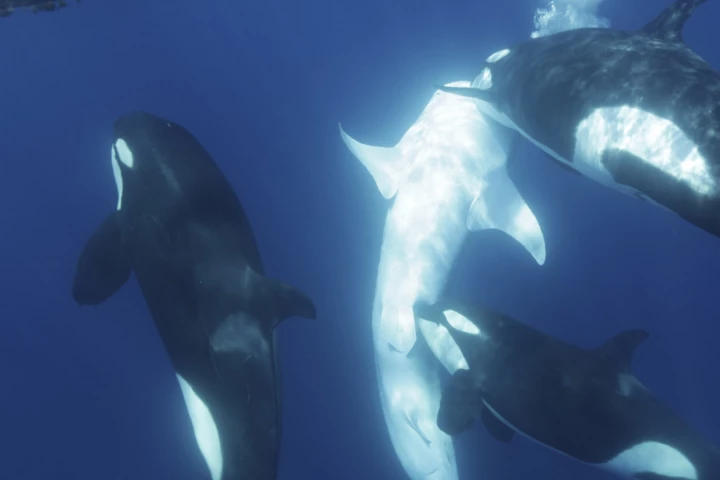 Researchers have found compelling evidence to confirm that a specific pod of clever killer whiles in the Gulf of California has developed an astonishing new skill: hunting enormous whale sharks by attacking their undersides.
 -
 If you're a surfer who doesn't want to be attacked by great white sharks, your surfboard should be as dark and stealthy as possible … right? Perhaps not, as a new Australian study suggests that a lit-up board may be better at keeping the sharks away.
 -
 The fossil of an extremely unlucky dugong has been uncovered. The old sea cow had a pretty bad day about 20 million years ago when it was eaten by both a crocodile and a shark.
 -
 In the event of a shark attack, it's very important to determine which shark species was responsible. A new study indicates that readily available medical gauze can be used by first responders to obtain that information.
 -
 While you're more likely to win the lottery than become a tasty snack for a great white, shark attacks have long been a real fear for beachgoers. While attacks and fatalities look to be on the rise, scientists are yet to pinpoint exactly why.
 -
 The Disney-esque hues on bluespotted ribbontail rays come from a unique arrangement of nanostructures, say researchers. The findings, along with those gleaned from studying blue sharks, could help lead to new chemical-free color techniques.
 -
 For the first time ever, a lone orca has been observed killing and eating a great white shark. Although orcas were already known to hunt great whites in packs or pairs, one had never been seen going solo before. The finding suggests the emergence of a new hunting strategy.
 -
 Most of us picture megalodon as a Jason-Statham-hunting monster that looked like a giant great white shark, but that probably wasn’t the case. A new study re-examines fossil evidence and suggests the creature was longer and more slender than thought.
 -
 Scientists have used fossilized megalodon teeth to estimate the ancient shark’s body temperature, and found it wasn’t exactly a cold-blooded killer. Strangely enough, that might have contributed to its downfall.
 -
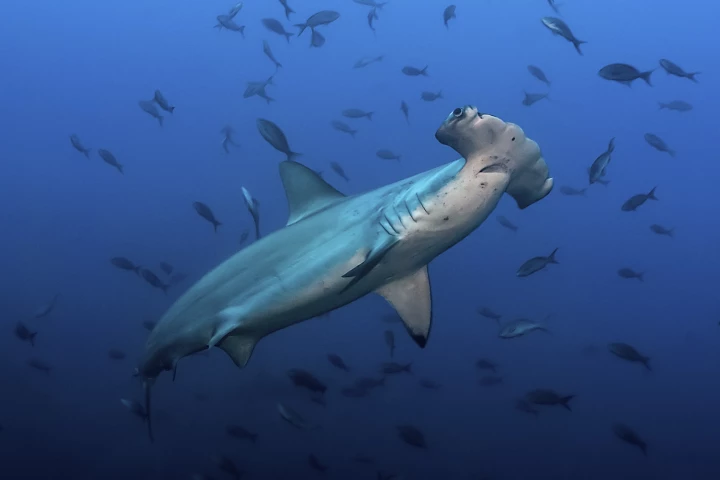 In a surprising first, researchers found that scalloped hammerhead sharks act like air-breathing marine mammals, holding their breath to stay warm when they deep-dive into cold water for food and making them vulnerable to humanity's deep-sea exploits.
 -
 The majority of shark species are threatened with extinction, so it's crucial to protect the "pupping" areas where females give birth to live young. A new satellite-linked device, known as the BAT, lets scientists know the locations of those areas.
Load More