
Sensory
-
 For millions, losing their sense of smell reshapes daily life. Once damaged, the system is difficult to restore. That challenge led researchers to stop asking how to fix smell, and start asking whether its information might reach the brain another way.
 -
 In a first, scientists believe they have confirmed we have another sense – a “remote touch” that we share with others in the animal kingdom, like some shorebird species that can sense prey beneath sand without seeing or touching it first.
 -
 Touch is a vital sense in human survival and experience, yet not all touch is equal. Men have less touch sensitivity than women, which comes down to biology. Using biomechanics, scientists have found that you can hack nature with hyaluronic acid.
 -
 Nature has again proven effective in treating health conditions, this time nerve injury. According to a new study, a compound found in the blessed thistle plant accelerates the regeneration of damaged nerves, restoring motor function and touch sensation.
 -
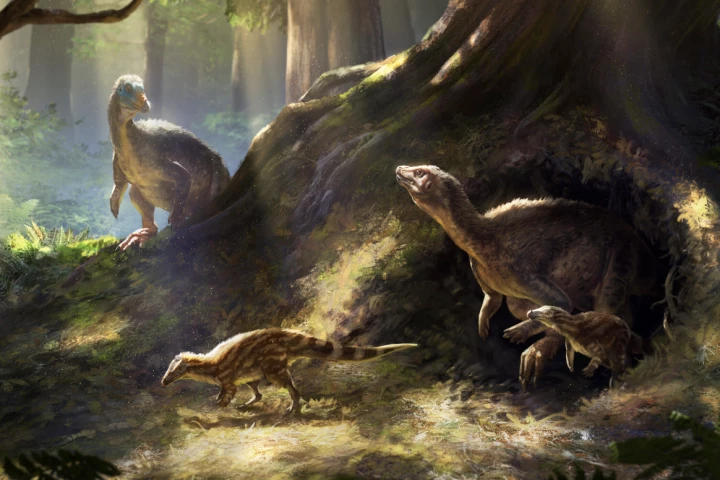 It's been called plain and boring, but this Thescelosaurus species has now had its sad reputation upended, thanks to fascinating sensory discoveries that suggest it lived a unique, successful life underground, beneath the feet of its fearsome predators.
 -
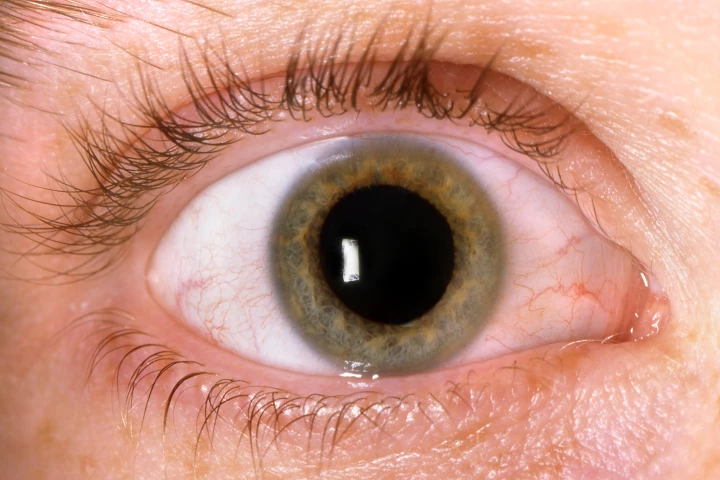 A study found pupils respond in the same way to the number of objects in one’s field of vision as they do to light. Experiments revealed pupils dilate in response to images with more dots, indicating sensing numbers is an innate perceptual mechanism.
 -
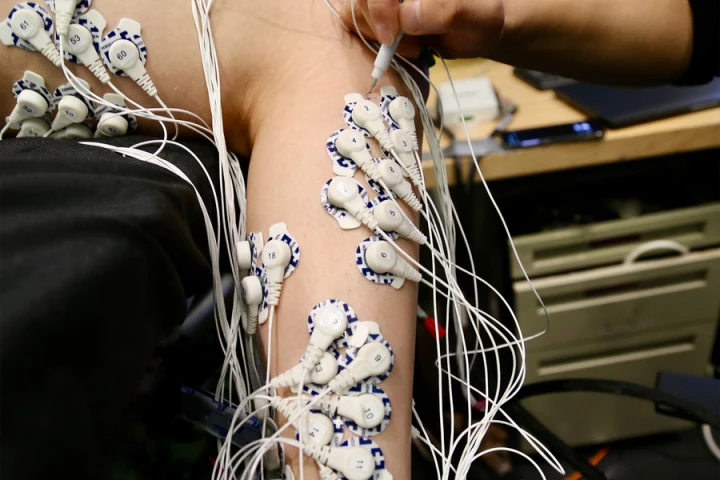 For some time now, we've been hearing about prosthetic limbs that are designed to work with amputees' bodies. MIT researchers are taking a different approach, though, with a new type of amputation that facilitates the use of prostheses.
 -
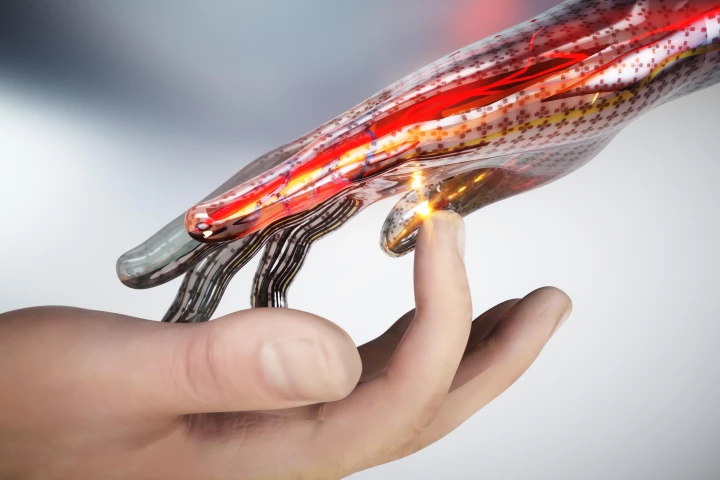 Researchers in Australia have succeeded in developing an artificial skin that responds to painful stimuli, heat and pressure like real skin does, which they see as an important step towards intelligent machines and prosthetics.
 -
 It is well known that dogs boast an incredible sense of smell, but new research has uncovered another way our four-legged friends use their famous noses to find their way around, detecting radiant heat much like a thermal infrared sensor.
 -
 Magnetoreception, or the ability to sense the Earth’s magnetic field, pops up throughout the animal kingdom, but it’s generally thought to be something humans missed out on. But new research has found changes in human brain wave activity that seems to be in response to a changing magnetic field.
 -
 Researchers at Caltech have revealed two illusions illustrating how our brain can be tricked into seeing something that isn’t really there. The phenomenon is known as postdiction, and highlights how our perception of reality is actually constructed by our brain retroactively.
 -
 A team of zoologists at the University of Bonn has discovered that, despite lacking a complex brain, the African elephantnose fish can swap between its electrical and visual senses in the same way a person can switch between sight and touch.
Load More