
Sensors
-
 It's a well-known fact that if you're trying to cool your mouth after eating spicy food, you should drink milk, not water. Bearing that fact in mind, scientists have developed an "artificial tongue" that measures food spiciness using a milk protein.
 -
 UCLA researchers have developed a tiny sensor to monitor metabolites – substances produced or used when your body breaks down food or medication – far more extensively than current methods. It could unlock better disease diagnosis and drug development.
 -
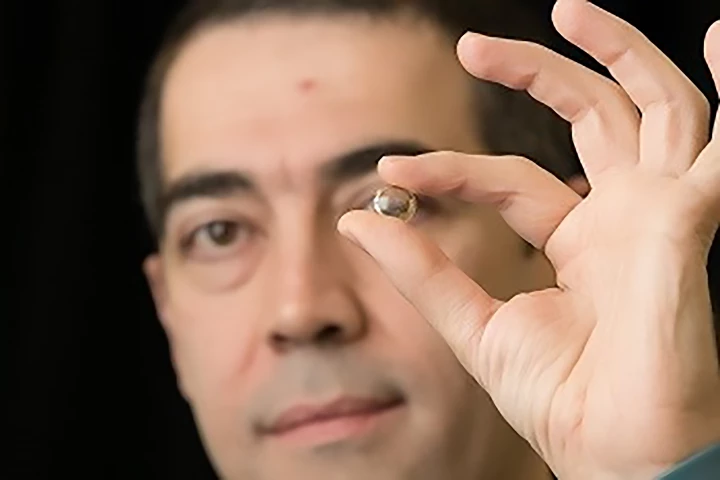 In an effort to diagnose glaucoma, a condition that can cause vision loss, earlier, researchers have developed contact lenses with sensors that measure the pressure inside the eye and send the information to an ophthalmologist for evaluation.
 -
 Soft robotic devices often need to sense both mechanical deformation and changes in temperature, requiring multiple integrated sensors. ChromoSense technology, however, combines both functions in one simple, robust, color-changing device.
 -
 In a fascinating new study, scientists have for the first time uncovered the heart-brain pathway, fueled by specific over-excited sensory neurons, that triggers fainting. The discovery is a huge step towards targeted treatments for a host of conditions.
 -
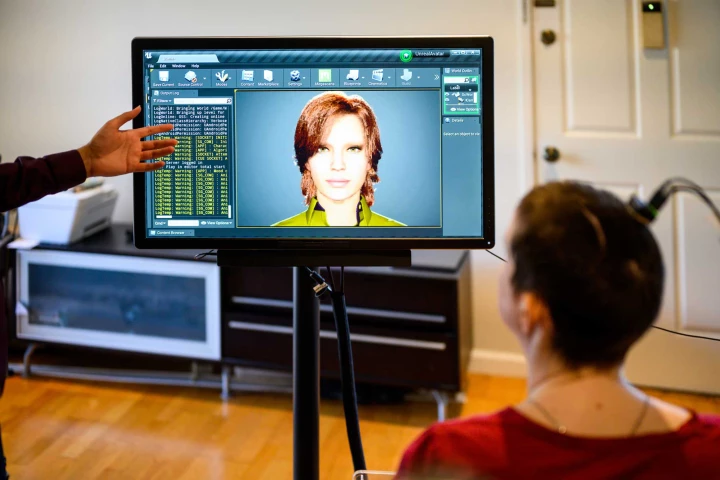 Two separate, recently published studies have demonstrated how combining brain sensors and AI to create a brain-computer interface (BCI) gave two women with the inability to speak a voice. It's hoped the tech will soon be able to assist more people.
 -
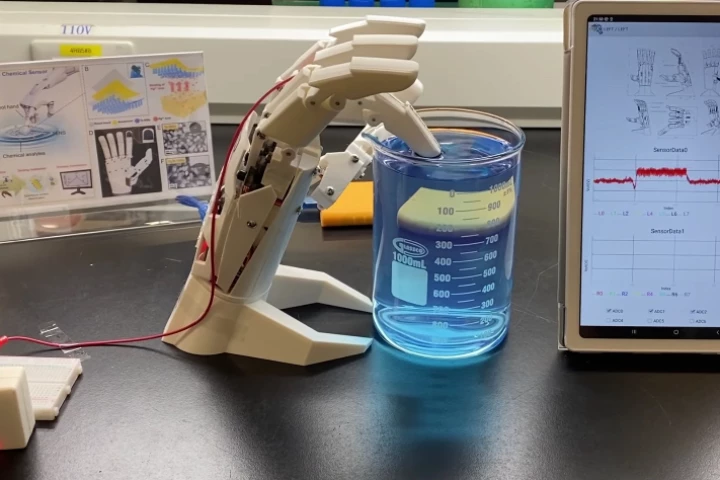 Mercury can be quite harmful in large amounts, and detecting its presence in foods or liquids typically requires lab-based tests. A new nanosensor, however, can quickly detect even small levels of the heavy metal onsite, simply by tapping on samples.
 -
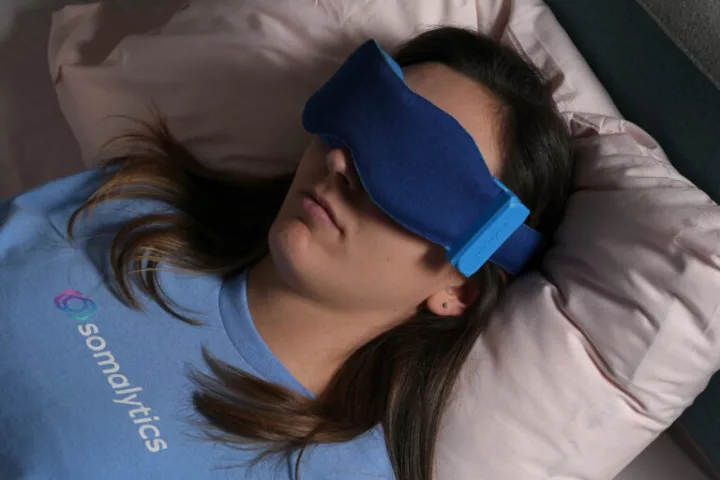 The REM stage of sleep plays an important role in learning, memory and brain development. Currently, lab-based tests are required to gauge how much REM sleep a person is getting. The SomaSleep mask, however, is claimed to let users do so at home.
 -
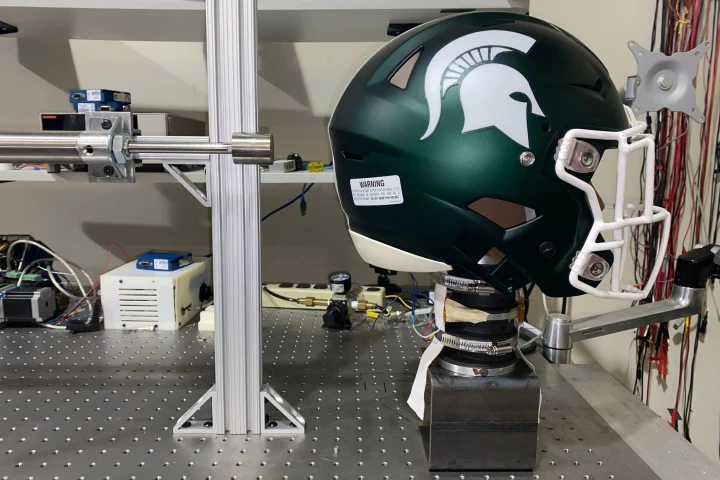 One of the dangerous things about sports-related concussions is the fact that athletes may not realize they have one, so they don't seek medical attention. A new sensor could let them know, and it would go on their neck, not their head.
 -
 Skin plays a key role in our sense of touch, but its sensitivity is hard to replicate. Now, researchers have developed a new type of electronic skin (e-skin) containing tiny embedded hairs that can precisely perceive touch and the direction it moves.
 -
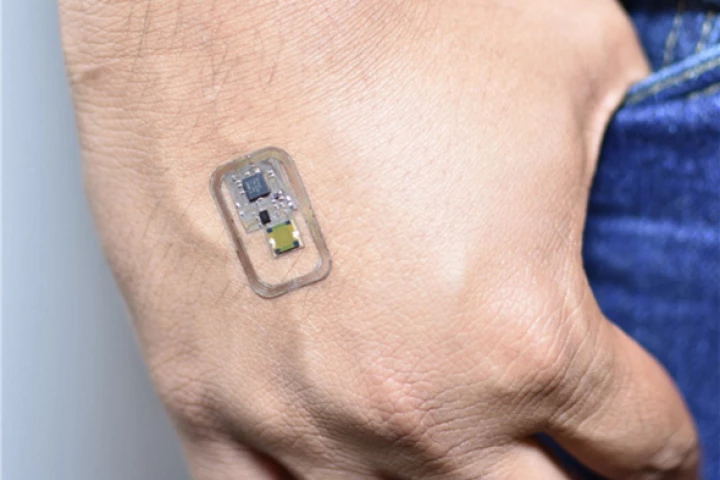 Nicotine is one of the more harmful compounds in electronic cigarette vapor, so non-vapers should avoid breathing it in whenever possible. A new skin-worn sensor could help, by monitoring airborne nicotine levels in the wearer's immediate vicinity.
 -
 Researchers have developed a face mask that can detect SARS-CoV-2 in a wearer’s breath within just 90 minutes. The sensor technology can be programmed to detect any kind of virus or toxin and is small enough to be integrated into clothing fabrics.
Load More