
Salt-water
-
 Dozens of water-harvesting pods are set to be deployed along the sea floor off the coast of California as the United States ramps up its first subsea desalination project. The effort is expected to produce 60 million gallons (227 million liters) of fresh water per day.
 -
 A bright red waterfall isn’t something you’d expect to see on the icy landscape of Antarctica, but that’s what’s pouring out from the foot of Taylor Glacier. Scientists now claim to have solved the mystery behind the crimson waters of Blood Falls.
 -
 Surfaces in contact with salty water usually end up with a corrosive layer of salt caked on. Now, engineers at MIT have made these minerals so easy to remove that they often just fall off on their own – by forming “crystal critters.”
 -
 Desalination is an important technology that may help expand the world’s supply of drinking water. Now, engineers in China have demonstrated a new, relatively simple design for a solar still with a high efficiency and low cost.
 -
 Desalination is an important technology that may help unlock more drinking water, and now two independent teams have developed new types of solar-powered desalination systems using very different mechanisms.
 -
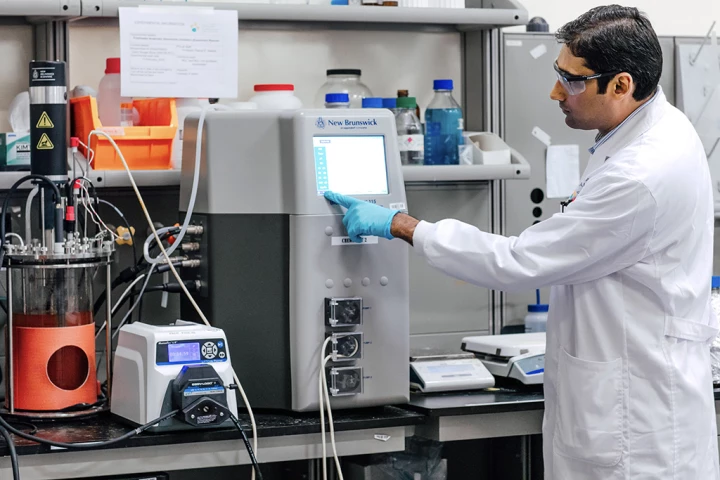 Given the scarcity of fresh water in many regions, it does seem a bit crazy to be flushing the stuff down the toilet. And while a few coastal areas use seawater instead, doing so is problematic in its own way – new research, however, may change that.
 -
 Scientists at Berkeley Lab have developed a sort of “solar umbrella” which could radically reduce the amount of land needed for industrial evaporation ponds.
 -
 When salt is removed from seawater in desalination plants, the byproduct is a lot of highly-salty brine. Ordinarily, this is just dumped back into the sea, which can harm the environment. Thanks to a new treatment process, however, that brine could actually be used to desalinate more water.
 -
 Researchers at the University of Manchester have developed a graphene-oxide membrane with a scalable, uniform pore size that can filter out even the smallest salts, giving it potential for producing drinking water from salt water without affecting the flow of the water too much.
 -
 Green energy comes in many guises these days, from wind-power to wave-power. One of the more compelling of the new kids on the eco-energy block is salinity power, which uses the concurrence of salt-water and freshwater in estuaries and marries it with the natural, effortless process of osmosis.