
Radar
-
 If you're hoping that we can avoid the attention of alien civilizations by lying low, it's a bit late now. A new study released by the Royal Astronomical Society indicates that our radar systems are already screaming our location to ET eavesdroppers.
 -
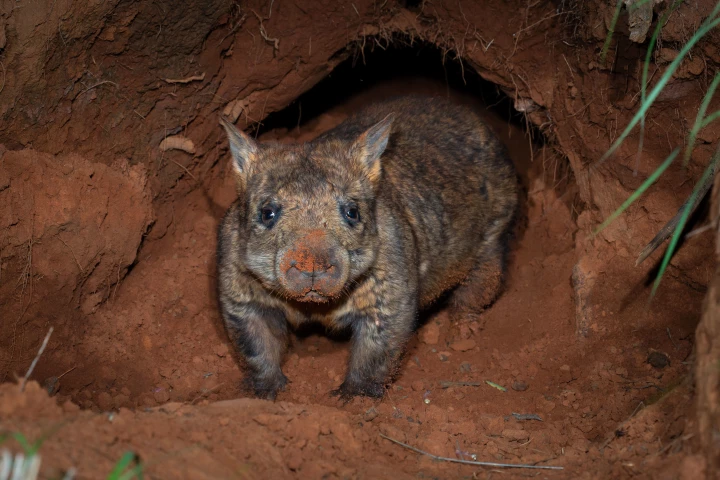 In an effort to foil these proficient hide-and-seekers, scientists have enlisted a tech secret weapon to find the northern hairy-nosed wombat, a shy and critically endangered Aussie icon. Despite their hiding skills, just an estimated 315 animals remain.
 -
 In a dramatic bit of improvisation, NASA' Jet Propulsion Laboratory (JPL) in Pasadena, California, has managed to reestablish communications with the Voyager 2 spacecraft 12.3 billion miles (19.9 billion km) from Earth after losing contact on July 21.
 -
 Researchers have created a device that uses photonic radar to remotely and accurately monitor breathing, even distinguishing between more than one patient. The device might one day be used in hospitals, aged care facilities, prisons, and at home.
 -
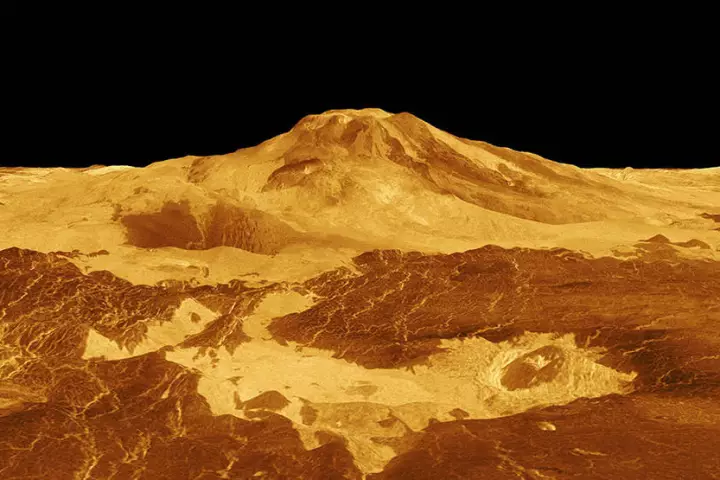 After decades of speculation, astronomers have discovered the first direct evidence of volcanic activity on Venus. Radar images of Earth’s “twin” taken just a few months apart reveal a recent eruption.
 -
 Despite making up 85% of the total mass in the universe, dark matter eludes detection. A new study proposes a unique way to look for it using the Earth’s atmosphere as a giant detector for dark matter particles streaming through the air like meteors.
 -
 Astronomers have captured stunning new high-resolution radar images of the Moon, using an experimental instrument on a ground telescope. This proof of concept test paves the way for a more powerful radar telescope that could see as far as Neptune.
 -
 Home to oceans of liquid methane, Saturn’s moon Titan is one of the most fascinating bodies in the solar system. Now scientists have used radar to probe the depth of its largest sea, Kraken Mare, and estimated it to be at least 300 m deep.
 -
 Ordinarily, if you want to know how soil properties change at different depths, you have to extract soil core samples. Scientists have now determined that the same data can be obtained much more easily, using ground-penetrating radar.
 -
 No one likes the idea of biting into a cookie (or other food item) and finding a piece of glass, wood or plastic inside. An experimental new system is designed to keep that from happening, utilizing radar technology.
 -
 Scientists have mapped an entire buried ancient Roman city known as Falerii Novi using radar technology. The researchers unraveled the secrets of the city 30.5 hectare Italian city by riding over its remains in a quad bike towing a radar instrument.
 -
 Physicists have harnessed the weird world of quantum physics to develop a “quantum radar” prototype. The system uses the quantum entanglement phenomenon to detect objects, and it could eventually outperform conventional radar in some circumstances.
Load More