
Prosthesis
-
 While a number of groups are developing thought-controlled prosthetic hands, most of the devices require fiddly electrodes to be implanted in the amputee's body. Such is not the case with a new system, however, which works with implanted magnets.
 -
 An international team of scientists is reporting success with one of the most advanced bionic arms ever made. Users control the prosthesis just by thinking about it, while it feeds the sensation of touch back to the brain.
 -
 Researchers have developed a prosthetic joint that connects directly to the forearm bones of an amputee, allowing them to use a prosthesis with a wrist-like rotary movement. Use of the new joint could dramatically improve the quality of life for amputees.
 -
 Researchers at Caltech have induced a range of sensations in the arm of a paralyzed man. Electrodes implanted in the brain stimulated the neurons to produce different feelings. The research could eventually lead to prosthetic limbs that allow users to feel realistic sensations through them.
 -
 Resulting in reduced or limited vision, Nystagmus affects nearly one in 400 people, and is euphemistically referred to as “dancing eyes”. A new procedure to treat the condition has been developed involving implanting magnets behind a person’s eyes to stabilize the uncontrollable eye movements.
 -
 A new project is aiming to provide a prosthesis to help women with lower limb amputations to walk in high heels. It’s an effort that could have a huge positive impact on peoples’ lives, from female veterans to the fashion conscious.
 -
 A new study conducted by Brown University researchers has furthered our understanding of how the brain formulates a plan for picking up an object. In the long run, the findings could pave the way for more accomplished mind-controlled robotic prostheses.
 -
 The IKO Creative Prosthetic System is aimed at unleashing the creative expression of those with missing limbs, and to do so the developers have enlisted every child's favorite building blocks.
 -
 Computer-controlled artificial legs have aided in improving amputees' freedom of movement by mimicking the natural motion of their missing limbs. Now, a new robotic ankle promises to make this motion even more precise by dynamically adjusting to the terrain underfoot.
 -
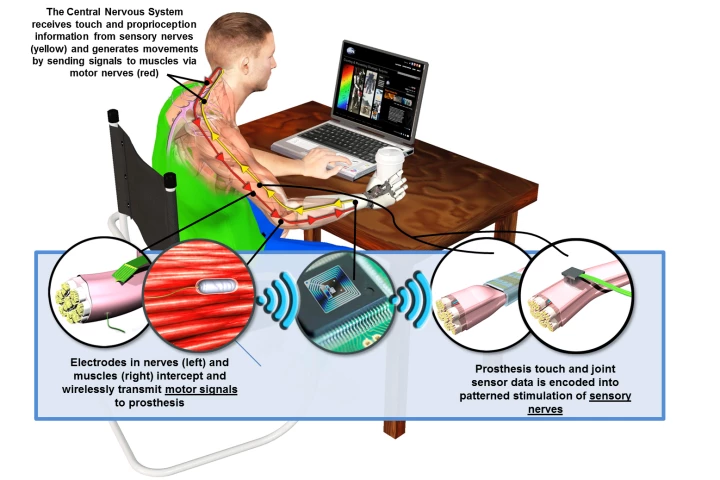 DARPA's recently announced Hand Proprioception and Touch Interfaces (HAPTIX) program aims to develop more lifelike prosthetic limbs that bring some sense of being part of the the wearer’s body, not something just strapped on.
 -
 Researchers at Michigan Technological University are developing a microprocessor-controlled prosthetic leg with an ankle that lets the foot tilt up and down and roll from side to side. It is said to allow for a more stable walking gait.
 -
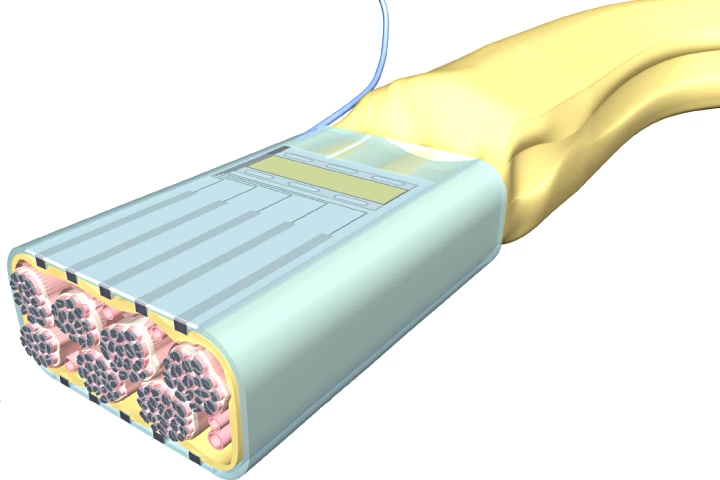 DARPA has instituted programs to improve neural interfaces and allow amputees to have better control of advanced prostheses in the near term.
Load More