
Photosynthesis
-
 Using advanced chemistry and AI, a team of Carnegie researchers uncovered new chemical traces of Earth's earliest life in 3.3‑billion‑year‑old rocks, and evidence that oxygen‑producing photosynthesis began over 800 million years earlier than thought.
 -
 Scientists in Japan have created hybrid plant-animal cells, essentially making animal cells that can gain energy from sunlight like plants. The breakthrough could have major benefits for growing organs and tissues for transplant, or lab-grown meat.
 -
 Everybody from NASA to David Bowie has wondered if there’s life on Mars – and now we might have a precise place to look for it. A new Caltech study has shown that photosynthetic microbes could thrive in a small habitable zone beneath the ice.
 -
 Scientists have given yeast a brand new ability – gaining energy from light. The technique was remarkably easy, the team says, and could not only help us understand evolution but make better beer and biofuel.
 -
 With complex ecological modeling, scientists have found that plants may be soaking up 20% more CO2 than earlier predicted. It's no "get-out-of-jail-free card," but it highlights the crucial role nature needs to play as we try to stem global warming.
 -
 A new study has tugged photosynthesis research in an interesting new direction, with a team at Sweden’s Lund University demonstrating how carefully spaced mirrors can be used to trap light and supercharge its effects.
 -
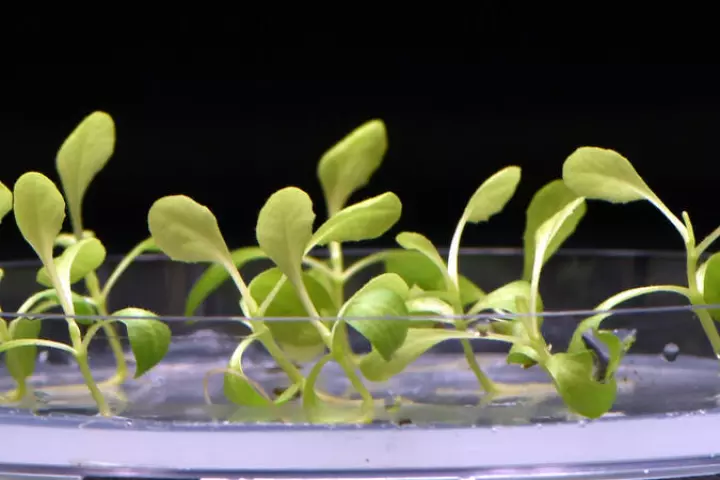 Scientists have improved on the natural process of photosynthesis, not only growing plants more efficiently, but doing so in the dark. This could expand agriculture to areas that don’t get enough sunlight, and even help feed future space explorers.
 -
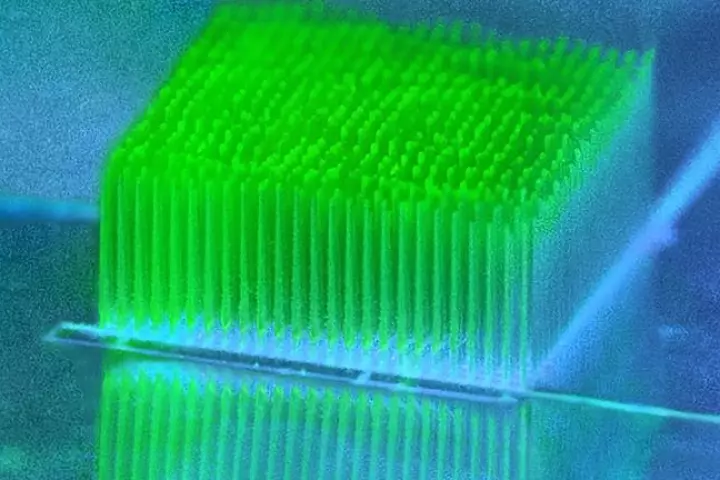 Scientists have long studied the abilities of photosynthetic bacteria that turn sunlight, carbon dioxide and water into energy, and by giving these communities a home likened to a high-rise apartment block, a team has broken new ground in this space.
 -
 One of the challenges in 3D printing biological tissue lies in the fact that the cells may die before oxygen-delivering blood vessels grow into the material. Harvard scientists are addressing that issue, by adding algae to the mix.
 -
 One argued silver lining of rising atmospheric carbon dioxide levels is that plants will be better off. But a new study has found that the more extreme heat and drought brought on by climate change would cancel out most of the benefits for trees.
 -
 Researchers from the Eindhoven University of Technology have fine-tuned an artificial leaf design and used it to produce drugs for the first time.
 -
 A new study is raising concerns over the effects of plastic pollution in our oceans. For the first time researchers investigated how a common ocean bacteria, responsible for producing over 10 percent of oxygen in the atmosphere, is impaired by chemicals that can leach out of plastic products.
Load More