
Perovskite
-
 If you've watched even a single episode of CSI, you'll know how important it is to check suspects and crime scenes for gunshot residue (GSR). A new technique could make that task faster and easier than ever before, by causing GSR to glow green.
 -
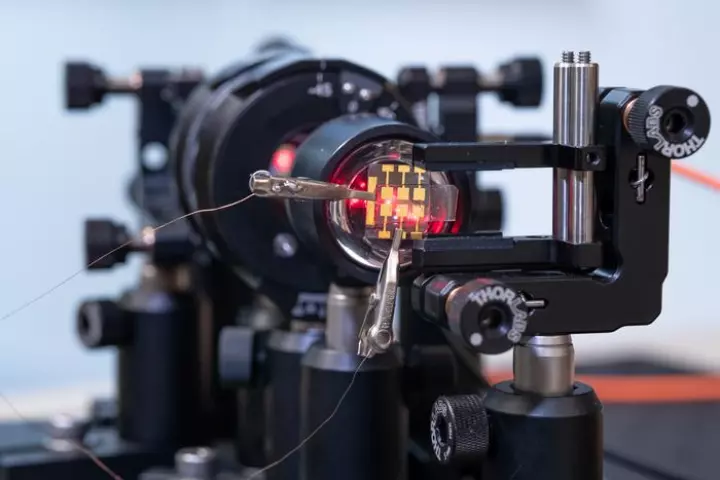 Random numbers are critical to encryption algorithms, but they're nigh-on impossible for computers to generate. Now, Swedish researchers say they've created a new, super-secure quantum random number generator using cheap perovskite LEDs.
 -
 Greenhouse gases and plastic waste are two of the biggest environmental problems the world faces today. A new reactor from Cambridge tackles both at once, converting CO2 and used plastic bottles into useful materials, powered entirely by sunlight.
 -
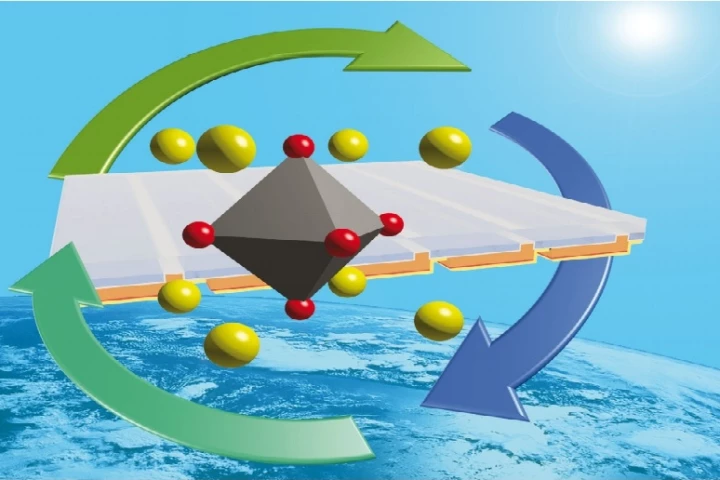 Scientists at Northwestern University and the U.S. Department of Energy have found that perovskite cells, one of the most promising solar technologies of recent years, can repay their energy cost over 10 times faster than traditional silicon-based solar cells.
 -
 Engineers at the University of Toronto have combined perovskite and quantum dots to create an ultra-efficient, super-luminescent hybrid crystal that they say will create new records in power-to-light conversion efficiencies.
 -
 Despite being the most abundant mineral on Earth, it is only recently that a naturally-occurring sample of it has been isolated. Surprisingly, that sample wasn't found on Earth. It came from outer space. Even more surprisingly, it didn't even have a name until just a short time ago.
 -
 Scientists from Ecole Polytechnique Federale de Lausanne (EPFL) in Switzerland have created a solar water splitting technique that uses common materials. They have also achieved a record solar energy to hydrogen conversion efficiency of 12.3% in the process.
 -
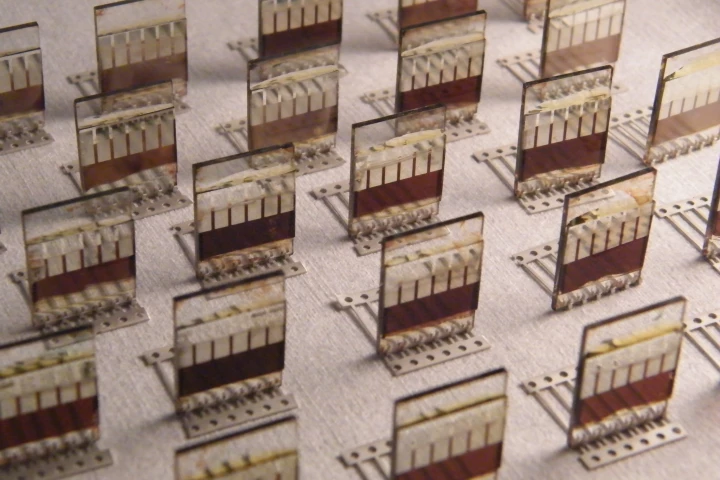 Researchers at the University of Sheffield, UK have built a spray-on solar cell that uses perovskite as the light-absorbing layer. Although the cell's efficiency is only 11 percent, it can be manufactured very cheaply, paving the way for reductions in the cost of large-scale solar panel production.
 -
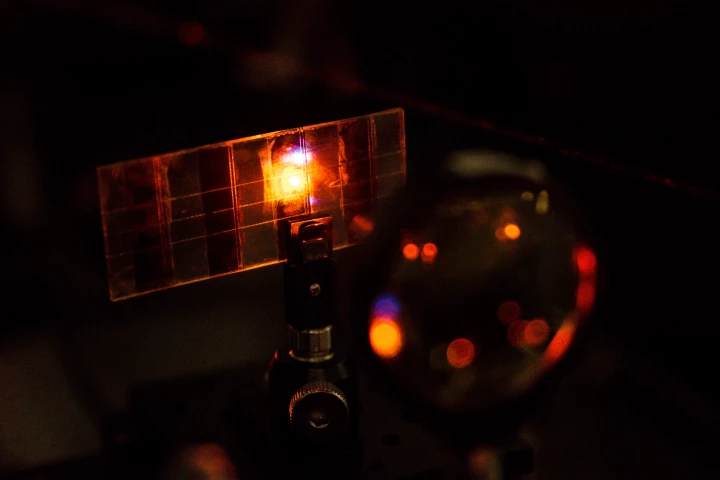 Researchers from Nanyang Technological University have discovered a solar cell material that both absorbs light and emits it. With a variety of potential applications, the researchers say the material, Perovskite, opens up the possibility of mobile devices with displays that double as solar cells.