
Parker Solar Probe
-
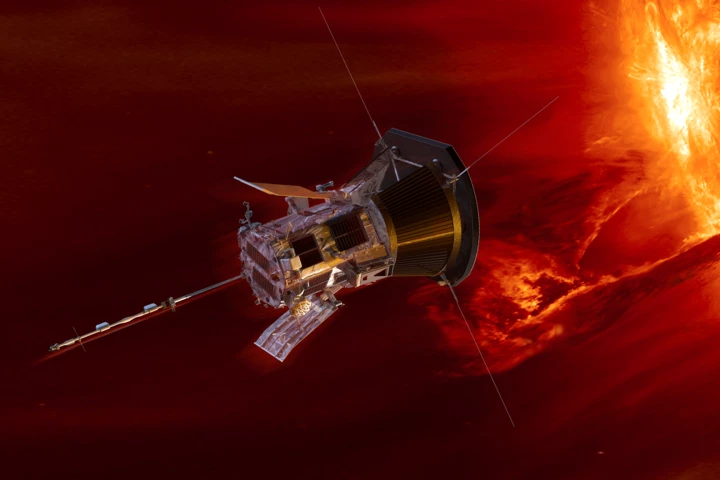 NASA has confirmed that its Parker Solar Probe is safe and fully operational after its Christmas Eve close encounter with the Sun. On December 24, 2024, the robotic probe came within a record 3.8 million miles (6.1 million km) of the Sun's surface.
 -
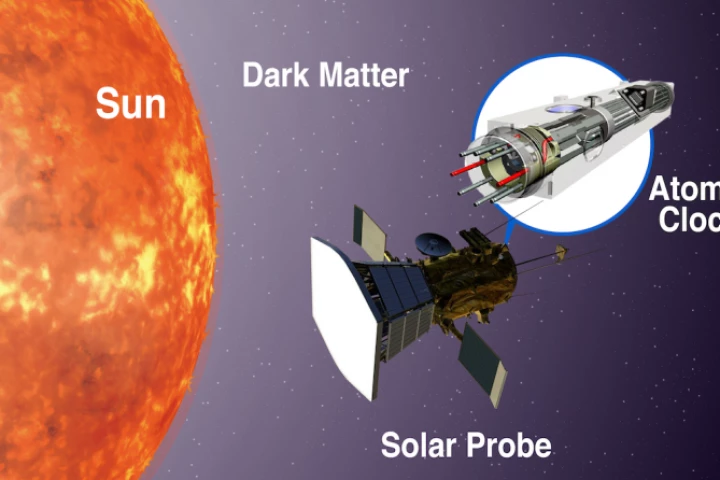 Dark matter remains elusive despite decades of searching. Now physicists have proposed a new experiment that would try to find signals by sending atomic clocks to where dark matter should be at its most dense – right near the Sun.
 -
 Though designed to study the Sun, NASA's Parker Solar Probe has scored a first by collecting the first images of the surface of Venus in visible light using its Wide-Field Imager (WISPR) while flying by the planet's night side in 2020 and 2021.
 -
 NASA's Parker Solar Probe has set a new pair of records after it survived its 10th close encounter with the Sun, coming within 5.3 million miles of the surface and reaching a speed of 363,660 mph, making it the fastest-ever artificial object.
 -
 NASA's Parker Solar Probe continues to edge closer and closer to its target, setting one new record after another. The latest came during a close approach today, where the spacecraft exceeded blistering speeds of 330,000 mph (532,000 km/h).
 -
 In a new series we'll be profiling space probes tasked with pushing the boundaries of science. This week: a spacecraft built to "touch the Sun".
 -
 Mission control at the Johns Hopkins University Applied Physics Lab confirmed receiving the Parker Solar Probe's status beacon on November 7 after it came within 15 million miles (24 million km) of the Sun's surface on November 5.
 -
The Parker Solar Probe has only been in space about two and a half months, and it's already breaking records. On October 29, 2018 at 1:04 pm EDT, the unmanned spacecraft came within 26.55 million mi (42.73 million km) of the Sun's surface – closer than any other man-made object.
-
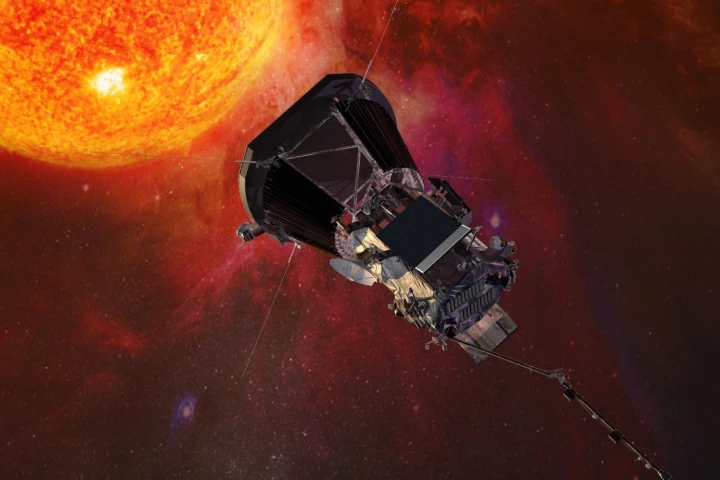 Following a successful launch last month that set it on a path to rendezvous with the Sun, NASA’s Solar Parker Probe has fired up its scientific instruments for the first time, demonstrating that all is in working order as it hurtles away from Earth.
 -
 The origin’s of NASA’s Parker Solar Probe mission can be traced back to a paper published 60 years ago by astrophysicist Eugene Parker, describing high speed matter emanating from the center of our solar system. Today the spacecraft carrying his name lifted off and is now en route to the Sun.