
Paralysis
-
 A team of researchers in China has developed a remarkable device to allow people with limited mobility to use computers and experience VR content by moving their eyeballs – and to power the gadget simply by blinking.
 -
 Researchers have demonstrated a minimally invasive technology that has effectively aided in restoring movement in paralyzed rats. This breakthrough could mean we're a big step closer to treating spinal cord injuries in humans and pets.
 -
 In another advancement in the field of brain-computer interfaces, a new implant-based system has enabled a paralyzed person to not only talk, but also 'sing' simple melodies through a computer – with practically no delay.
 -
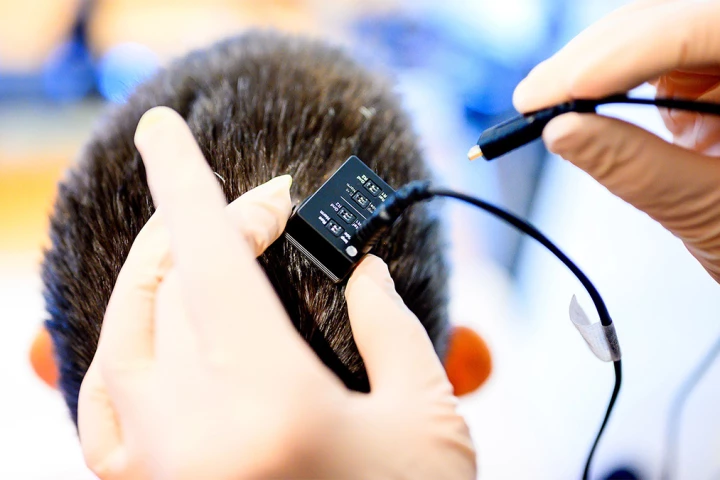 A team of California-based researchers has developed an incredible AI-powered system to restore natural speech for paralyzed people in real time and using their own voices.
 -
 A new study has tested innovative proof-of-concept technology that syncs electrical stimulation with rehabilitation robotics to enable individuals paralyzed after spinal injury to move more naturally. The tech should improve recovery outcomes.
 -
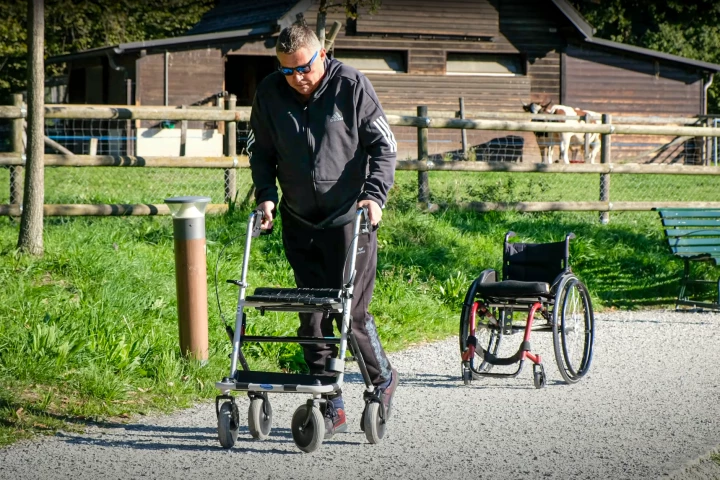 Two patients with spinal injuries have seen improvements in their ability to walk again, thanks to deep brain stimulation. Intriguingly, the therapy targets a region of the brain that normally isn’t associated with motor skills.
 -
 Scientists at Johns Hopkins have developed a new spinal stimulator that can help restore lower limb function to paralyzed patients. The tiny device can be non-invasively implanted through a syringe.
 -
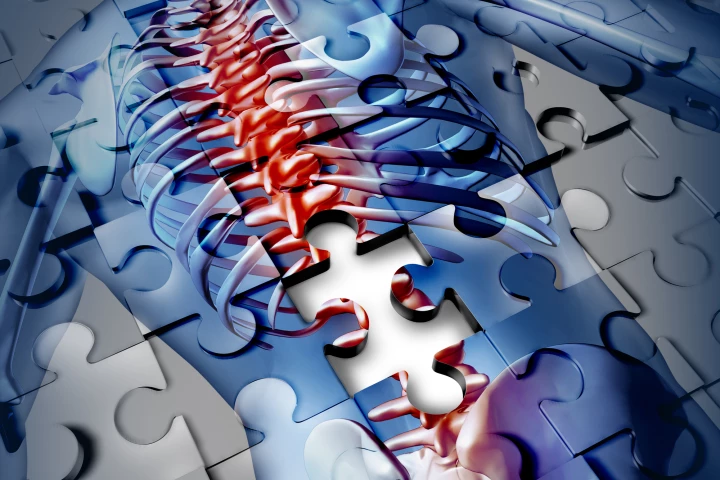 A complete spinal cord injury results, tragically, in total paralysis of all limbs and muscles below the injury site. But now, scientists at EPFL have demonstrated in mice a new gene therapy that can regenerate nerves and restore the ability to walk.
 -
 While fans of Another Brick in the Wall (Part 1) may be horrified, researchers have recreated the song from brain activity. In the process, they discovered the way brains process rhythm and melody, which has huge implications for therapies.
 -
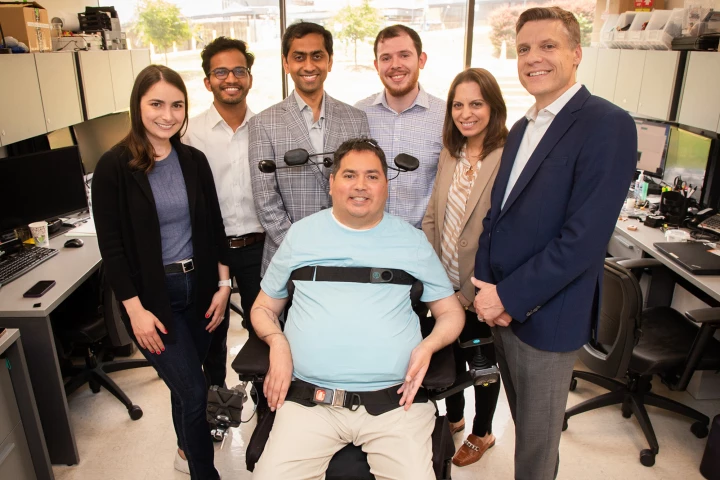 A team of researchers, engineers and surgeons have used a novel ‘double neural bypass’ technology to restore arm movement and sensation to a quadriplegic man. It’s hoped the technology will help others affected by impaired movement or paralysis.
 -
 Researchers at the University of Cambridge in the UK have combined human stem cells with flexible electronics to create a new type of neural implant that has the potential to help amputees or those who’ve lost the use of their limbs.
 -
 Electrical spinal stimulation can help paralyzed people walk again. In a promising new clinical trial, scientists have identified the specific neurons being stimulated, and found that patients can still walk even after the implant was turned off.
Load More