
Pacific Northwest National Laboratory
-
 By using advanced microscopes and imaging technology to study tiny pockets of liquid trapped in ancient minerals, scientists have gained new insights into how seawaters have changed over time, and how they might do so in the future.
 -
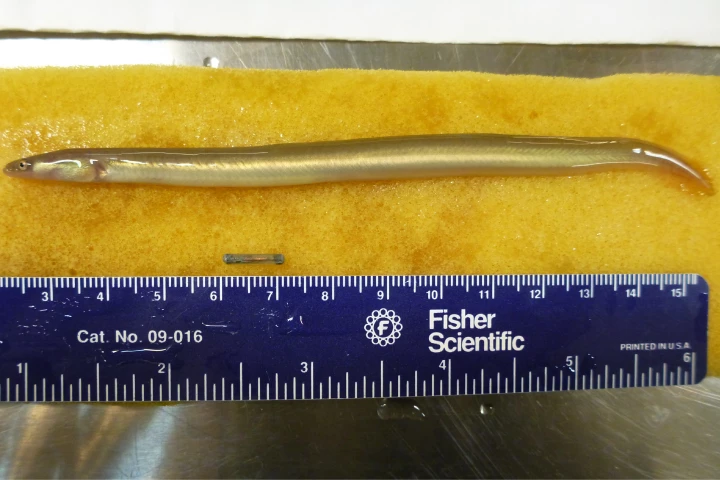 If you're going to check how fish are affected by hydroelectric dams, it's particularly important to monitor tiny, delicate individuals. That's why US scientists have developed what is claimed to be the world's smallest fish-tracking tag.
 -
 Hydroelectric turbines may indeed be a non-polluting source of electricity, but their spinning blades can nonetheless kill larger fish that are passing through. A new type is designed not to do so, while maintaining a compact form factor.
 -
 A new study has determined that Earth’s forests are transforming in response to a combination of human actions and natural processes such as wildfires, causing them to lose their oldest trees and grow shorter.
 -
 While not quite as significant as the one-time accidental discovery of penicillin, 2016 did have its share of chance findings in the scientific community. Here we take a look at five of them.