
Nano
-
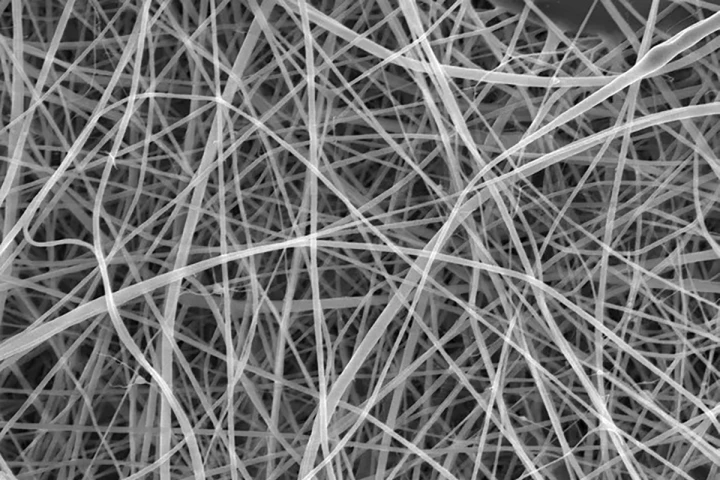 The world's thinnest spaghetti is 200 times thinner than a human hair, which means you'd have a hard time eating it. It's actually a nanofiber developed to help heal wounds. Besides, you'd probably overcook it in a second anyway.
 -
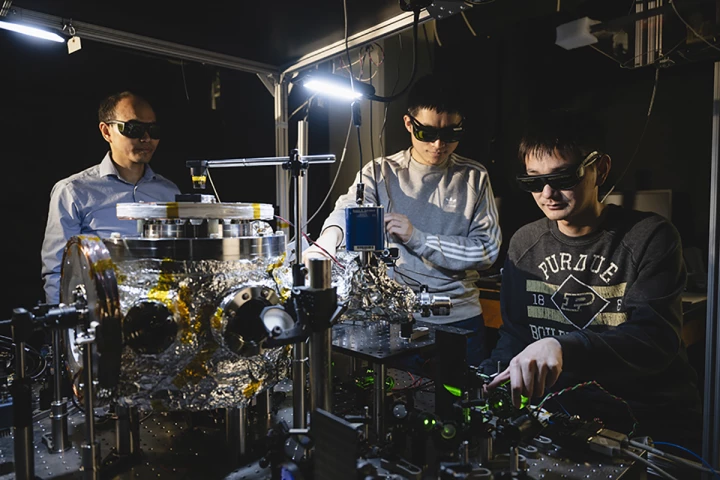 Physicists have levitated nanoscale diamonds, hit them with lasers to make them flash and spun them at an incredible 1.2 billion rpm. The experiments aren’t just about creating the “world’s smallest disco” but could help the study of quantum physics.
 -
 For the estimated 800 million people worldwide with acne, a successful new treatment would have a profound impact on quality of life. Scientists hope their new treatment method, using a drug that's unique in human medicine, will be the 'magic bullet.'
 -
 Researchers have developed a new open-source program that can convert drawings or digital models into nanoscale sculptures made of DNA. In tests, the system nailed rounded objects like vases and bowls.
 -
 Researchers at the Technical University of Munich (TUM) have developed the world’s first electric nanomotors made of DNA. The self-assembling structures can be activated by an electric charge to spin a ratcheting rotor arm.
 -
 In many fields of technology, smaller is better, and machinery is now getting so tiny it’s measured in mere atoms. Researchers at the University of Erlangen–Nuremberg in Germany have now developed the world’s smallest working gear wheels.
 -
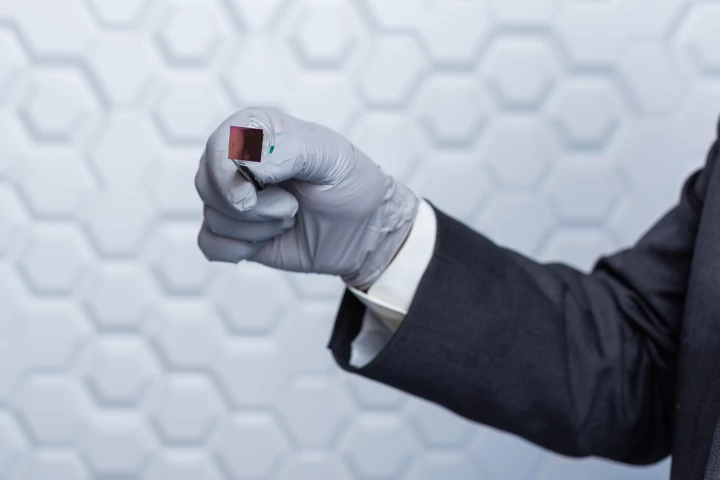 A team of researchershas advanced development of a nanochip device that can reprogram cells in the body to become new blood vessels and nerve cells. It could be used to repair brain damage resulting from a stroke or nerve damage caused by diabetes.
 -
 Researchers at Empa and EPFL have created one of the smallest motors ever made. It’s composed of just 16 atoms, and at that tiny size it seems to function right on the boundary between classical physics and the spooky quantum realm.
 -
 Though a long accepted tenet in physics, no experiment has ever directly observed the wave/particle duality of light. Now researchers at the École polytechnique fédérale de Lausanne (EPFL) in Switzerland claim to have captured a photograph of light as both waves and particles in the same image.
 -
 Arguably the world’s most famous painting, da Vinci's Mona Lisa has now been copied onto the world’s smallest canvas at the Georgia Institute of Technology.
 -
 UK company develops a $900 fast, portable, and disposable DNA sequencer to support genome research and personalized medicine.
 -
 In the future, dentists may use a special nano-sized film to bring diseased teeth back to life rather than remove them.
Load More