
Motion
-
 Millions of Americans can now look forward to a better time traveling, with the US Food and Drug Administration approving a novel oral pill that helps prevent motion-induced vomiting – the first of its kind in more than 40 years.
 -
 Nobody likes being carsick, seasick or airsick, but what can you do to keep from getting that way? Well, according to a new study, simply listening to an audio tone for one minute might be all it takes to stop you from losing your lunch.
 -
 One of the best things about sleeping on a train is the gentle rocking motion that lulls you off to la-la land. Well, the Ensven 3 Modular Bed Rocker brings that same motion to people's beds, with a lot more oomph than its predecessors.
 -
 GPS-enabled tracking collars allow scientists to learn a lot about wild animals, but the devices do have one major drawback – limited battery life. A new tracker gets around that limitation, as it's continuously powered by the animal's movements.
 -
 Typically, motion capture systems are confined to one studio containing multiple cameras, and they require subjects to wear sensor-equipped body suits. A new setup, however, is based around a single chest-mounted camera.
 -
 If you kick a ball on the ground, it will roll away from you – that’s pretty basic science. But mathematicians have found that a quantum ball would roll toward your foot instead. When a force is applied to them, quantum particles can move in the opposite direction, in an effect known as “backflow.”
 -
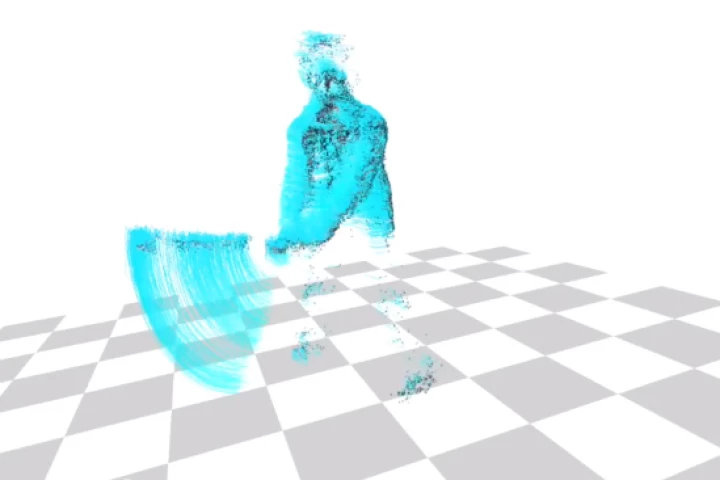 It might soon be possible to perform large-scale 3D motion reconstructions of sporting events or other live performances, thanks to new research by scientists at Carnegie Mellon University that involved 480 video cameras mounted in a two-story geodesic dome.
 -
 Under the guise of World Cup fever, scientists across the globe are seizing the opportunity to examine the aerodynamic properties of what will in all likelihood be the most talked-about object on a global scale over the coming weeks, the 2014 World Cup match ball.
 -
 Microsoft's Kinect system is certainly impressive, but it does have one problem – you have to stay located in front of it. MIT's new WiTrack system, however, can track users' movements even when those people are in another room.
 -
 Triboelectric generators developed at Georgia Tech could be used to produce electricity from activities such as walking and they even have the potential to enable touchscreens that generate their own power.
 -
 The watch-sized FINIS Swinsense is worn on the wrist and uses motion sensing technology to automatically detect and record the number of laps swum, total distance, calories burned, lap time, pace, stroke count and even stroke type.
 -
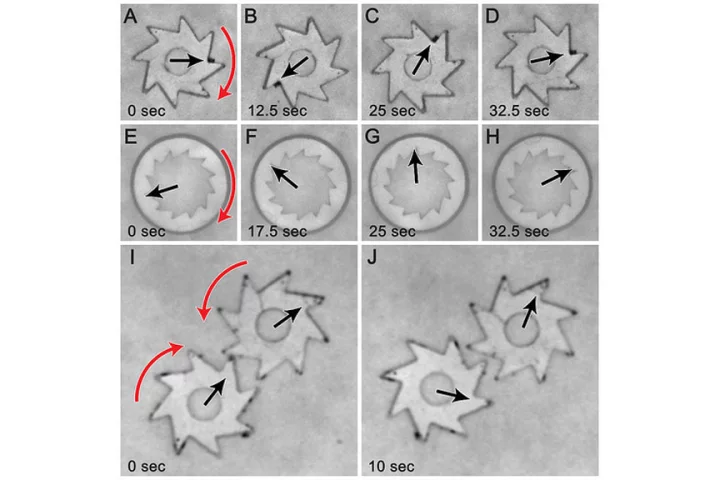 Researchers have discovered that common bacteria suspended in a solution can be made to turn microgears, paving the way for ‘smart materials’ that can dynamically alter their microstructures, repair damage, or power microdevices.
Load More