
Mosquito
-
 An antiviral targeting the dengue virus was quietly abandoned by industry, but it's now suddenly back in the spotlight. A new study suggests it didn’t just slow the dengue virus, it blocked viral replication and reduced infection rates at high doses.
 -
 We don't fully understand why some people are more attractive to mosquitoes – it's a complicated web of physiological and bacterial factors, geography and species. But a new study suggests that some insects like to home in on the life of the party.
 -
 A novel way to prevent the spread of malaria by directly targeting the proteins that enable the infectious parasite to reproduce could soon be realized, thanks to scientists at WEHI in Australia.
 -
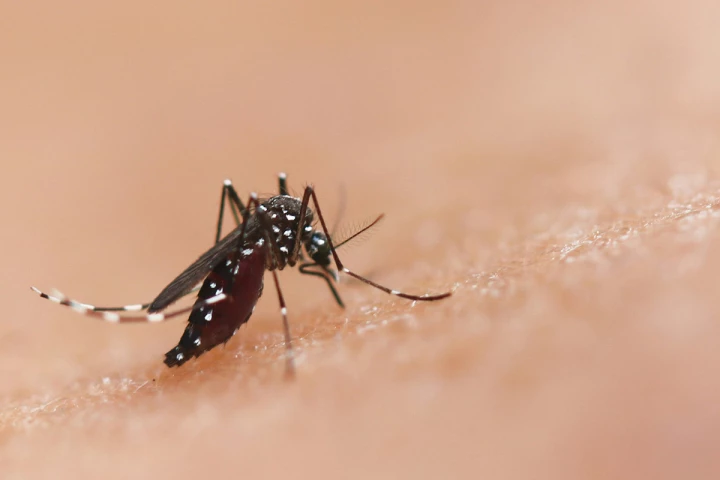 Mosquitoes have long been among humanity’s most formidable adversaries, causing more deaths than any other animal. With traditional control methods facing mounting resistance, researchers are seeking innovative ways to combat mosquito-borne disease.
 -
 The itch from bug bites, rashes, and other skin conditions can sometimes be so overpowering that it feels impossible to avoid scratching them. But new research explains why you might want to hold off as long as you can.
 -
Mosquitoes looking to mate in Australia are about to have the worst sex of their lives – thanks to genetic modifications turning their semen toxic. That could kill females swiftly, and greatly reduce their ability to spread deadly diseases.
-
 Mosquitoes do a superb job of spreading diseases like malaria – now researchers have shown it's possible to hijack these pests and distribute vaccines via mosquito bite. In human trials, these mozzie-borne vaccines proved around 90% effective.
 -
 Genetic studies have revealed that when male mosquitoes lose their hearing, they also lose their sex lives. The surprising discovery could lead to new ways to reduce mosquito populations and the diseases they spread.
 -
 There could soon be a non-toxic, longer-lasting and less-smelly alternative to DEET for repelling mosquitos. Scientists have created genetically engineered human skin bacteria that are unappealing to the irritating and disease-spreading insects.
 -
 After confounding scientists for more than 80 years, researchers have finally discovered how the flesh-eating Buruli ulcer is transmitted: mosquitoes. The discovery means practical measures can now be taken to restrict the spread of the disease.
 -
 Researchers have chanced upon a bacteria naturally present in the gut of mosquitoes that inhibits the growth of a malaria-causing parasite. Unlikely to produce resistance, it could be used to complement existing malaria eradication strategies.
 -
 Researchers have identified the molecular pathway that allows male mosquitoes to hear females, which is crucial to their reproduction. It could lead to insecticides that exploit this pathway to control mosquito populations and reduce disease transmission.
Load More