
Model
-
 Scientists have, for the first time, developed functional, brain-like tissue without relying on animal-derived materials or biological coatings. The innovation offers a new, fully synthetic platform for neural tissue engineering.
 -
 Spots and stripes serve many purposes in nature, but how they form has been more of a mystery. Now, researchers have advanced their breakthrough theory – and it could help us design materials that can respond to the environment and change color on demand.
 -
 A groundbreaking study has traced the 66-million-year history of primates to overturn conventional thought that our ancestors came from tropical forests. The earliest members of our family tree, scientists say, were actually cold-climate survivors.
 -
 Is obesity a disease or a risk factor for disease? It's a contentious question. In a new report, the Global Commission on Clinical Obesity strives to settle the enduring debate, introducing a new framework that seeks to redefine obesity.
 -
 Google has put AI to work as a weatherman, and shown that in just one minute on a single machine, it can make accurate predictions up to 10 days in advance, a task that normally takes a room full of supercomputers hours to achieve.
 -
 Mini lab-grown organs are helpful test subjects for new drugs, but they don’t replicate how drugs affect other parts of the body. Now, researchers at Wake Forest Institute for Regenerative Medicine have combined several of these organ models into one system, to create a detailed “body-on-a-chip."
 -
 Russian chemists have discovered that some exotic compounds may be formed in high pressure environments like those found inside Uranus, Neptune and other gas giant planets.
 -
 Chances are one of the materials up for consideration in building the International Space Station was not matchsticks. But for one Iowa artist the idea of using 282,000 matchsticks and gallons of glue to hand-build a scale model of the ISS seemed like a perfectly reasonable idea.
 -
 Researchers at Penn state have developed a new method for calculating the habitable zone around exoplanets.
 -
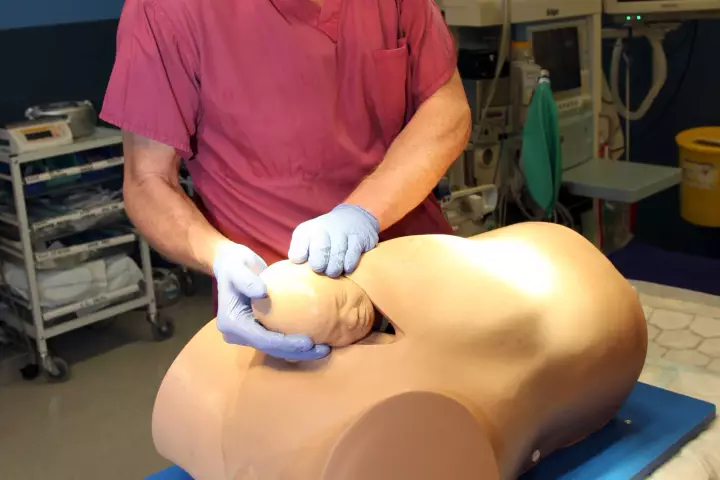 "Desperate Debra" is a caesarean section simulator that trains surgeons to deal with potentially life-threatening cases of fetal head impaction.
 -
 New computer modeling technology suggests that Tyrannosaurus rex was even larger than previously assumed.
 -
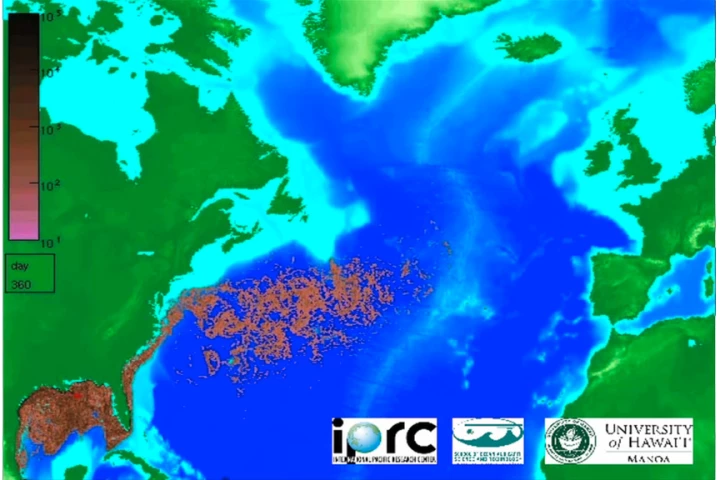 SOEST researchers have produced an animated computer simulation that shows the potential spread of the Deepwater Horizon oil spill over a period of 360 days from when it started.