
Mobility
-
 Working out doesn't just build muscle but, in later life, helps maintain a powerful cellular machine that repairs damaged tissue. Scientists have now not only discovered how this system works but found a way to keep it balanced in older muscles.
 -
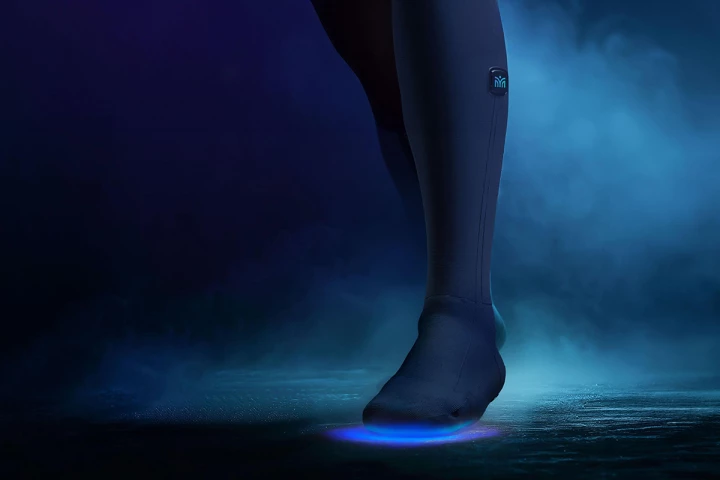 Researchers in Switzerland have stuffed a bunch of chips and sensors into socks to help people who suffer from some of the worst symptoms of diabetes – chronic pain and a loss of sensation in the feet that make it hard to walk.
 -
 A type of medicine commonly used to treat everything from chronic obstructive pulmonary disease to depression has now been linked to accelerating the loss of mobility in older age. These anticholinergic drugs have already been linked to dementia.
 -
 Scientists at Johns Hopkins have developed a new spinal stimulator that can help restore lower limb function to paralyzed patients. The tiny device can be non-invasively implanted through a syringe.
 -
 Electrical spinal stimulation can help paralyzed people walk again. In a promising new clinical trial, scientists have identified the specific neurons being stimulated, and found that patients can still walk even after the implant was turned off.
 -
 It's important to monitor the physical activity level of seniors living on their own, as a decrease may indicate health problems, depression, cognitive decline, or a debilitating fall. A new device does so simply and unobtrusively, by hitching a ride on the senior's walker.
 -
 Taking inspiration from the traditional cane, a team of researchers has come up with a LiDAR-enabled robotic assistant which offers light-touch support for the mobility-impaired. Dubbed Canine, the device improves the user's spacial self-awareness, and thus, their walking stability.
 -
 The mySmartCane system is the latest modern-day take on a centuries-old mobility aid, consisting of a ball that can be retrofitted to existing canes to equip them with parking sensor-like technology and give users a better sense of their surroundings.
 -
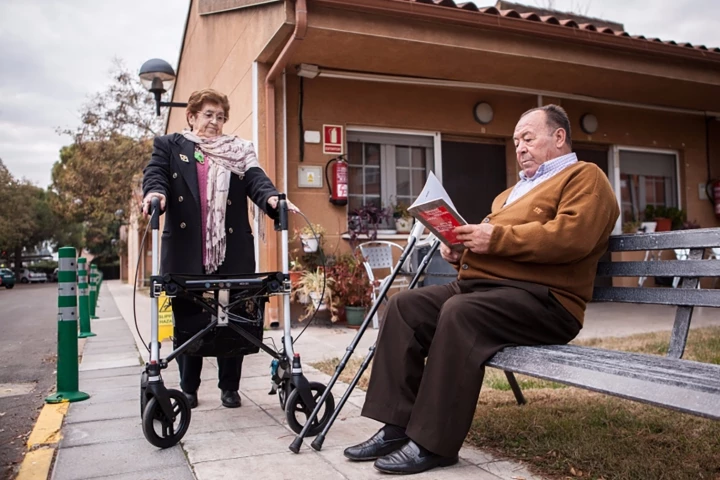 The main purpose of a mobility walker is to help its elderly owner get around more easily, but the FriWalk (Friendly Robot Walker) adds health monitoring, navigational aids and social alerts to the mix. It's a high-tech walker for the 21st century and is being trialed in Spain, Italy and England.
 -
 Duchenne muscular dystrophy causes the victim's muscles to shrink throughout their lifetime, often to the point that the arms and legs can't be used at all. That's why the A-Gear project is designing two arm-worn exoskeletons, intended to help Duchenne patients retain the use of their arms.
 -
 When we hear about exoskeletons, chances are that we either think of something that allows disabled users to walk again, or that gives wearers extraordinary strength. The AXO Suit project, however, is aimed at creating something else – an exoskeleton that simply allows seniors to stay active.
 -
 Unlike other stair-climbing wheelchairs we've seen over the years, the B-Free Chair relies on a set of robotic "pedrails" that look almost like skinny tank tracks. These articulated pedrails allow the electric to grip the staircase firmly as it navigates up or down.
Load More