
Mirror
-
 Many indoor plant enthusiasts know that mirrors can be used to direct more sunlight onto plants that need it. Scientists have now developed a method of applying that same principle to tree seedlings that are struggling to grow in shady forests.
 -
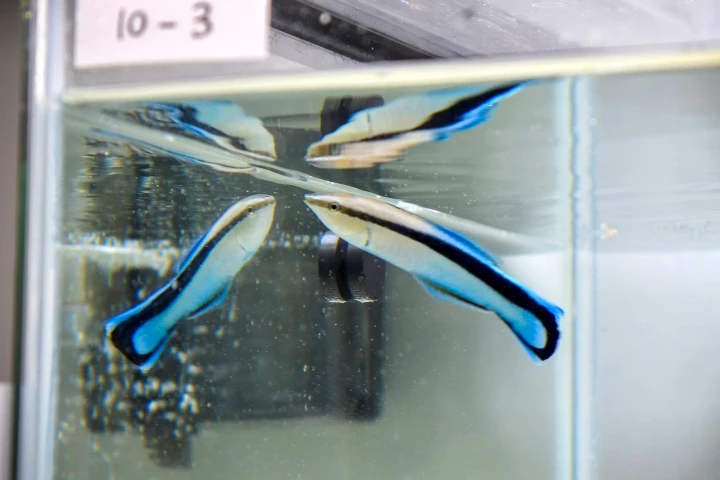 Last year, it was discovered the bluestreak cleaner wrasse could pass the "mirror test", showing that it can recognize its own face in a mirror. Now researchers have found it can actually size itself up against a potential competitor before a fight.
 -
 Humans can recognize their own face in the mirror, and so can apes, monkeys, dolphins, elephants, and some birds. Now a fish species has passed the mirror test for the first time, which may suggest that the animals are smarter than we give them credit for.
 -
 Mirror, mirror, show my reflection; tell me how to fix my complexion. That's the premise behind HiMirror's HiMirror Classic: a smart-mirror with built-in camera designed to help beauty professionals. But with the new Mini, they're cutting out the go-between so you won't even need to leave the house.
 -
 San Francisco's Naked Labs has started shipping its 3D-scanning smart mirror with rotating scale. Connected to a mobile app, the Naked scales build 3D models of your body, then track them through your hypothetical healthy transformation.
 -
 People rate food as tasting better, and they eat more of it, when eating with other people. The effect is known as the "social facilitation of eating," and scientists don't fully understand it. In a new study, however, it was found that it also occurs when solo diners eat in front of a mirror.
 -
 The CSIRO has claimed a world record for the highest temperatures ever recorded using solar energy to generate "supercritical" steam at its solar thermal test plant in Newcastle, Australia. This achievement is touted as a breakthrough for solar energy production.
 -
 Innovations Foresight has introduced an on-axis guiding accessory for astrophotography that uses a cold mirror to separate a visible image from a near-infrared image for guiding.
 -
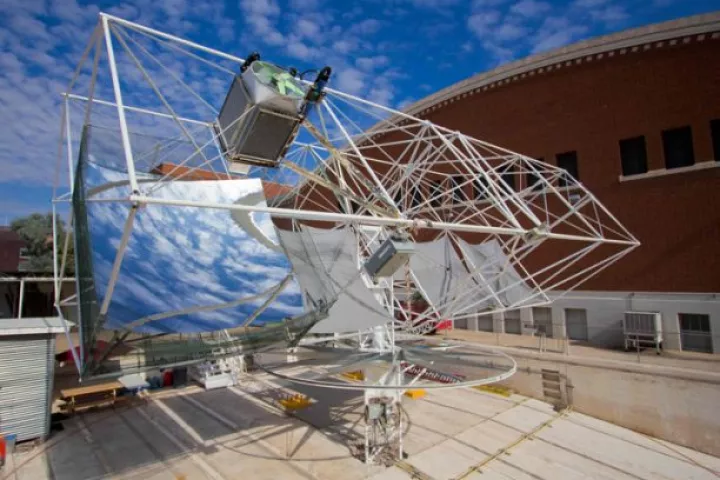 University of Arizona researchers are building a low-cost, highly effective solar module borrowing technology from telescope mirrors and high-efficiency solar cells.
 -
 The Cybertecture Mirror presents users with a wealth of information while looking at their reflection - including weather and news, social network feeds, streamed internet TV, personal health information and can even act as a personal exercise coach.