
Messenger
-
 Researchers have designed a new nanoparticle that was shown to more effectively deliver a cancer-fighting mRNA vaccine to mice. The study’s results may lead to the development of better vaccines to treat cancer and infectious diseases like COVID-19.
 -
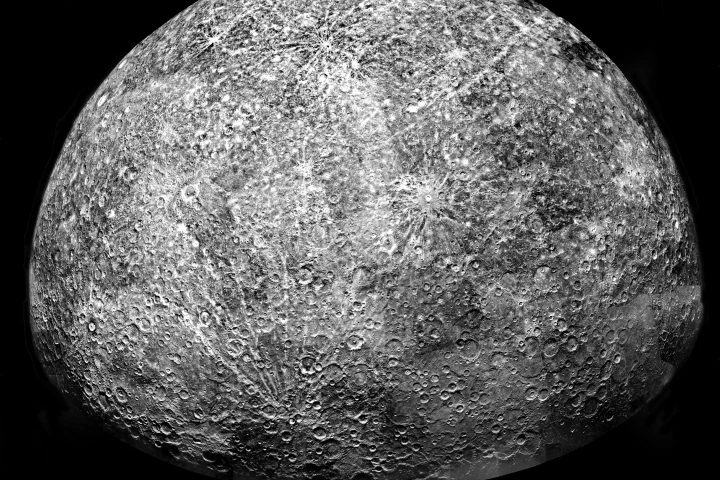 Mercury’s disproportionately massive core may be the result of the Sun’s powerful magnetic influence rather than the consequence of a cataclysmic collision with another body in the ancient past, according to the results of a new study.
 -
 Picture a plum. When it is ripe, the surface is smooth, but when it starts to age and shrink, wrinkles can appear along the surface. Researchers now believe that Mercury's newly discovered Great Valley was formed in much the same way.
 -
 Researchers have estimated that around 3.5 billion years ago, Mercury underwent its final major burst of volcanic activity. The results of the study will help scientists understand how Mercury evolved into the scorched planet we know today.
 -
 Using data captured by NASA's MErcury Surface, Space ENvironment, GEochemistry, and Ranging (MESSENGER) spacecraft, a team of scientists has constructed the first complete digital elevation model (DEM) of the planet Mercury.
 -
 If the midweek hump has you in a contemplative spirits, this image of Earth as pictured by Cassini from Saturn may offer a little context. The Earth and the Moon appear to be seemingly insignificant specks from the perspective of the spacecraft from its orbit around the gas giant.