
Magnetism
-
 Magnetic bioactive nanocomposites can eliminate tumors through magnetic arson while helping build new bone. Integrating bioactivity with magnetic performance may be key step in creating smart nanomaterials for oncology and medical regeneration.
 -
 Researchers at Massachusetts Institute of Technology have demonstrated an entirely new form of magnetism in a synthesized crystalline material. They're calling it p-wave magnetism, and it could be the key to next-gen computer memory.
 -
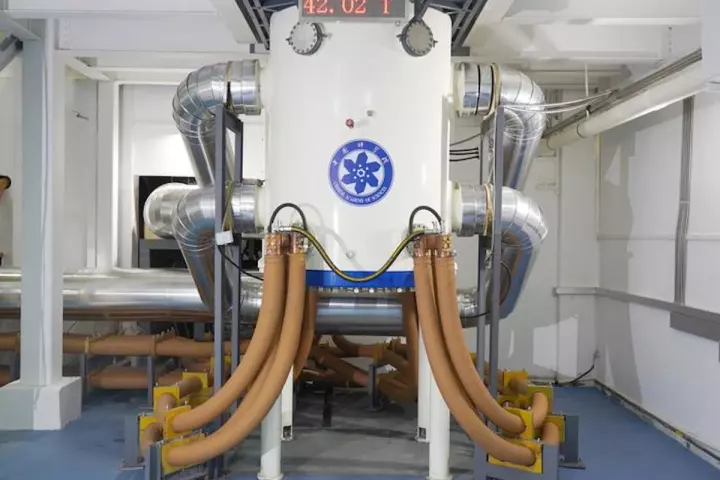 Scientists have developed the world’s strongest resistive magnet, which produced a steady magnetic field of 42 Tesla (T). The system could improve devices that use magnets, as well as enable a range of new experiments that probe electromagnetism.
 -
 Scientists have confirmed the existence of a strange new form of magnetism. Hiding right under our noses, the team says that “altermagnetism” can be found in everyday materials and could have major technological uses.
 -
 When it comes to the treatment of Parkinson's disease, electrical deep brain stimulation (DBS) is a commonly used technique. It does have some drawbacks, however, which is why scientists are now looking to tiny wirelessly activated magnets instead.
 -
 Scientists at ETH Zurich have discovered a new type of magnetism. Experiments show that an artificially produced material becomes magnetic through a mechanism that hasn’t been seen before.
 -
 The skin ulcers that diabetics often develop on their feet are slow to heal, sometimes to the point that they become infected and require foot amputation. A magnetic gel could keep that from happening, as it triples the healing speed of such wounds.
 -
 Astronomers have discovered a new type of star, which could be key to solving a cosmic mystery. This massive helium star has an ultra-strong magnetic field, meaning it could be the preliminary stage of a magnetar, which so far has unknown origins.
 -
 An exotic state of matter originally hypothesized almost 50 years ago has been observed for the first time. Created by Harvard researchers, this material called quantum spin liquid could eventually help improve quantum computers.
 -
 Currently, most powered prosthetic limbs are controlled by electrodes in the user's residual stump. An experimental new MIT system, however, is claimed to work better by replacing those electrodes with implanted magnetic beads.
 -
 Geologists have pieced together an uncertain part of Earth’s ancient history. A team in Australia has found new evidence that suggests the cycle of supercontinents forming and breaking up only started about two billion years ago.
 -
 Although various groups are working on nanoparticles that could be used for directed drug delivery via the bloodstream, most of those particles are made to "go with the flow." Now, however, researchers have created ones that can travel upstream.
Load More