
Magnetic field
-
 Many persistent sinus infections involve biofilms – colonies of bacteria that group together to resist efforts to kill them. Now, researchers have developed biofilm-blasting bots that could handily deal with these, and other, bacterial infections.
 -
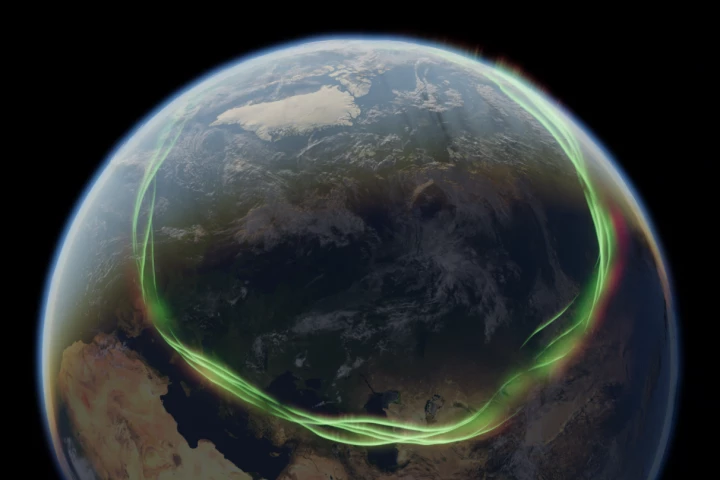 If you ever travel back in time around 41,000 years ago, pack some sunscreen. New research suggests that during a cataclysmic polar reversal, our ancestors might have covered themselves in mineral-rich ochre to survive harmful solar radiation.
 -
 A preserved tree fossil gives an unprecedented view into a moment 42,000 years ago when the Earth’s magnetic field went haywire, triggering environmental chaos, influencing everything from an increase in cave paintings to the Neanderthal extinction.
 -
 Researchers have developed a gene therapy technology that uses magnetic fields to control specific brain circuits. In addition to Parkinson’s disease, the tech could be used to treat conditions as diverse as depression, obesity, and chronic pain.
 -
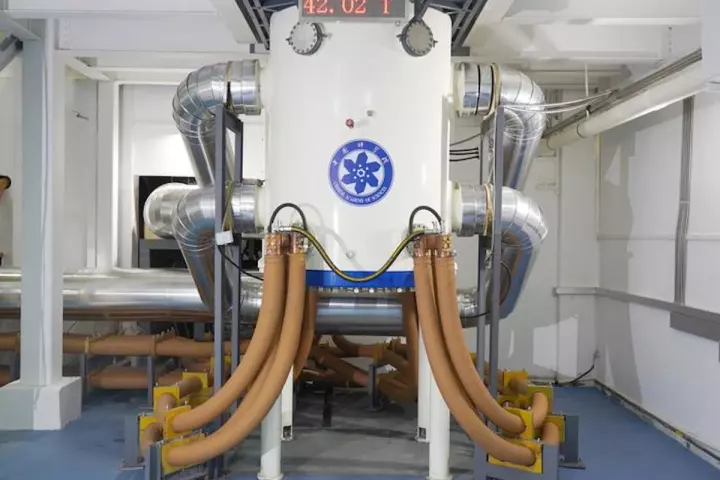 Scientists have developed the world’s strongest resistive magnet, which produced a steady magnetic field of 42 Tesla (T). The system could improve devices that use magnets, as well as enable a range of new experiments that probe electromagnetism.
 -
 A new two-step process that safely rewarms frozen tissues using nanoscale magnetic rods could preserve donor organs long-term. The procedure provides an alternative to current time-limited methods and paves the way for more life-saving transplantations.
 -
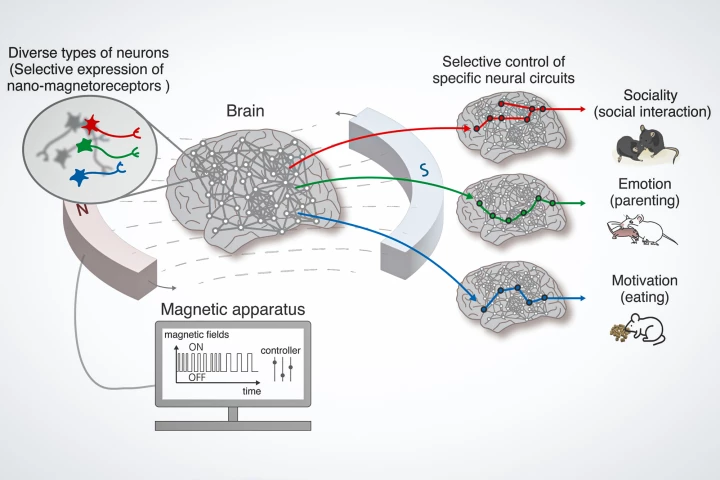 Researchers have developed a remote, non-invasive method of selectively controlling neurons in the brain using magnetic fields. The technique opens the door to a greater understanding of brain function and, potentially, new treatments for disorders.
 -
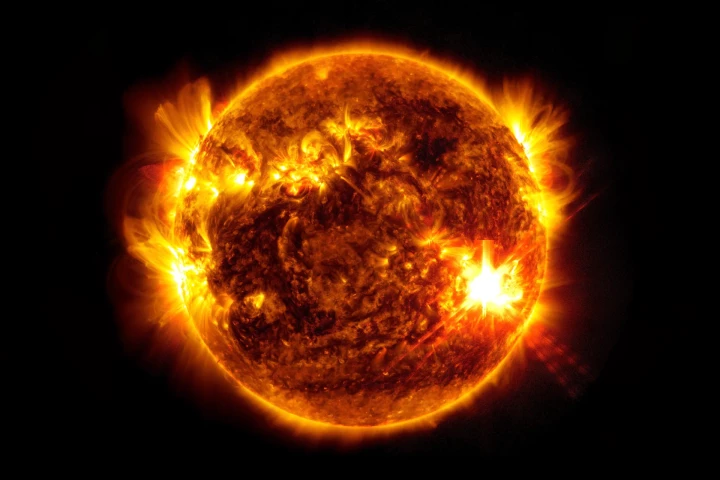 While millions of people who couldn't normally see the aurora took in the recent color-filled spectacle in the night sky, NASA's Solar Dynamics Observatory was looking straight at the sun to catch the action. The fiery footage is well worth a watch.
 -
 The Earth’s magnetic field is vital for life – without it, the Sun’s radiation would sterilize the planet. But a new study suggests we wouldn’t be here at all if that magnetic field hadn’t almost completely collapsed half a billion years ago.
 -
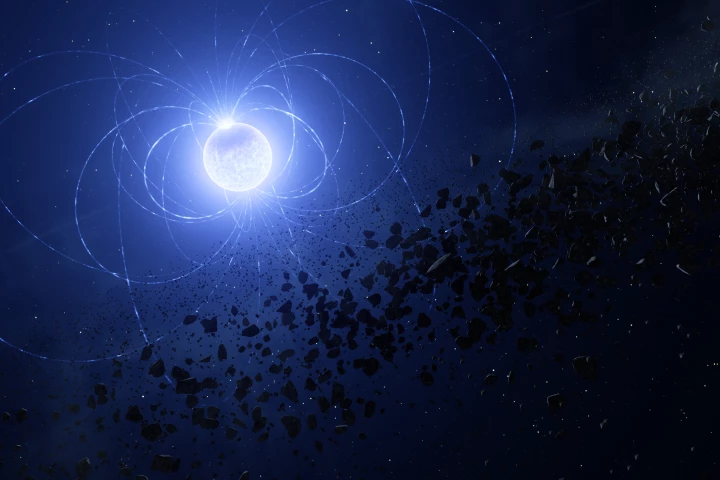 In a few billion years, the Sun will destroy the solar system’s inner planets – and if it’s lucky, it might get a big cool scar to brag about. That’s what happened to a newly found white dwarf, which appears to have a bizarre metal scar on its surface.
 -
 Scientists have confirmed the existence of a strange new form of magnetism. Hiding right under our noses, the team says that “altermagnetism” can be found in everyday materials and could have major technological uses.
 -
 The hot interior of planets isn’t somewhere you’d expect to find snow, but “iron snow” could fall on Earth’s core. A new study has modeled the dynamics in the lab and found that iron snow could make magnetic fields switch on and off in some planets.
Load More