
Lithium-ion
-
 It never fails … you go to use a device that should be fully charged, but its battery has gone flat over time. Such may soon no longer be the case, however, if battery manufacturers simply start using a different type of adhesive tape.
 -
 Although lithium can be found in hard mineral ores, it's more often extracted from very salty (aka briny) groundwater. The latter task could soon be much quicker and eco-friendlier, thanks to a new string-based extraction technique.
 -
 While electric vehicles are greener than their fuel-burning counterparts, their battery packs still aren't as recyclable as they could be. A new process could help, by more efficiently extracting reusable materials from old lithium-ion batteries.
 -
 A technique is allowing researchers to measure endogenous lithium concentrations in the human brain for the very first time. Researchers found natural lithium levels in white matter were lower in suicidal subjects than healthy controls.
 -
 Just because a lithium-ion battery no longer holds a charge doesn't mean it no longer holds any value. It still contains useful metals, which can now be reclaimed via a more eco-friendly technique – the key ingredient is orange peel waste.
 -
 Researchers at Australia's Deakin University say they've managed to use common industrial polymers to create solid electrolytes, opening the door to double-density solid state lithium batteries that won't explode or catch fire if they overheat.
 -
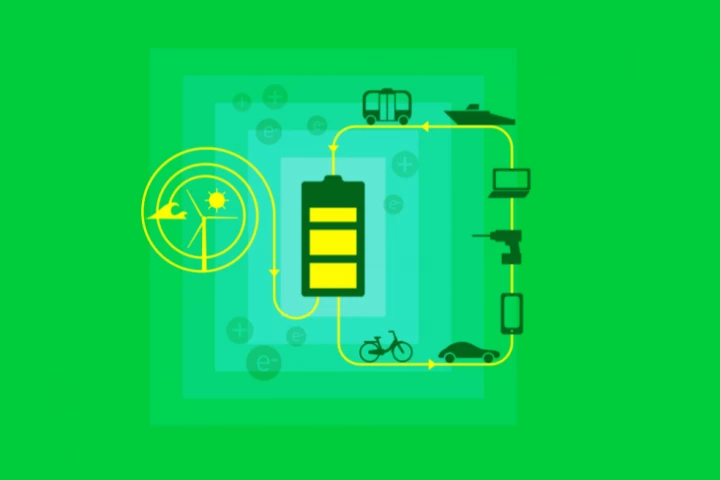 The 2019 Nobel Prize in Chemistry has been awarded to three scientists for the invention and development of the lithium-ion battery.
 -
 Scientists have come up with a way to stop damaged lithium-ion batteries catching fire. The batteries effectively harden on impact, preventing the electrodes making contact and starting a fire.
 -
 Ask a smartphone user how to improve them, and it's a safe bet that longer battery life would top the list. Batteries with silicon anodes could help boost that, and now a team has shown that these batteries can be environmentally friendly too, sourced from glass bottles headed for the scrap heap.
 -
 Dubbed the Powerwall, Tesla has unveiled a home stationary battery that offers 10 kWh of storage capacity for the relatively modest price of US$3,500. A smaller unit is also available at 7 kWh for $3,000, and homeowners can stack multiple units if needed.
 -
 There may soon be a new use for discarded tires. Researchers from the US Department of Energy’s Oak Ridge National Laboratory have devised a method of harvesting the carbon black from them, and using it to make anodes for better-performing lithium-ion batteries.
 -
 Powerful microbatteries developed at the University of Illinois combine the energy capacity of lithium batteries and the power delivery of a supercapacitor.
Load More