
liquid metal
-
 While intravenous needles need to be rigid in order to pierce the skin, that rigidity sometimes causes damage to the veins. A new needle addresses that issue by softening upon insertion into the patient's body.
 -
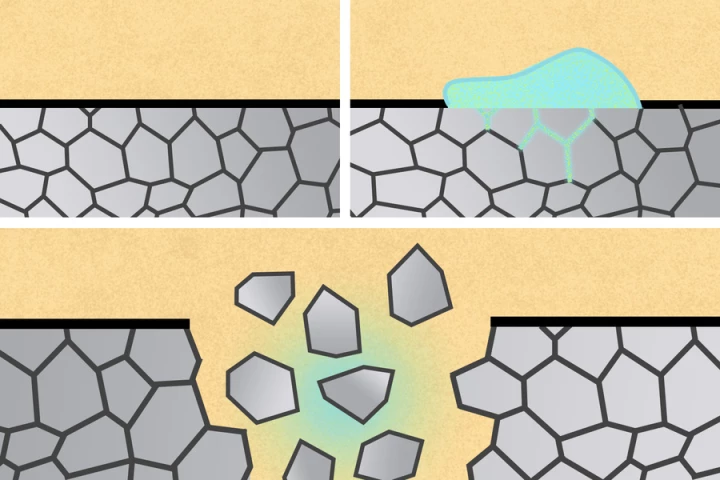 Currently, small metal implants either have to be surgically removed from the body once they're no longer needed, or just left inside indefinitely. Now, however, scientists have devised a method of breaking them down in place using liquid metal.
 -
 Researchers have created a new platinum catalyst that remains liquid at room temperature, by mixing tiny amounts with gallium. This new liquid catalyst performs reactions more efficiently than a solid platinum catalyst, using far less of the metal.
 -
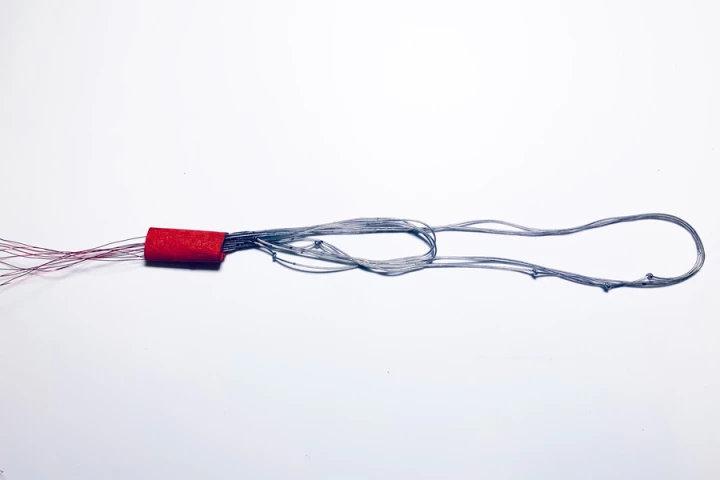 Long before computers existed, the Inca people kept records using knotted strings known as quipu. That technology has inspired a new system for assessing gastrointestinal problems, which is considerably less expensive than conventional methods.
 -
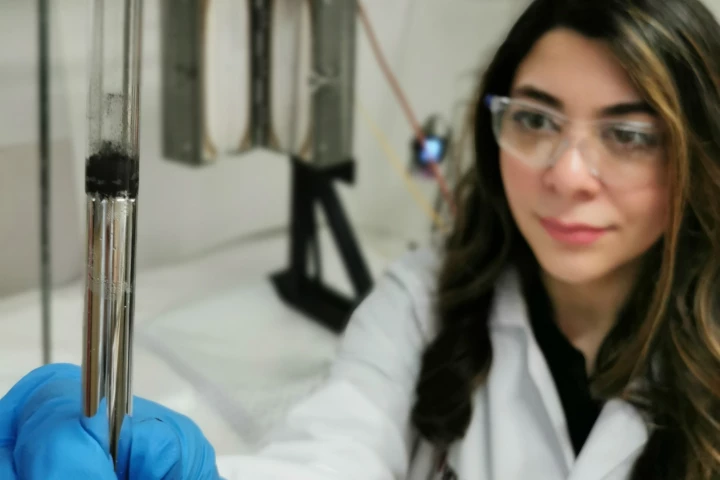 A new method quickly converts carbon dioxide into solid carbon, which can be stored indefinitely or turned into useful materials. The technology works by bubbling CO2 up through a tube of liquid metal, and could be used at the source of emissions.
 -
 One of humanity’s biggest threats is also the smallest – bacteria. But now, researchers at RMIT in Australia have found a new method for killing these superbugs that they can’t resist – magnetic nanoparticles that physically tear them to shreds.
 -
 Capturing carbon from the air and sequestering it is emerging as a viable strategy, and now scientists have developed a new method to turn CO2 gas back into solid coal, that can then be buried, or even used for electronic components.
 -
 North Carolina State University researchers have developed a way to control the surface tension of liquid metals with the application of very low voltages. This may lead a new field of morphing electronic components or – maybe one day – even self-assembling, terminator-style robots.