
Levitation
-
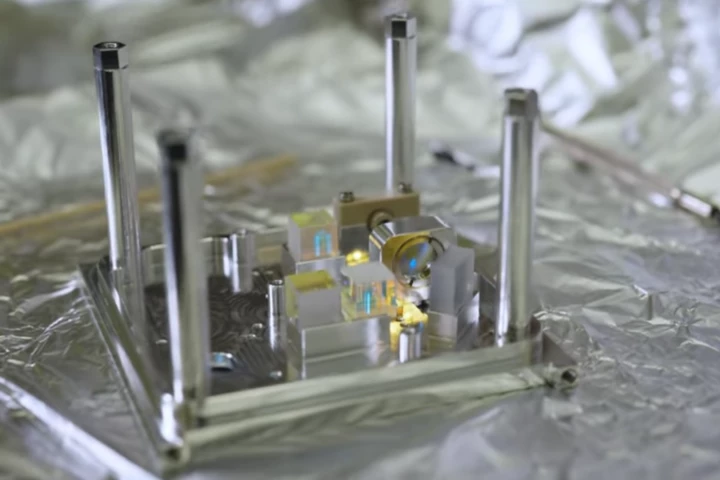 Dark matter is thought to outnumber regular matter by a factor of five to one – so why can’t we find the stuff? A new study proposes looking for it from space, using a satellite containing a levitating piece of graphite and a laser.
 -
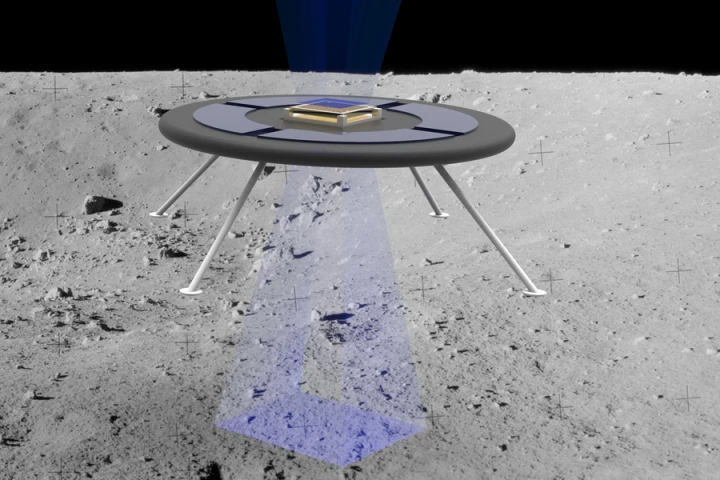 Although we may think of flying saucers as craft used by aliens in movies, MIT scientists are now proposing utilizing one of their own to explore the Moon. The vehicle would hover above the lunar surface via the force of electrostatic repulsion.
 -
 An advanced "sound tweezer" can manipulate dozens of objects independently using hundreds of tiny speakers, allowing for noninvasive surgery and a new, highly interactive type of 3D display.
 -
 Levitation usually only works with particles or tiny objects, but scientists from the University of Bristol have developed a new “acoustic tractor beam” that can trap larger objects, possibly paving the way for contactless production lines or even human levitation.
 -
 Levitation may look like magic, but there are a few scientific tricks behind it. Magnetic systems, optical levitation and acoustics only work with certain objects, but researchers at the University of Chicago have developed a method to levitate basically anything, using differences in temperature.
 -
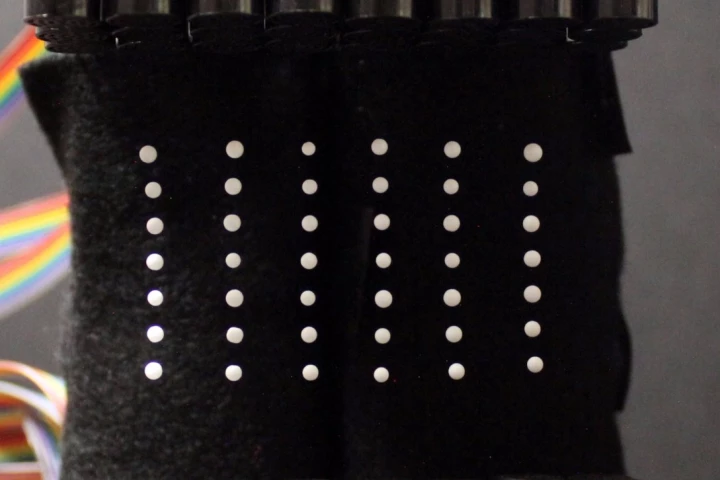 We've already seen sound waves being used to levitate small numbers of foam balls, but scientists have recently taken things a step further. They've created a low-res "display" in which the pixels are actually physical spheres that float and can be individually rotated in mid-air.
 -
 Developed as part of the MAGDRIVE research project, a new frictionless transmission gear and corresponding contactless axles have been created using superconductor magnetic levitation. Aimed primarily for use in spacecraft, the system is also adaptable for use in automobiles, railways, and aircraft.
 -
 Scientists at the University of California Berkeley claim to have produced a "bottle" beam of acoustic energy that can precisely direct sound waves through open air without the need for waveguides or other mechanical assistance, promising applications in acoustic cloaking and levitation.
 -
 For the first time, ETH researchers have been able to control the movement of objects and droplets of liquid suspended in mid air on acoustic waves. The technology makes it possible to mix droplets in mid air without any potential contamination or interference from surfaces.
 -
 Scientists at the U.S. Department of Energy’s (DOE) Argonne National Laboratory have implemented levitation in order to improve the drug development process.