
Laser
-
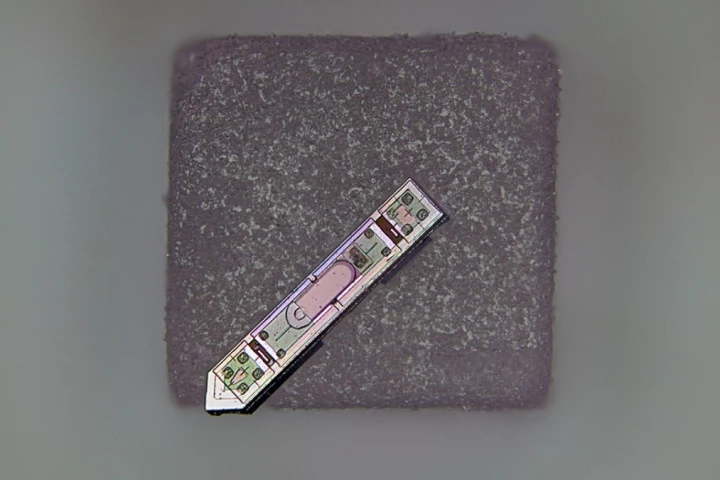 Smaller than a grain of salt and possibly the tiniest neurotech implant ever invented, the MOTE sends neuro-telemetry data via infra-red lasers, and could help neuroscientists unlock cures for neurological diseases.
 -
 Just when you think you've seen it all, researchers claim to have developed a way for people to see a color the human eye has previously never seen before. They're calling this new hue 'Olo.'
 -
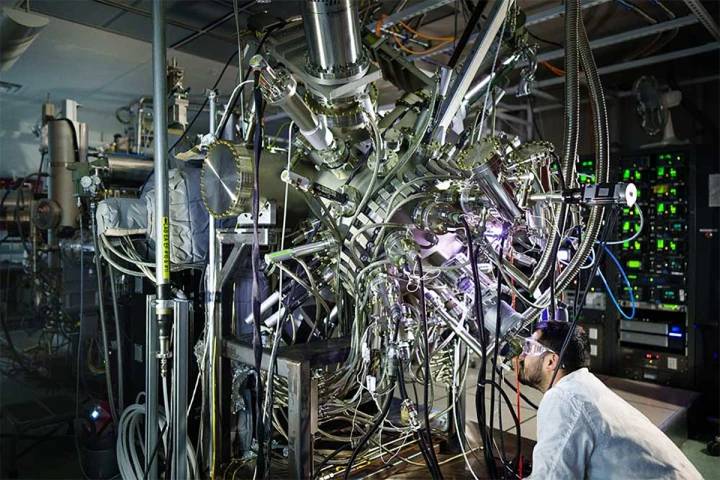 Under specific conditions, lasers can cool things down – and that might just be what we need to tackle way-too-toasty data centers. A new technology called laser-based photonic cooling can target tiny hotspots on chips to zap heat away.
 -
 The question of whether life once existed on Mars may be answered by a new laser instrument from the University of Bern. The device can be carried by a rover to zap samples of the Red Planet to see if they contain traces of microfossils.
 -
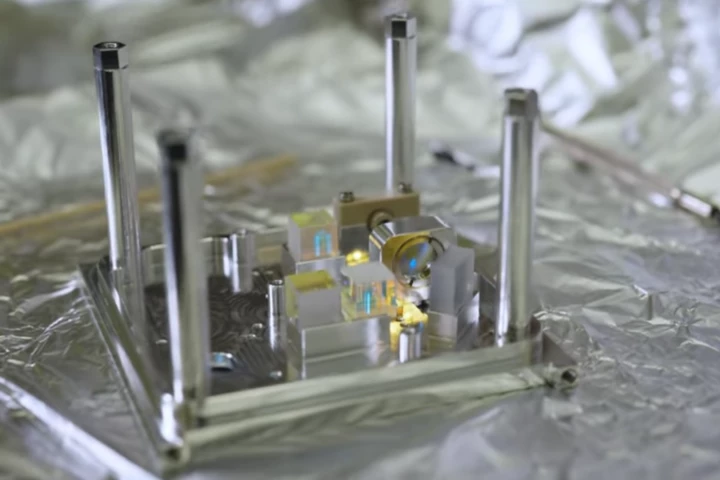 Dark matter is thought to outnumber regular matter by a factor of five to one – so why can’t we find the stuff? A new study proposes looking for it from space, using a satellite containing a levitating piece of graphite and a laser.
 -
 A frothy breakthrough at Lawrence Livermore National Laboratory (LLNL), using lasers with a silver metal foam that's as light as air, has created the brightest yet X-ray source ever, twice as brilliant as that of anything previous.
 -
 A new experiment has demonstrated something that sounds physically impossible – light itself casting a shadow. If you manipulate a laser just right, then hit it side-on with another light source, it’s possible to create this bizarre optical effect.
 -
 A laser-led device that shoots light into the brain to test blood flow and volume can offer instant feedback on a patient's stroke risk and and provide a portable, affordable and non-invasive way for clinicians to make life-saving interventions.
 -
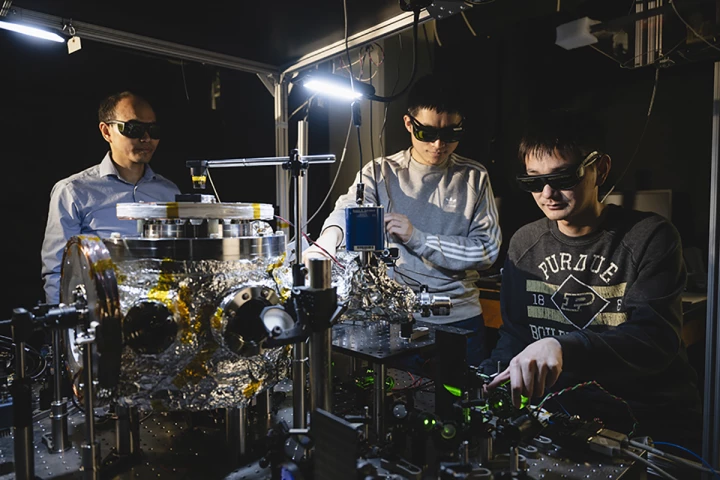 Physicists have levitated nanoscale diamonds, hit them with lasers to make them flash and spun them at an incredible 1.2 billion rpm. The experiments aren’t just about creating the “world’s smallest disco” but could help the study of quantum physics.
 -
 NASA’s Psyche spacecraft, farther away than the Sun, has sent data through a laser over a record-breaking distance, and done so even faster than expected. The breakthrough could help establish high-speed communications with human colonies on Mars.
 -
 We all know that water evaporates when the temperature climbs, but researchers have just shown that there's another factor at play. The breakthrough could solve long-standing atmospheric mysteries and lead to future technological advances.
 -
 In a move to make high-speed communications with deep space missions a practical reality, NASA is testing a giant hybrid dish antenna that is capable of handling both radio and laser signals across hundreds of millions of miles of space.
Load More