
Lancaster University
-
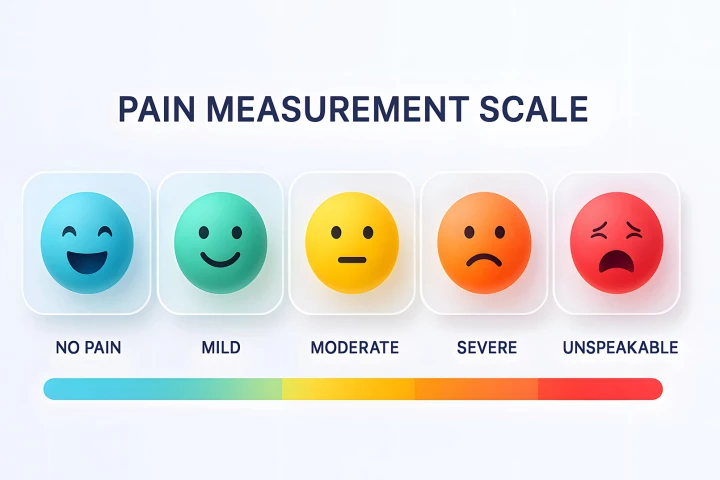 Pain is hard to measure. One person’s “ouch” is another’s agony. Now, scientists say they’ve found a better way to assess pain: putting a price on it. By translating pain into dollars, they’ve created a more accurate, comparable way to measure suffering.
 -
 In a bid to revolutionize Alzheimer’s detection, scientists have examined the brain’s neurovascular unit. The research revealed not only how this system is altered by the disease, but also found distinctive breathing patterns in affected individuals.
 -
 Researchers have discovered that limiting a certain enzyme can have a dramatic impact in protecting against the effects of Alzheimer's disease. The finding could lead to a new class of drugs that fight the disease.
 -
 It has long been known that plants can help mitigate air pollution in urban environments. New research reinforces such findings, showing that "tredges" planted around schoolyards can help protect children from traffic-derived airborne particles.
 -
 Time crystals are strange phases of matter that appear to break time-translation symmetry. Now scientists have observed two time crystals interacting for the first time, which could be a step towards practical applications like quantum computing.
 -
 The Martian landscape is dotted with evidence of ancient fluid flows. But were they caused by lava or mud? Experiments in chambers simulating Mars conditions have now shown that mud volcanoes could be responsible for some formations.
 -
 Engineers are turning to bats to learn more about how to protect the thousands of miles of pipelines that cross the Earth by working on how to use nuclear radiation to mimic the sonic hunting system used by bats to locate their prey.
 -
 One of the challenges of dealing with depression, anxiety, or bi-polar disorder is the fact that your emotions can take control of you, without your even realizing that it's happening. An experimental new wristband could help, as it alerts wearers to changes in their emotional state.
 -
 The results of a new study suggest that listening to music can significantly impair your ability to perform creative tasks. Whilst music was found to disrupt creative processes, ambient "library noise" was found to have no significant effect.
 -
 It’s not a huge newsflash that green tea has some pretty impressive health benefits, but a new study has identified a specific compound found in the tea that could be recruited into dissolving plaques that accumulate in blood vessels and lead to heart attacks and cardiovascular disease.
 -
 One of the most confounding aspects of Alzheimer's Disease is our inability to diagnose the condition with certainty until after death. Now, researchers are claiming a breakthrough in identifying the disease, even in its early stages, using a sensor embedded with a diamond.
 -
 A new study sheds light on a potential link between toxic nanoparticles in air pollution and neurodegenerative diseases such as Alzheimer's.
Load More