
Kepler Mission
-
 Move over TRAPPIST-1 – there’s an exciting new planetary system in town. Meet Kepler-385, home to seven Super-Earths that were just discovered in existing data.
 -
 While two thirds of exoplanets may be a fiery, boiling wasteland, scientists believe the other third occupy a "just right" goldilocks orbit around their star, and this, much like Earth's orbit, could provide the right environmental support for life.
 -
 The hunt for planets beyond our solar system has now reached a major milestone. A new batch of 65 exoplanets brings the total number of confirmed planets beyond our solar system to over 5,000 – with potentially hundreds of billions left to find.
 -
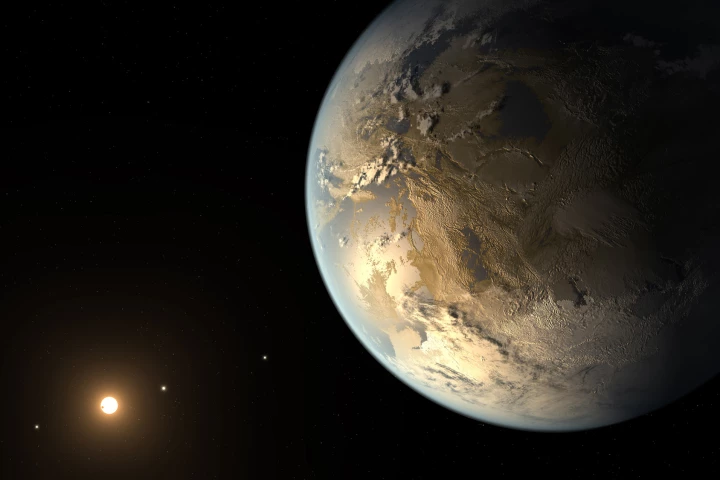 Based on data from the Kepler Space Telescope and the Gaia mission, there may be up to 300 million habitable planets in our galaxy. The research refines a key factor in the Drake equation that estimates how many extraterrestrial civilizations may exist.
 -
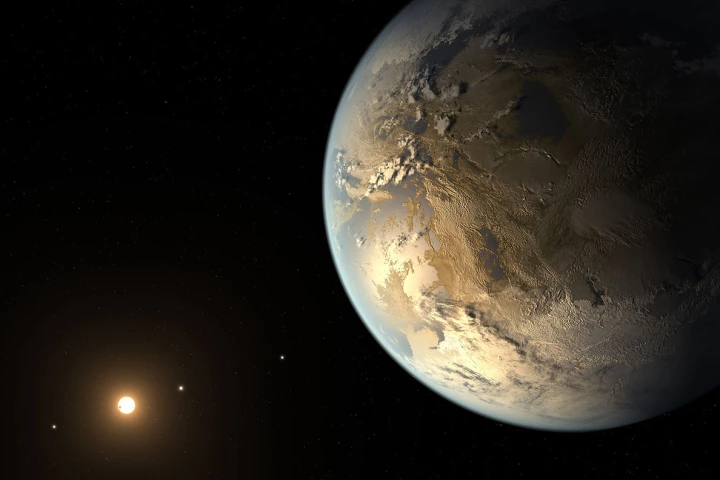 A team of scientists has identified two dozen exoplanets that could be more favorable to life than the Earth. These super-habitable worlds may have conditions more suitable to sustaining life for a longer period of time than our planet.
 -
 For the first time, astronomers have used a machine learning algorithm – a form of self-teaching AI – to confirm the existence of 50 new exoplanets in data collected by the now retired Kepler space telescope.
 -
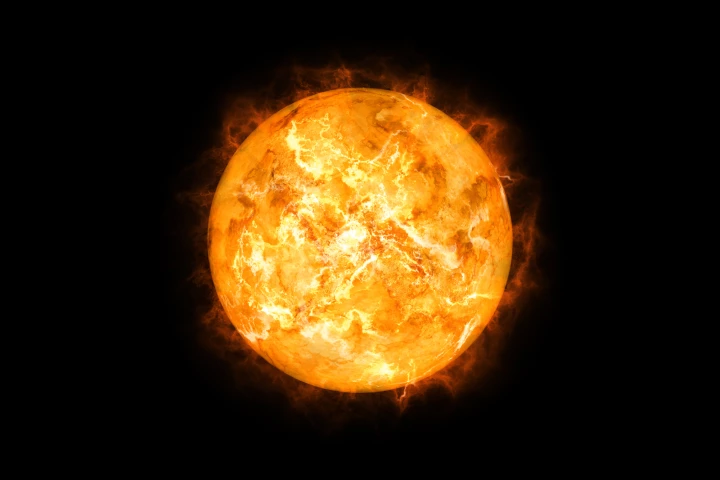 To get a sense of how “normal” the Sun may be, astronomers have compared the Sun to hundreds of similar stars. It turns out that it’s actually far less active than its peers – but is this a permanent personality, or is it just going through a phase?
 -
 A review of early data returned by NASA's Kepler mission has revealed one of the most Earth-like exoplanet discovered so far. The new planet is slightly larger than ours, is estimated to have a similar temperature, and orbits in the habitable zone.
 -
 Just how common are potentially habitable Earth-like planets? Researchers on a new study claim to have come up with the most accurate estimate yet – and they’re more common than you might think.
 -
 Astronomers have discovered a weird star system that appears to be dimming completely at random, and none of the usual explanations seem to fit.
 -
 Another 18 exoplanets have been added to the haul, but the difference this time is that all of them are roughly Earth-sized – much smaller than the Neptune-sized average found so far. The discovery was made in old data, using a new and more sensitive algorithm.
 -
 After nine years, NASA's exoplanet-hunting Kepler mission came to a final end Thursday as the space agency sent the radio commands ordering the onboard computer to shut down the unmanned space telescope's systems.
Load More