
Karlsruhe Institute of Technology
-
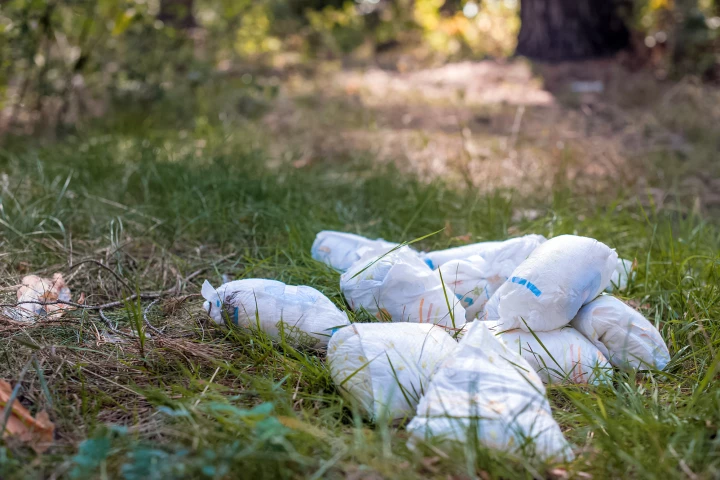 Disposable diapers are a huge source of global waste, largely because they're difficult to recycle. A new process, however, could salvage the "superabsorber" polymer utilized in the liners of those diapers – and yes, even if they're soiled.
 -
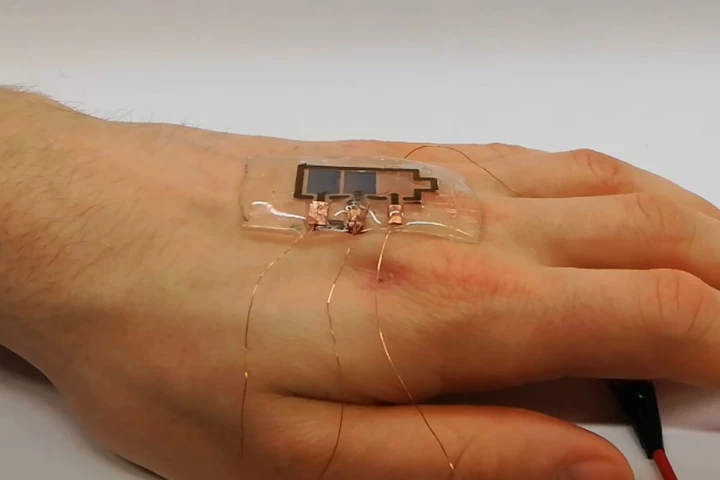 E-waste is a growing problem, so if an electronic component can't be reused or recycled, it should at least be biodegradable. That's where an experimental new electronic display comes in, as it can be composted when no longer needed.
 -
 One argued silver lining of rising atmospheric carbon dioxide levels is that plants will be better off. But a new study has found that the more extreme heat and drought brought on by climate change would cancel out most of the benefits for trees.
 -
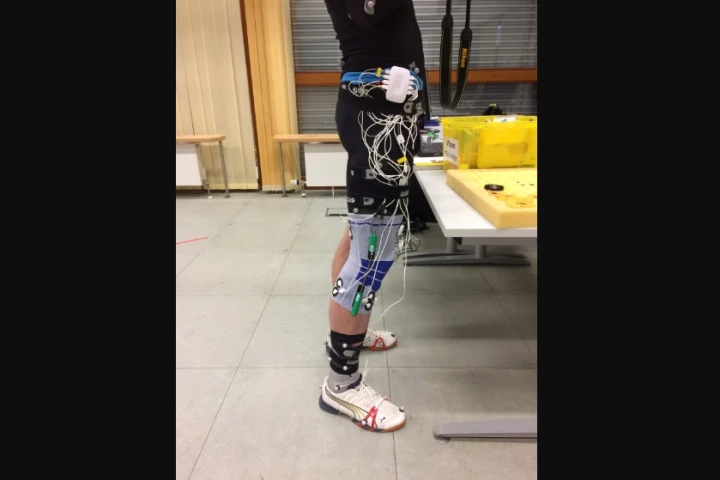 The most common form of arthritis, arthrosis is caused by wear and tear on joint cartilage. And while some exercise helps, too much just makes things worse. That's where a new "smart" knee bandage will come in, by providing real-time strain readings.
 -
 Electronic waste is a growing problem, and if we're ever going to get on top of it, then we need to be able to recycle electronic devices as thoroughly as possible. Thanks to a new temperature-sensitive adhesive, doing so could soon be easier than ever.
 -
 It's important for us to be able to detect odors such as those emitted by spoiled food. However, what if there were a low-cost "electronic nose" that was better at detecting those things, providing us with an earlier warning? That's what's being developed at the Karlsruhe Institute of Technology.
 -
 Could renewable sources meet 100 percent of our energy demand? Yes, according to new research which scrutinises the arguments against. “There are no roadblocks on the way to a 100-percent renewable future,” the research finds.
 -
 If you're using the sun to power a mobile device, it only makes sense to put the solar cells on something you're wearing that will be receiving a lot of sunlight. With that in mind, researchers have created a pair of sunglasses that generate electricity via solar cells that double as their lenses.
 -
 When an oil spill occurs on water, one way of cleaning up that spill involves the use of materials which soak up the oil. Those won't be very effective, however, if they absorb both oil and water. That's why scientists have turned to nature, resulting in a fern-inspired material known as Nanofur.
 -
 Researchers from Karlsruhe Institute of Technology (KIT) and Franz Binder GmbH & Co have developed a new manufacturing process to print EL panels directly onto the surface of almost any convex and concave shape. Even, apparently, onto spheres.
 -
 A new invisibility cloak developed at the Karlsruhe Institute of Technology (KIT) is reportedly able to hide cylindrical objects up to one inch in diameter, while relying only on common materials like polymers and acrylic paint.
 -
 Researchers from the Karlsruhe Institute of Technology have studied the wings of glasswing butterflies in an effort to determine what causes their low-reflective nature. It's believed that the findings of the study could lead to less reflective screens on mobile phones, tablets and other devices.
Load More