
Iowa State University
-
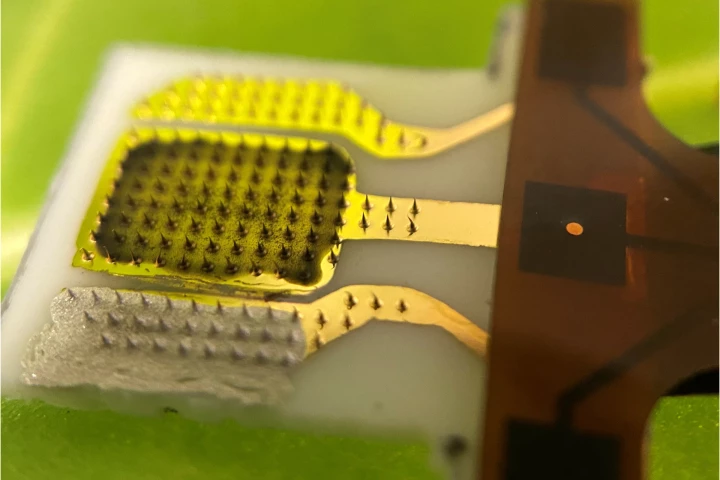 The sooner a farmer knows that their crops are suffering, the faster they can take action to prevent major crop failure. A new plant-leaf-poking sensor could soon help them do so, by sending an alert as soon as the plant gets stressed.
 -
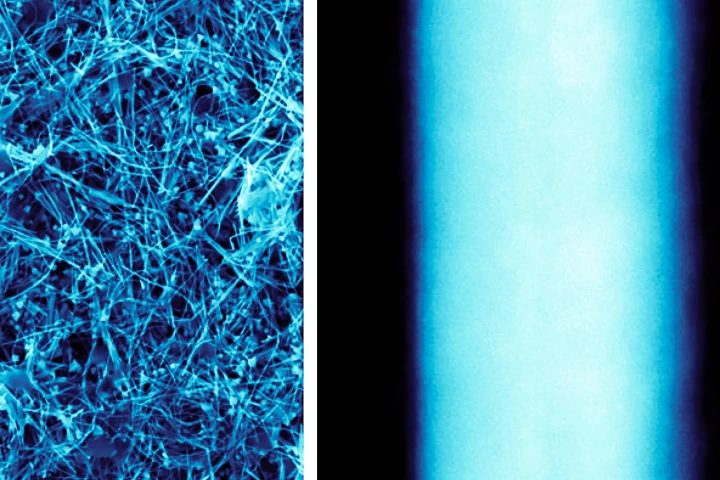 Copper is known for its ability to kill microbes on contact, which is why it's often professionally coated onto commonly touched items. A copper nanowire spray may allow everyday folks to give existing surfaces the same treatment, using a spray can.
 -
 New research has found a long bout of moderate exercise following COVID-19 or influenza vaccination can amplify the body’s immune response. The study showed 90 minutes of exercise immediately after vaccination increased antibody responses weeks later.
 -
 We are seeing some exciting research advances that could help reveal Parkinson's in its ealy stages. Scientists have now produced another by demonstrating how a skin biopsy can be used to identify the disease with a high degree of accuracy.
 -
 Graphene, the electrically-conductive "wonder material" made up of a one-atom-thick sheet of linked carbon atoms, already has many uses. It now has another, however, as the active ingredient in a sensor that detects food spoilage.
 -
 Finding a person's fingerprints at a crime scene isn't always enough to convict them, as they can claim that those prints were left before the crime took place. That may be about to change, as scientists have devised a method of dating fingerprints.
 -
 The placenta may be one of the least understood organs, but it’s important to study its effects on the health of a developing fetus. Researchers at Iowa State University have used microfluidic models of the organ, a placenta-on-a-chip, to see if, and how much, caffeine can cross from mother to baby.
 -
 Toxic algae blooms can be nasty, killing fish, other wildlife and sometimes even people. One of the main causes of such blooms is excessive amounts of fertilizer running off of fields and into waterways. A new type of buried sensor, however, could help address that situation.
 -
 If you're trying to produce crops that require less water, then you need to know how much water those plants are using. Scientists have taken a new approach to finding out, by producing graphene-based moisture sensors – they take the form of strips of tape that are applied to the leaves.
 -
 Engineers at Iowa State University think concrete columns could be the key to building taller, higher-powered wind turbines.
 -
 Spider silk has been shown to conduct heat better than any other organic material, which could lead to its use in applications such as flexible electronics.
 -
 Researchers have developed a process of producing a thin and uniform light-absorbing layer on textured substrates that improves the efficiency of polymer solar cells by 20 percent.
Load More