
Ions
-
 If, like me, you can't go a day without making sure your watch is synced to the second, you'll be delighted to learn that a new atomic clock has broken the record with an accuracy of 5.5 x 10⁻¹⁹ – gaining or losing one second in 57.6 billion years.
 -
 NASA scientists have discovered a third global energy field around Earth. Known as the ambipolar electric field, this force drives charged particles into space above the poles and joins the known gravity and electromagnetic fields.
 -
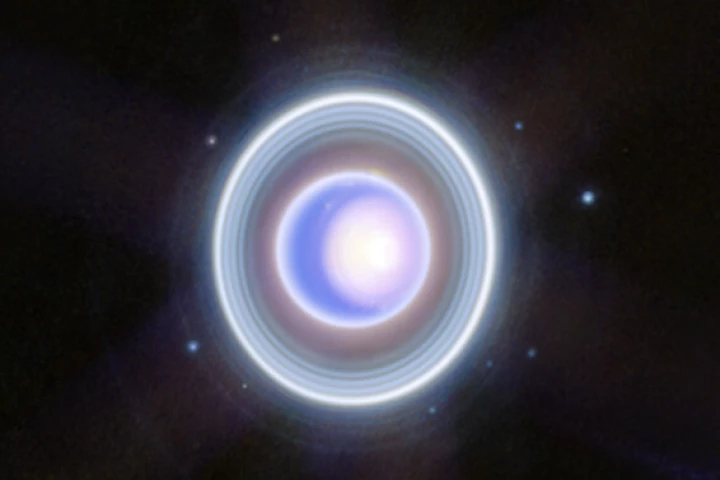 Scientists have discovered the potential existence of a bizarre new molecule related to water. Dubbed “aquodiium,” this ion could form under extreme conditions and may explain some of the weirdness of our solar system’s ice giant planets.
 -
 The Moon may look like a big dry ball, but there’s more water up there than you might expect. In a new study, scientists have shown that at least some of it could have been showered onto the lunar surface from the Earth’s atmosphere.
 -
 Transmitting data from medical implants in the body can be tricky, but a new technique can essentially write data to ions in human tissue, where it can then be read from a receiver outside the body at high transmission speeds.
 -
 Artificial devices usually don’t communicate well with nature. Now, researchers have created artificial organic neurons and synapses that can integrate with natural biological systems, and demonstrated this by making a Venus flytrap close on demand.
 -
 Water can take on far more forms than many people give it credit for, and now scientists have recreated a particularly bizarre one in the lab – a “hot black ice” that may exist deep inside planets like Uranus and Neptune.
 -
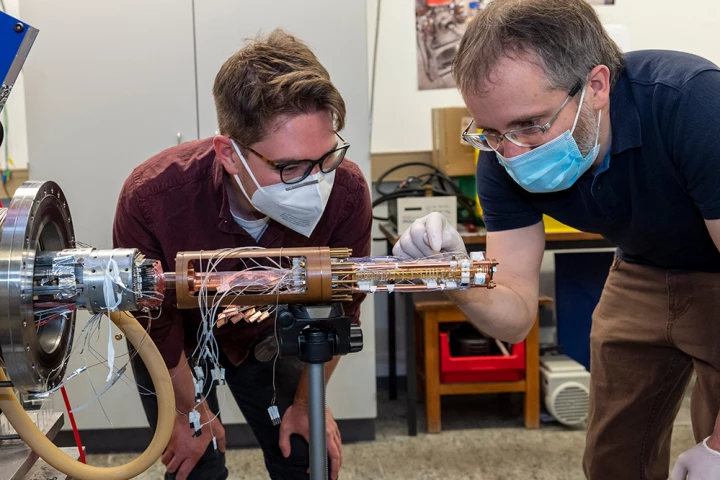 Antimatter is hard to study, not least because it annihilates any container you try to put it in. Now CERN physicists have developed a new antimatter trap that can cool samples in seconds, which could help unlock a fundamental mystery of the universe.
 -
 When you think of processes that could benefit from a high-tech makeover, the drying of fruit may not be the first that comes to mind. It turns out, however, that the use of "ionic wind" for fruit-dehydration saves energy and preserves nutrients.
 -
 A team of engineers from Caltech have created a stable ring of plasma in open air, using just a high-pressure jet of water and a crystal plate. The technique could, in the long run, unlock the potential for plasma to be used for storing energy.
 -
 Eighty-five percent of all matter is dark matter, a theoretical substance that doesn’t interact with ordinary matter and has so far eluded our best efforts to directly detect it. Now physicists have proposed a new way to find dark matter using a huge tub of helium in a superfluid state.
 -
 On the road to getting humans to Mars, engineers from NASA and the University of Michigan have successfully tested the X3, a thruster designed to get us to Mars. And it’s broken several records in the process.
Load More