
Insulation
-
 Although various uses for post-harvest rice husk waste are being explored, the stuff is still usually incinerated, dumped in landfills, or composted. Soon, however, rice husks may be combined with discarded newspapers to form eco-friendly insulation.
 -
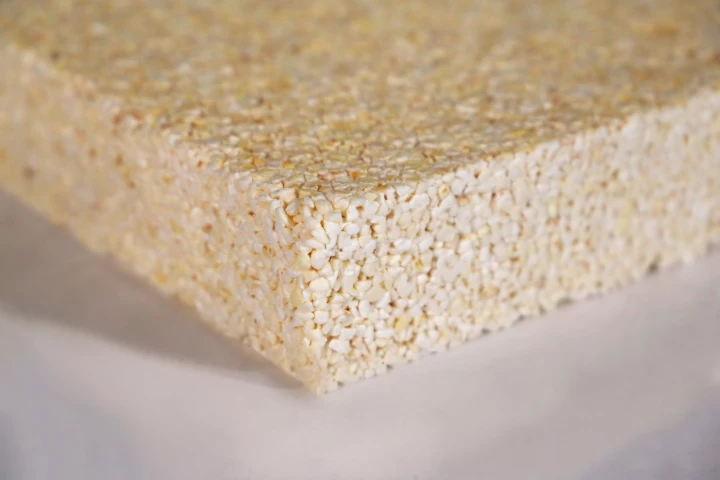 Expanded polystyrene (EPS) foam is a problematic material, in that it's cheap and lightweight but also non-biodegradable and difficult to recycle. German scientists have developed a possible alternative, though – foam made out of popcorn.
 -
 Many "cold chain" items such as food or medicine are shipped in single-use expanded polystyrene foam (EPS) packaging, which is difficult to recycle and non-biodegradable. Such is not the case with a new material, however, made from discarded paper.
 -
 Styrofoam isn't eco-friendly stuff. It's made from petroleum, it can't be efficiently recycled, it's non-biodegradable, and it creates pollution when burned. A new plant-based foam reportedly has none of those drawbacks, however, plus it's claimed to actually insulate better than regular Styrofoam.
 -
 A couple of years ago, researchers from MIT created a beaver fur-inspired material that could be used to produce warmer wetsuits. Now, a different group of MIT scientists have devised a process that lets existing wetsuits retain body heat three times longer than normal.
 -
 Researchers in Spain have managed to turn waste material from orange trees into high-performance acoustic insulation. The new material is more environmentally friendly to produce and an improvement in terms of acoustic insulation compared to conventional laminated gypsum boards.
 -
 Insulating your home may help the environment by lowering your energy usage, but unfortunately the petroleum-based foam that's typically used as insulation isn't all that eco-friendly itself. Researchers in Germany, however, have developed a greener alternative – it's foam made from wood.
 -
 In what could lead to new ultrathin insulation, researchers at the University of Namur in Belgium and the University of Hassan I in Morocco found that radiation plays a larger role than conduction in the insulation of polar animals such as penguins and polar bears than previously believed.
 -
 Scientists at the University of Hertfordshire have developed what they say is the world’s first portable, real-time airborne asbestos detector.
 -
 Washed up dead seaweed known as Neptune balls is being converted into building insulation.
 -
 New polymer aerogels from NASA Glenn Research Center are flexible and 500 times stronger than traditional aerogels.
 -
 Cotton is being used for many purposes, including reducing pollution, insulating homes, cleaning up oil spills, and feeding the hungry.