
Inkjet
-
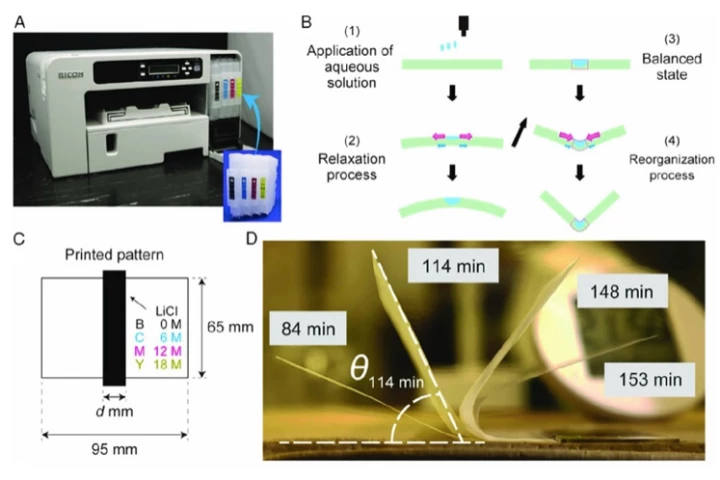 When plants perform movements such as curling their leaves, they do so by drawing water into the cellulose fibers in that part of their "body." Scientists have now replicated that technique to produce self-folding paper structures.
 -
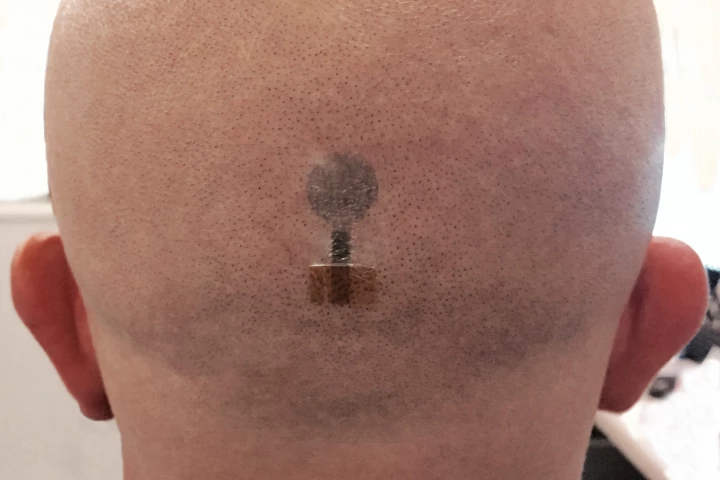 Engineers have optimized a novel technology that uses temporary tattoo electrodes to record EEG brain activity. The technology is cheap, can be produced using an inkjet printer, and delivers EEG measurements as accurately as traditional electrodes.
 -
 Researchers at the University of Utah have devised a method to create invisible images embedded within normal-looking images using cheap inkjet printers. The data hidden in these images can then only be revealed using sub-millimeter electromagnetic radiation
 -
 Scientists have created a picture that only fleas could truly appreciate. That's because the inkjet-printed image takes up an area no larger than the cross-section of a human hair.
 -
 Security holograms can currently take days to create, using expensive equipment. That could be about to change, however, as scientists have developed a hologram production method that utilizes a regular inkjet printer.
 -
 Researchers at Clemson University have discovered that inkjet bioprinting disrupts the membranes of the cells being printed, leaving them open to having proteins inserted.
 -
 OSU engineers have developed a process to create "CIGS" solar cells with inkjet printing technology that reduces raw material waste by 90 percent and significantly lowers the cost of producing solar cells with promising, yet expensive compounds.