
Information
-
 A new poll commissioned by the American Psychological Association has shed light on a disturbing trend among residents in the US. An increased sense of division is leading to a cascade of other negative effects.
 -
 A new study from Caltech calculates that our brains process information at the extremely slow speed of just 10 bits per second. This leisurely pace may have long evolutionary roots, despite our sensory systems gathering data 100 million times faster.
 -
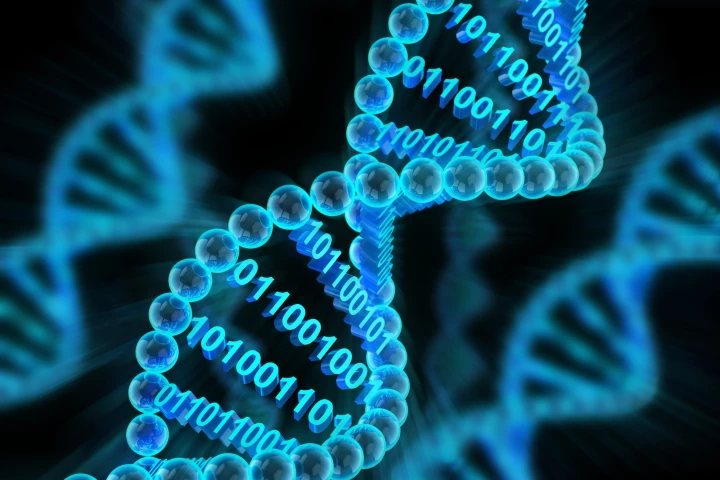 DNA is a promising data storage medium, but it’s difficult to retrieve and manipulate data written to it. Now a team has developed “chemical neurons” that can conduct calculations on data stored in DNA and read back the answers easily.
 -
 An intriguing new study suggests that the recent acceleration in fringe extremism and misinformation is due to the mass proliferation of information we all have at our fingertips playing up on our limits for effectively processing information.
 -
 In a world labeled as “post-truth”, where facts and scientific evidence have become subjective, some researchers are investigating how false beliefs are not only formed, but seemingly strengthened, when presented with contradictory evidence.
 -
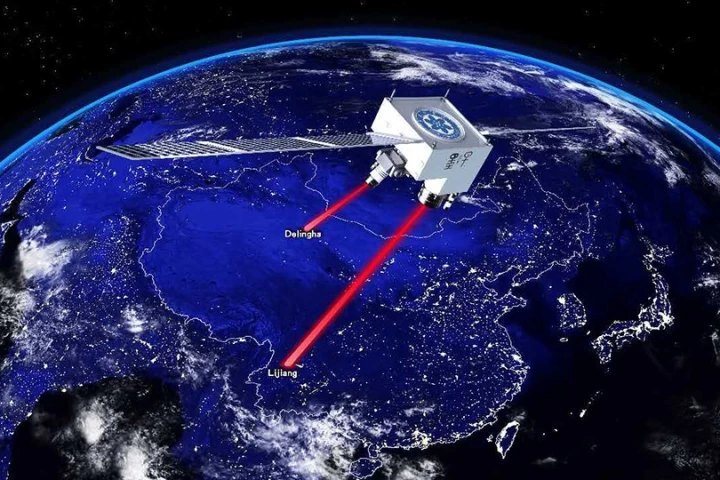 Chinese scientists have smashed the quantum entanglement distance record. Transmitting information through entangled photons had previously only been possible to 100 km (62 mi), but using the Micius satellite launched in August, information has effectively been teleported 1,200 km (746 mi).
 -
 Researchers in Uruguay and in Louisiana have succeeded in forming a loop quantum gravity model of a quantum black hole. The result is that predictions of physics-ending singularities vanish, and are replaced by bridges to another universe.
 -
 A sapphire disk etched in platinum could preserve information for future generations to decipher 10 million years from now.
 -
 A new study has estimated how much information there is in the world in terms of how much information humankind is able to store, communicate and compute.