
Impact
-
 Scientists have discovered the world’s oldest known meteorite impact crater in Western Australia. It has been dated to about 3.5 billion years ago, at a time when these almost literally Earth-shattering events should have been occurring regularly.
 -
 Saturn’s rings are iconic, but new evidence presented by researchers from Monash University suggests Earth might once have sported one of its own. This ring would likely have caused climate chaos on the surface.
 -
 While all team sports can be rough, hockey poses a particularly high risk of brain injuries. A new high-tech helmet is designed to warn of such injuries, by detecting and reporting on knocks to its wearer's head.
 -
 Astronomers have discovered three new near-Earth asteroids, including the closest known to the Sun. Another is one of the largest known asteroids considered potentially hazardous to Earth, measuring almost a mile wide with an orbit close to our own.
 -
 As the dinosaurs could attest, it’s worth keeping an eye on space rocks buzzing around Earth. Many observatories are doing just that, and astronomers have announced that we’ve just ticked over the milestone of 30,000 near-Earth asteroids discovered.
 -
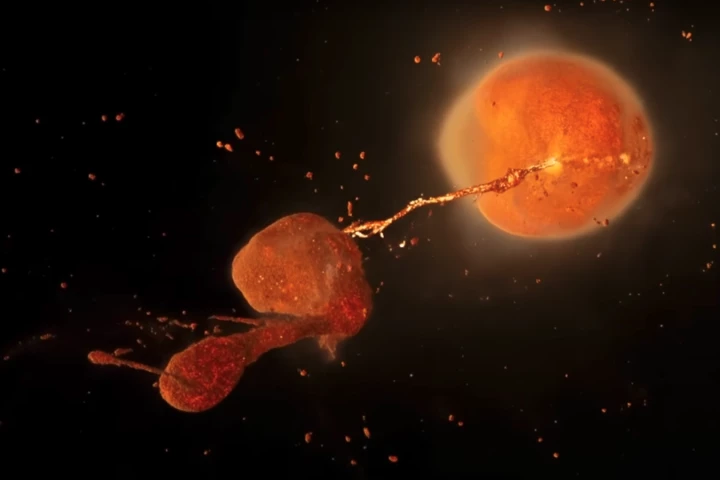 It’s believed that the Moon formed billions of years ago, from debris from a cosmic collision with Earth. New high-resolution simulations not only illustrate the idea in stunning detail, but reveal that the Moon’s birth might have taken mere hours.
 -
 Scientists have discovered a new crater in the seabed of the North Atlantic Ocean that seems to date to the end of the Cretaceous period. That suggests the extinction event that killed off the dinosaurs could have been triggered by multiple impacts.
 -
 Astronomers had a tense January, as a newly discovered space rock became the riskiest asteroid in a decade – then hid behind the Moon for a week. Thankfully, further observations have found that it poses no risk to Earth when it swings by next year.
 -
 About 66 million years ago, a gigantic object crashed into the Earth, triggering a mass extinction that took out the dinosaurs. Now, scientists say they’ve traced the culprit back to its point of origin, identifying it as a “dark primitive asteroid.”
 -
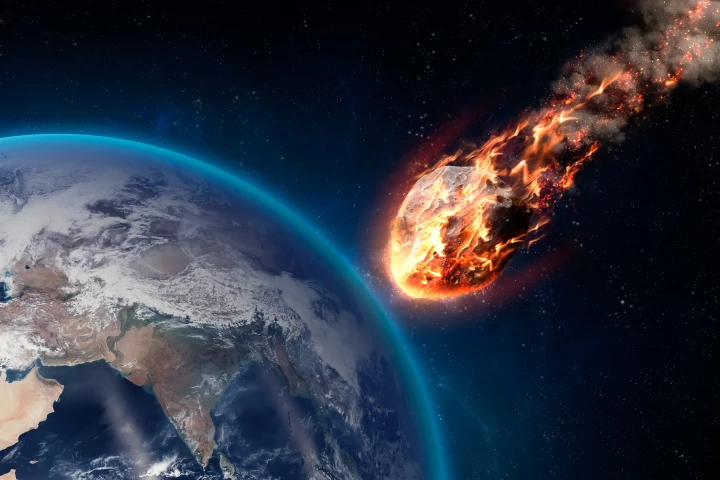 Around 66 million years ago, a gigantic asteroid smashed into the Earth and ended the reign of the dinosaurs. Now, researchers have discovered direct evidence of this cataclysm – fossilized “megaripples” from the tsunamis that immediately followed.
 -
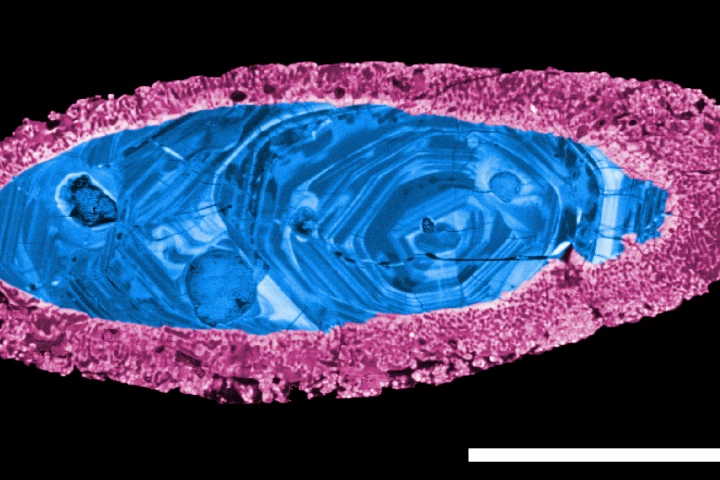 Scientists have identified the oldest impact site ever to scar our planet’s surface. The body that formed the Yarrabubba crater in the Australian outback struck Earth 2.229 billion years ago, and may have helped end a global ice age.
 -
 A drilling expedition to the Chicxulub crater turned up new details of the immediate aftermath of the asteroid impact that killed the dinosaurs.
Load More