
Imaging
-
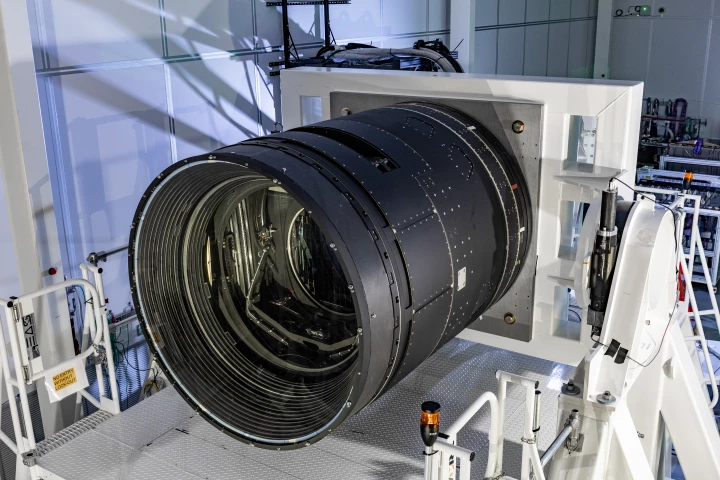 After decades of planning and building, the world's largest digital camera at the heart of the Vera C. Rubin Observatory on the summit of Cerro Pachón in Chile has snapped its first imagery – from test observations spanning a 10-hour window.
 -
 We all know the equation – hydrogen plus oxygen equals water. But now scientists have captured molecular-scale video of that famous meeting in action, which could lead to a new way to generate large amounts of drinking water.
 -
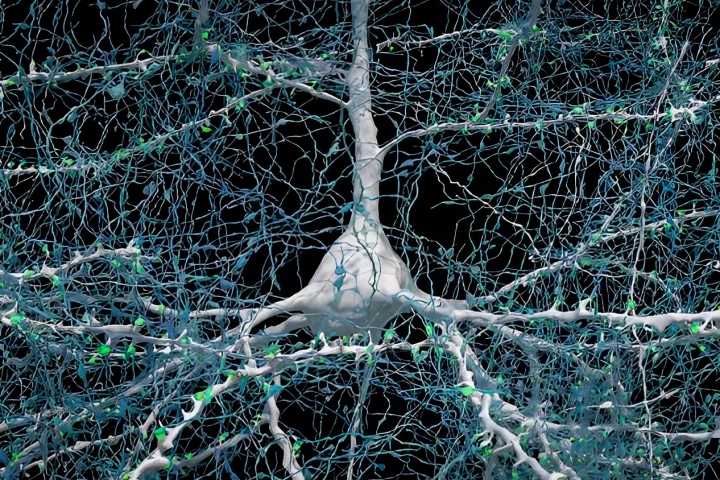 Harvard and Google Research have mapped thousands of cells and millions of synapses in a poppy seed-sized sample of tissue. The result is a set of truly stunning images and marks a major step towards understanding of the biggest challenges in science.
 -
 The world’s most powerful MRI machine has scanned its first living human brains. The resulting images give an ultra high resolution glimpse into the brain, to help us better understand the nature of consciousness and treat neurodegenerative diseases.
 -
 On the largest scales possible, the universe resembles a web of light spun by an inconceivably large spider. Now, astronomers have detected very faint light from these cosmic web filaments in the deep, dark, distant universe.
 -
 Generally speaking, if you want to grab sharp images of fast movements such as molecular interactions, you're going to need a super-expensive rig. Researchers have developed a system built using projector tech that could significantly cut the cost.
 -
 This stunning image may look like a particularly lively Jackson Pollock painting, but it’s actually an example of a new cell imaging technique. The subject? A human retina.
 -
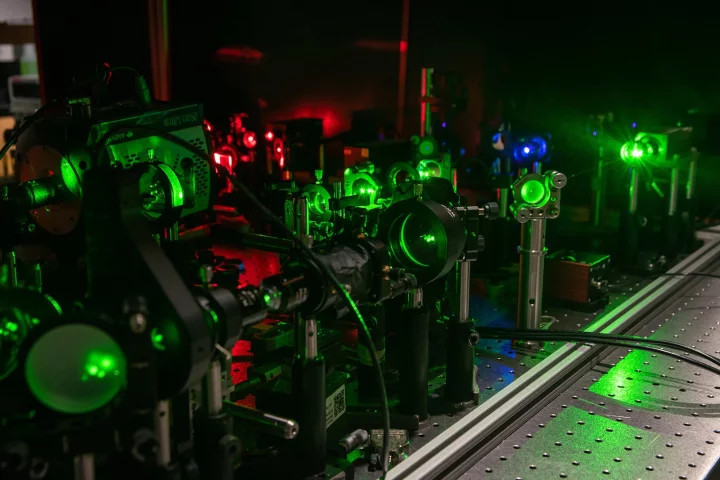 Caltech scientists have created a quantum microscope that taps into the quirky quantum rules to see tiny details much more clearly. Using pairs of entangled photons allows the instrument to double the resolution of images without damaging the sample.
 -
 Nearly 40 years in the making, scientists have supersized magnetic resonance imaging to produce never-before-seen detail of a brain. They believe this mouse model will pave the way for similar human imaging for a crucial view into how our brains age.
 -
 In 2019 we got the first-ever direct image of a black hole, which resembled a fuzzy, orange donut. Now the team has refined the iconic image with the help of machine learning to produce the highest resolution image possible with the original data.
 -
 Scientists at Duke University have developed an incredibly powerful new camera that combines dozens of lenses to capture images and video at resolutions of thousands of megapixels, in three dimensions.
 -
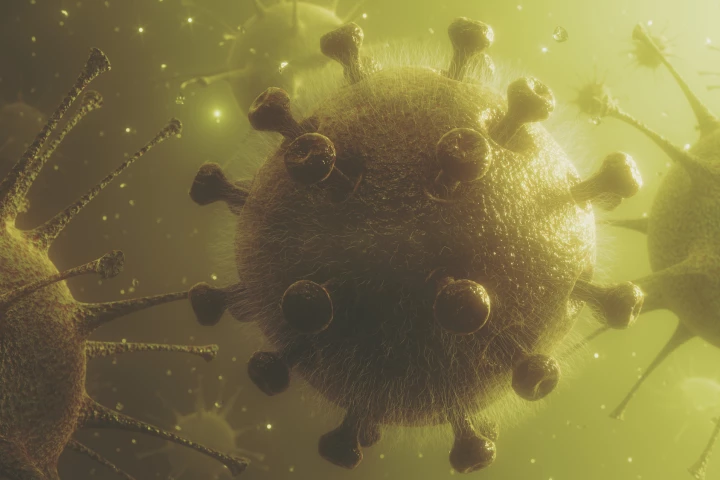 Scientists at Duke University have created a real-time video that captures the frantic movements of a single virus as it tries to infect a cell. The video shows a part of the process that’s normally hard to see.
Load More