
Hydrogen
-
 We all know the equation – hydrogen plus oxygen equals water. But now scientists have captured molecular-scale video of that famous meeting in action, which could lead to a new way to generate large amounts of drinking water.
 -
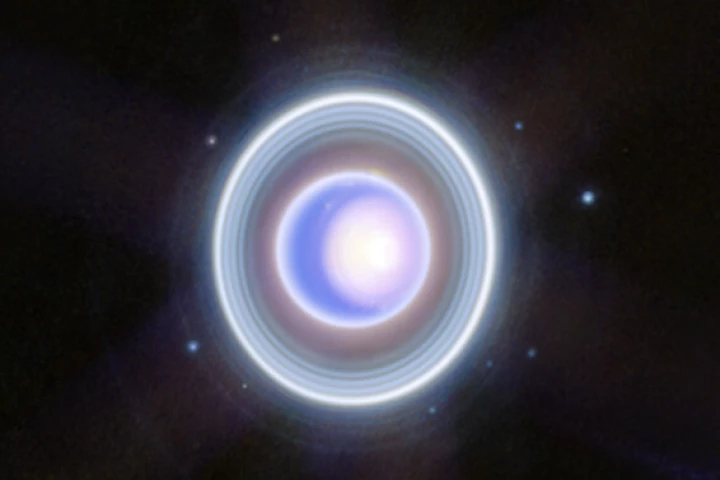 Scientists have discovered the potential existence of a bizarre new molecule related to water. Dubbed “aquodiium,” this ion could form under extreme conditions and may explain some of the weirdness of our solar system’s ice giant planets.
 -
 The James Webb Space Telescope has captured direct images of galaxies being born at the cosmic dawn. This is the first time this has ever been witnessed by astronomers, confirming models for galaxy formation.
 -
 Saturn’s moon Enceladus continues to climb the list of best places to look for life beyond Earth. New NASA data has detected a molecule thought to be key to the origin of life, and suggests there’s more chemical energy for life to chow down on.
 -
 Researchers have created a floating, solar-powered device that converts contaminated water or seawater into clean hydrogen fuel and drinking water. Because it works with any open water source, it could be used in resource-limited or remote places.
 -
 On the largest scales possible, the universe resembles a web of light spun by an inconceivably large spider. Now, astronomers have detected very faint light from these cosmic web filaments in the deep, dark, distant universe.
 -
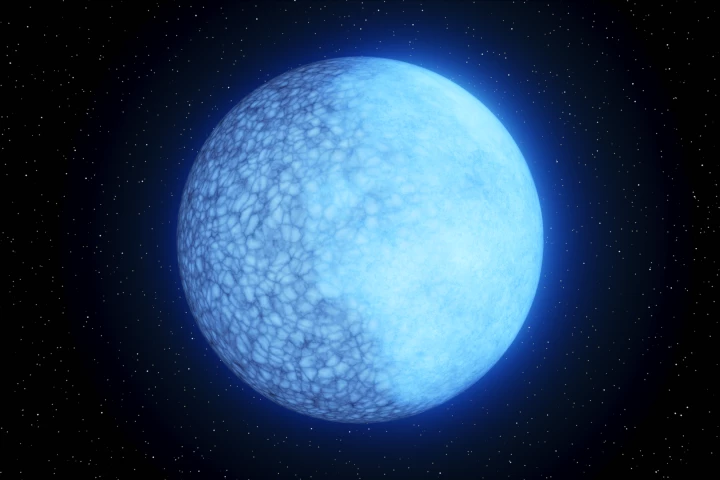 The ingredients in stars are usually pretty evenly mixed throughout, but now astronomers have discovered a bizarre star with two distinct faces, each made of a different element, which defies explanation.
 -
 PFAS are insidious pollutants thanks to their ubiquity, long life and a growing list of linked health concerns. But now researchers at UC Riverside have developed a new method to break them down more effectively, using hydrogen and UV light.
 -
 NASA engineers have developed a tiny but powerful laser that could one day help astronauts find water on the Moon. Smaller than a US quarter, the laser makes use of quantum mechanical effects to produce a THz beam that can highlight hidden water.
 -
 The Moon may look like a big dry ball, but there’s more water up there than you might expect. In a new study, scientists have shown that at least some of it could have been showered onto the lunar surface from the Earth’s atmosphere.
 -
 Hydrogen will be one of humanity's key weapons in the war against carbon dioxide emissions, but it must be treated with care. New reports show how fugitive hydrogen emissions can indirectly produce warming effects 11 times worse than those of CO2.
 -
 Scientists have recreated in the lab some of the wild weather that might be found on Jupiter and Saturn. Using extremely high pressures and laser shock waves, the researchers produced helium rain which has been hypothesized to fall on these planets.
Load More