
Hunting
-
 Millenia ago communities went to great lengths to hunt wild boars, and not just for survival. Archaeologists recently uncovered 19 wild boar skulls. The skulls bore butchery marks, hinting at a feast; however, the real mystery was their origin.
 -
 Well-preserved bones of a two-tonne glyptodont revealed cut marks indicative of stone tools, suggesting that human hunter-gatherers had settled in the Americas around 21,000 years ago – some 5,000 years before people were thought to have arrived.
 -
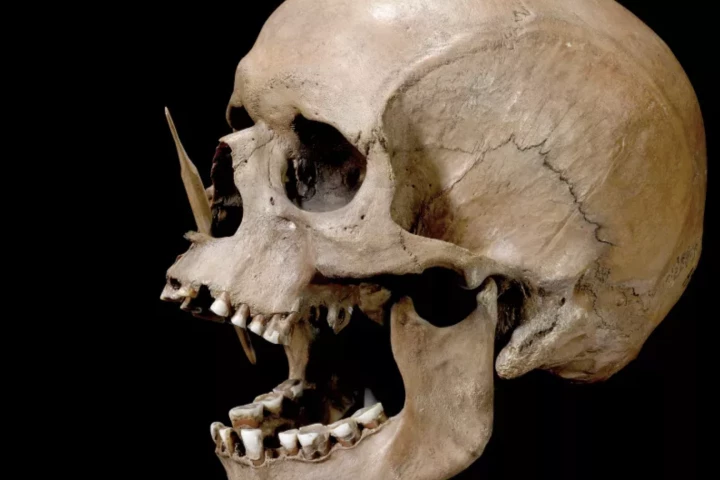 Upending existing theories, there was no peaceful transition of power from hunter-gathers to the first farmers. New DNA analysis reveals that instead it was a deadly takeover – one that completely wiped out the hunter-gathers within a few generations.
 -
 Scientists have long puzzled over why some dinosaurs had feathers and wings long before they evolved the ability of flight. Experiments with a robot dinosaur may now have revealed the answer – they used them for hunting.
 -
 In a study that blows apart the long-held stereotype of women historically playing the role of caregivers and homemakers in societies, researchers have discovered that across they board they've long been born hunters, equal to their male counterparts.
 -
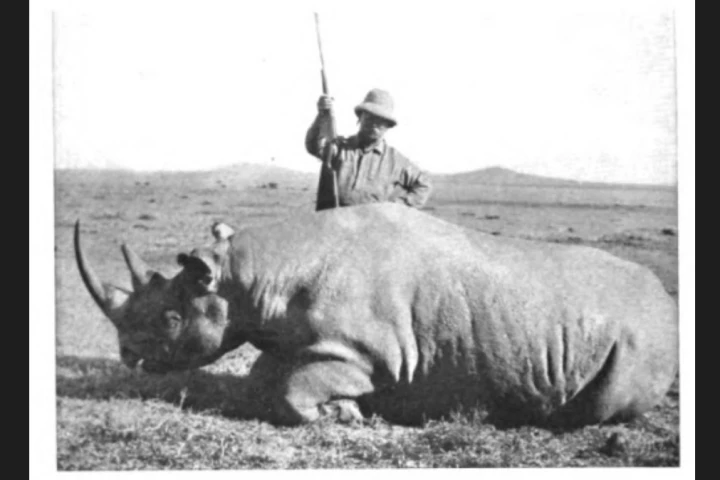 If certain animals posses a trait that decreases their chance of survival, then that the trait is less likely to be passed along to offspring. Such appears to be the case with rhinos hunted for their large horns, according to a recent analysis of photographs.
 -
 A new study has found that nearly half of all bald and golden eagles in the USA suffer from chronic and/or acute lead poisoning, which the research team believes is the result of these birds scavenging the remains of animals shot with lead bullets.
 -
 It has generally been thought that electric eels are purely solitary animals, which stalk prey on their own. Now, however, scientists have described seeing the creatures hunting in packs – which only nine other fish species are known to do.
 -
 The skeletal remains of some 14 woolly mammoths have been discovered in Mexico. More than 800 mammoth bones were distributed in two round pits – apparently traps used to house the mammoths. The remains were found north of Mexico City.
 -
 A study by an international group of zoologists has, for the first time, documented praying mantises killing and eating small birds, and revealed this is happening all over the world.