
Howard Hughes Medical Institute
-
 An antibiotic primarily used in veterinary medicine was found to turn the gut into a factory that pumps out life-extending compounds. The finding could change the way we think about the development of longevity drugs.
 -
 In a fascinating discovery, scientists have pinpointed just what happens in our brains when we're expecting pain relief but are unknowingly given a placebo. It reveals just how powerful the mind is in moderating physiological responses such as pain.
 -
 A groundbreaking project has seen hundreds of scientists across the world uncover many mysteries of the evolution of mammals, work that may help us understand why humans are unique and what genetic changes may be key to some of our unique diseases.
 -
 Forget invisible ink – future spies could be sending secret messages encoded directly into the DNA of living cells. Researchers have demonstrated a DNA Typewriter by encoding full sentences into DNA, which may also function as a cellular “black box.”
 -
 New research in hundreds of mice on different diet regimes suggests that a careful balance of restricting calorie intake and limiting eating to the most active hours of the day could significantly extend lifespan.
 -
 Olfactory signals can switch fat storage mechanisms on and off without having any effect on appetite or eating habits, says a Baylor research team that's traced the way olfactory nerves regulate fat metabolism in C. elegans worms.
 -
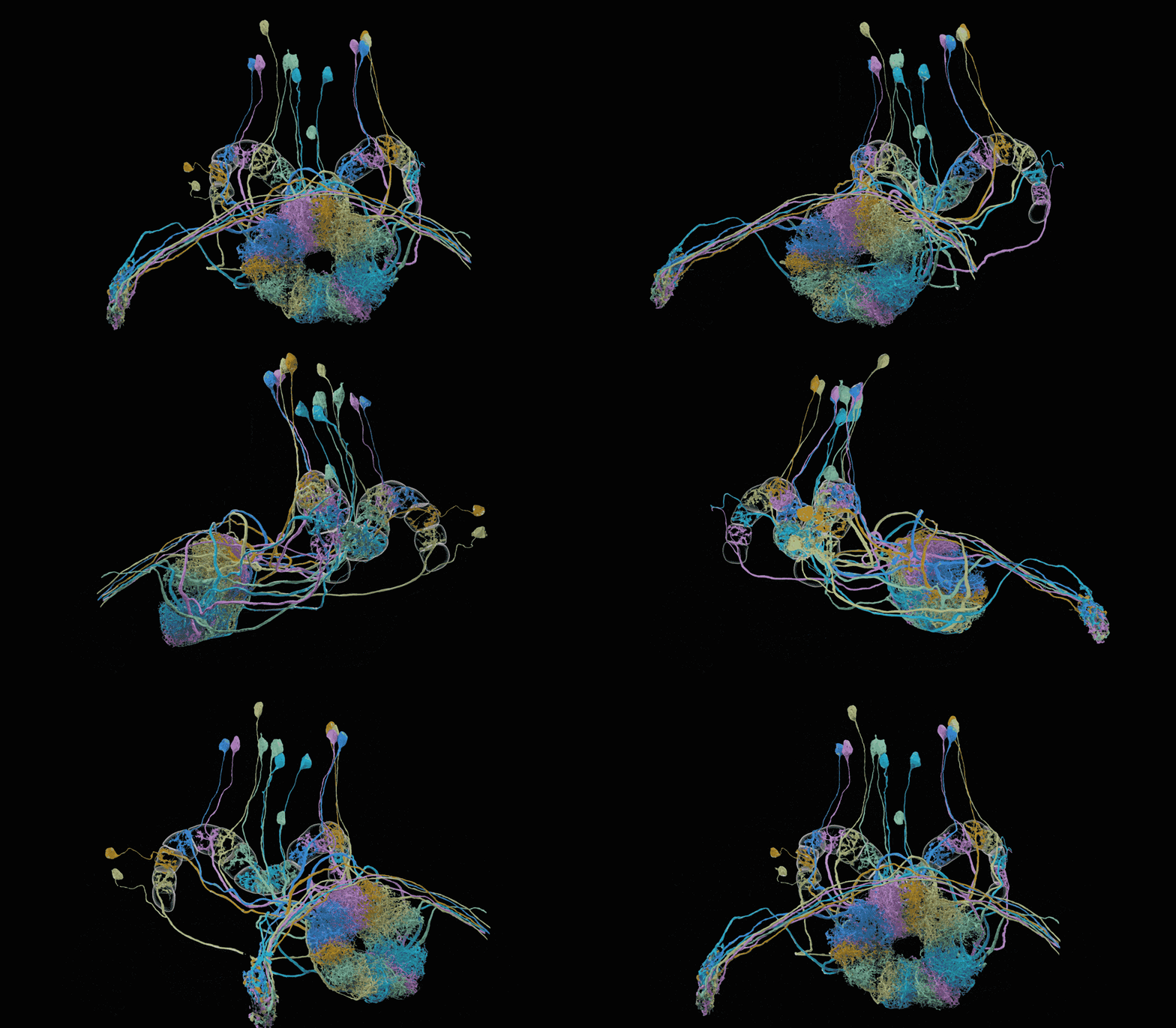 The developing field of connectomics – the attempt to produce a neuron-and-synapse-level wiring diagram of the brain – has taken a major leap forward, as a Janelia team with the help of Google has released a full map of the hemibrain of a fruit fly.
 -
 A completely new category of microscopy has been invented by researchers in the US. Dubbed DNA microscopy, the technique tags RNA molecules with a range of DNA "barcodes" which in turn flag the identity and location of the molecules, even when they're stacked on top of each other.
 -
 Using techniques borrowed from astronomy, biologists have developed a new microscopy technique that delivers extraordinary 3D video of cells moving around inside living tissue. It's a fascinating window into just how busy and complex life is at the cellular level.
 -
 Electron microscopes are useful for creating a topographical map of cell structures, but grayscale images are produced. Researchers have developed a new method for producing electron micrographs with several colors, highlighting different components and details that normally wouldn’t be visible.
 -
 A new test developed by the Howard Hughes Medical Institute (HHMI) can test for both past and current infections by analyzing a single drop of patient blood. The researchers consider the method superior to existing techniques, which only search for a single virus at a time.
 -
 Researchers at the Howard Hughes Medical Institute (HHMI) have genetically engineered mosquitoes to alter their sense of smell, which could provide the understanding required to block the pesky pests attraction to humans.