
Hand
-
 The extraordinary evolution of humans is often attributed to two defining traits: large brains and highly dexterous hands. A new study suggests the evolution of these two traits are interconnected across the entire primate lineage, from lemurs to humans.
 -
 While a number of groups are developing thought-controlled prosthetic hands, most of the devices require fiddly electrodes to be implanted in the amputee's body. Such is not the case with a new system, however, which works with implanted magnets.
 -
 Hand edema, which is a swelling of the fingers due to the accumulation of fluid, is typically treated via a hand massage performed by a therapist. A new finger-massaging glove, however, may offer a less costly and more accessible alternative.
 -
 When someone has been left paralyzed by a stroke or brain injury, much of their recovery involves physically guiding the affected limb though the lost motion, so their brain can relearn it. A new exoskeleton does exactly that for the hand.
 -
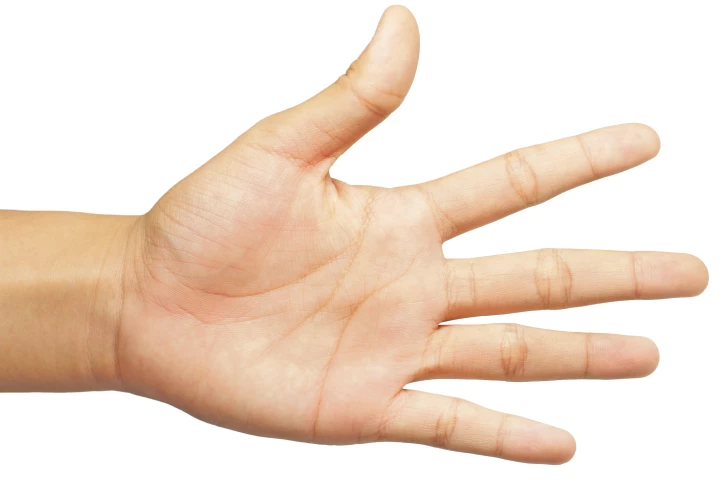 For people with coronary heart disease, regular monitoring of bloodstream cholesterol levels is essential – and it typically requires the drawing of blood samples. A new system, however, is claimed to provide the same data simply by imaging the skin of the hand.
 -
 A few years ago a designer named Dani Clode introduced the world to the Third Thumb, a robotic finger controlled using pressure sensors under one’s feet. Now neuroscientists are using the device to investigate how our brain's adapt to extra limbs.
 -
 If someone is lacking a hand, a prosthetic appendage can help them perform basic daily tasks. However, what if they've still got both hands, but one of them is paralyzed? Well, that's where NeoMano is designed to come in.
 -
 A new imaging study has discovered that lizard-like muscles temporarily develop in embryos across the early weeks of gestation before disappearing.
 -
 A new robotic glove for hand rehabilitation swaps conventional rigid electromechanical components for soft fabric with embedded actuators that are meant to conform to natural hand movements. EsoGlove is lightweight and intuitive enough for patients to use in their own homes.
 -
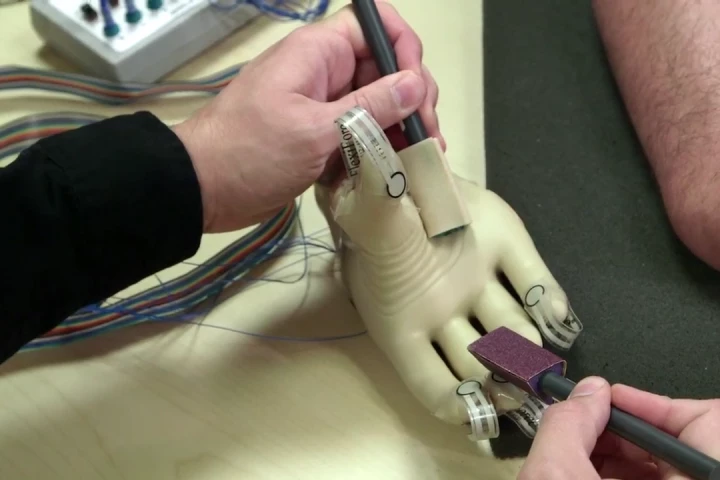 A new prosthetic system allows amputees to feel familiar sensations and also, somewhat unexpectedly, reduces their phantom pain. Test patients were able to discern materials of different textures while blindfolded and to hold soft or brittle objects without crushing them.
 -
 MIT's "supernumerary robotic fingers" extend from either side of the user's dominant hand, and are attached to a device that's worn around the wrist. The idea behind them is that (among other things) they could allow users to perform tasks that usually require two hands, using only one.
 -
 A common ailment among stroke patients and the aging, treating a degenerative sense of touch has proven a complex task. A stimulation glove designed to improve tactile perception through small electrical pulses could provide a wearable solution that's unimposing enough for everyday use.
Load More