
GPS
-
 If you're going to Mars you'd best take along a jar of anti-aging cream because while you're there you're going to age faster than on Earth thanks to the Theory of Relativity. It's only 477 millionths of a second per day, but that tends to add up.
 -
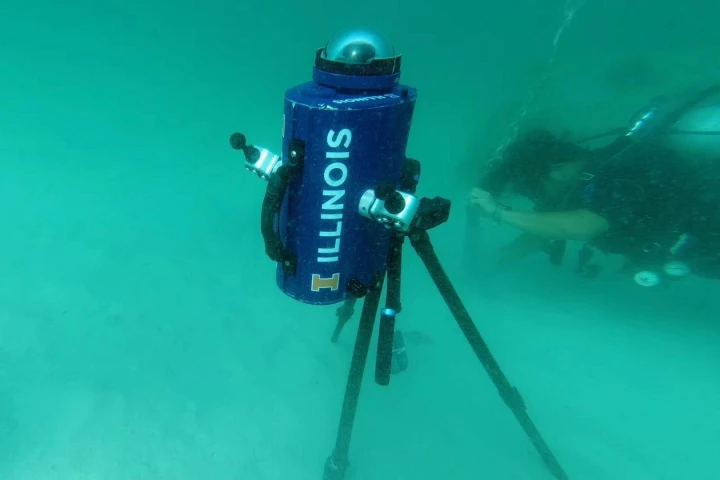 While GPS can be used to determine one's geographical coordinates on land, such is not the case underwater. Scientists have developed an alternative, however, in the form of a system that analyzes the manner in which sunlight is polarized by water.
 -
 GPS-enabled tracking collars allow scientists to learn a lot about wild animals, but the devices do have one major drawback – limited battery life. A new tracker gets around that limitation, as it's continuously powered by the animal's movements.
 -
 Water level sensors serve an important purpose in rivers, warning of floods and unsafe recreational conditions. A new one is claimed to be not only more robust and reliable than others, but also considerably less expensive.
 -
 ESA plans to use its upcoming Lunar Pathfinder mission to experiment with expanding sat nav coverage to the Moon. By tuning in to the Galileo and GPS satellite constellations, the goal is to provide more precise fixes for spacecraft in lunar orbit.
 -
 MIT scientists have developed an acoustic system that acts like an underwater GPS, yet doesn't need batteries to operate. The system is instead powered by modulated audio signals reflected from the environment to provide net-zero energy positioning info.
 -
 When NASA's first manned Artemis mission lifts off, the astronauts aboard will be equipped with second-gen GPS emergency beacons that provide a faster and more accurate locator fix for rescue services. The technology will be available to the public in a few years.
 -
 A team of researchers led by the University of Helsinki has used new miniaturized GPS tags to keep tabs on desert bats as they fly about in Kenya.
 -
 After months of speculation, the British government has committed itself to developing an alternative satellite system if negotiations over the EU's Galileo system fail and has announced that it has begun A £92 million study to begin design and development of a sovereign British navigation system.
 -
 GPS might seem like a godsend, but apart from occasionally leading drivers astray, researchers at University College London (UCL) suggest that simply following instructions given by your navigational app could have another negative effect: allowing parts of your brain to go dormant.
 -
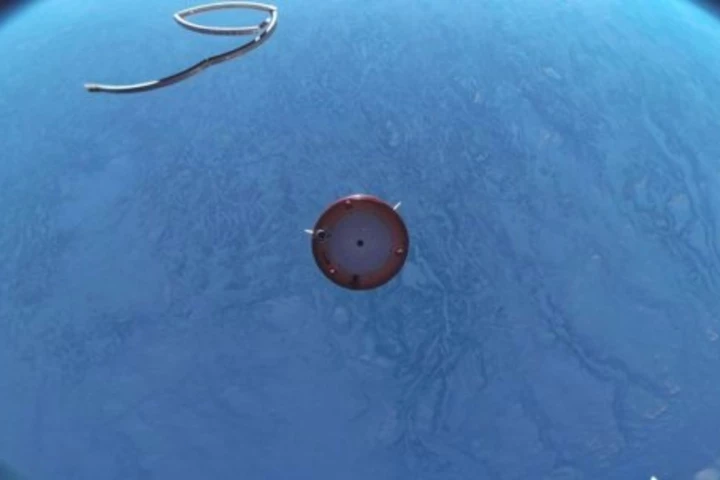 An optical clock built by a team led by Matthias Lezius of Menlo Systems not only has the potential to one day produce centimeter-level GPS location fixing, but is capable of operating in a zero-gravity environment.
 -
 GPS is great unless you lose the signal, so the University of California, Riverside is developing an alternative navigation system that uses secondary radio signals, such as from cell phone systems and Wi-Fi, and is claimed to be highly reliable, consistent, and tamper-proof.
Load More