
Glasses
-
 People with photosensitive epilepsy could soon be able to watch TV without worry. Scientists in the UK have created glasses that can block out specific wavelengths of light known to cause seizures.
 -
 Presbyopia is a common form of age-induced far-sightedness. Now a Stanford team has developed a pair of high-tech specs called autofocals, which use fluid-filled lenses, depth-sensing cameras and eye-tracking technology to make sure whatever a wearer is looking at stays sharp.
 -
 It can be a hassle, taking your glasses on and off to switch between near and distant vision. That's why scientists from the University of Utah have developed glasses that change focus automatically, depending on what you're looking at.
 -
 Researchers have developed electronic glasses that can be used in place of eye patches or eye drops for treatment of lazy eye, aka amblyopia. Initial trials suggest they are as effective as these traditional methods of treatment.
 -
 A new fully-adjustable synthetic eye lens from the University of Leeds, and made from liquid crystal, is designed to surgically replace long-sighted lenses in the human eye.
 -
 Adlens Adjustables are inexpensive glasses that can be focused by the user to (more or less) match their prescription. We recently gave them a try, and can tell you that they work ... but you probably won't want to use them as your primary glasses.
 -
 Instead of looking through a different area of the lenses (and tilting your head forward and back) to switch from near to far objects as is the case with bifocals, the magnification of the AdlensFocuss glasses is adjusted by a small dial on the arm.
 -
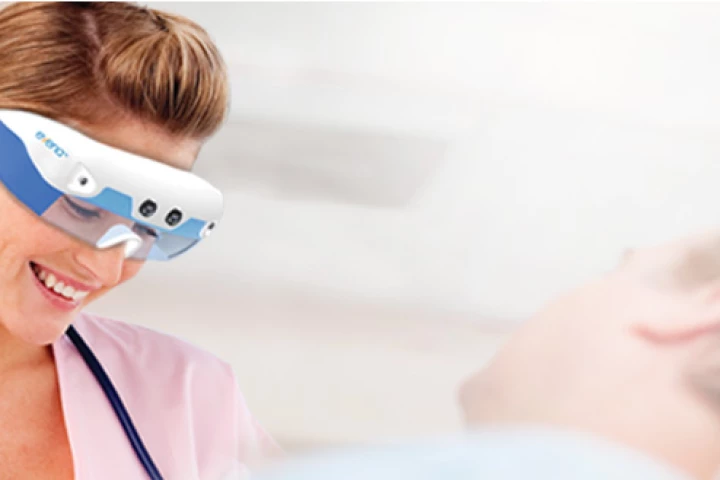 Despite what the movies might have us believe, getting a needle into a vein isn't always a straightforward procedure. It can sometimes take multiple attempts, much to the discomfort of the patient. Now, however, Eyes-On Glasses reportedly let nurses see patients' veins right through their skin.
 -
 The O2Amps glasses from 2Al labs that were developed to help read people's emotions can also assist people with color blindness.
 -
 EnChroma's Cx sunglasses are claimed to allow people with red-green color blindness to see red and green as distinct colors.
 -
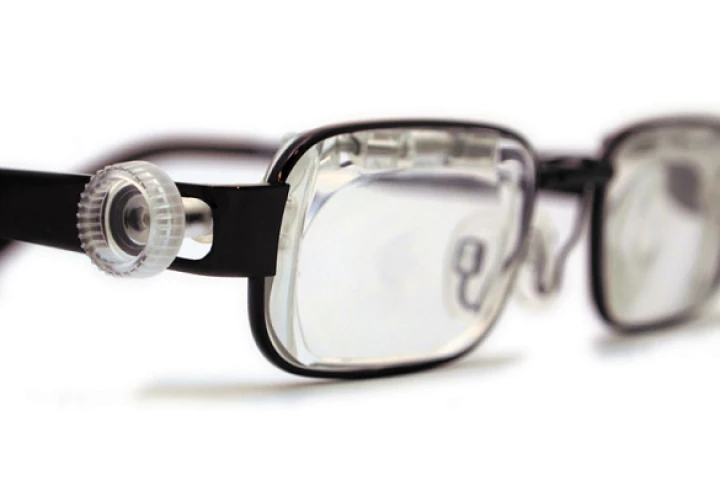 Eyejusters are self-adjustable glasses which enable the prescription of each eye to be changed by the simple turning of an adjustment tool.
 -
 Wink Glasses feature sensors that fog a user's lenses should they forget to blink