
Gas
-
 Nitrous oxide, known as laughing gas, has shown rapid antidepressant effects in people with depression, with symptoms easing within hours of inhaling it. The treatment involves breathing in a mix of nitrous oxide and oxygen for up to an hour.
 -
 An engineered protein that acts like a molecular sponge can hunt down CO molecules in the bloodstream and safely flush them out of the body in just minutes, without the risk of short- or long-term organ damage that comes with current oxygen treatment.
 -
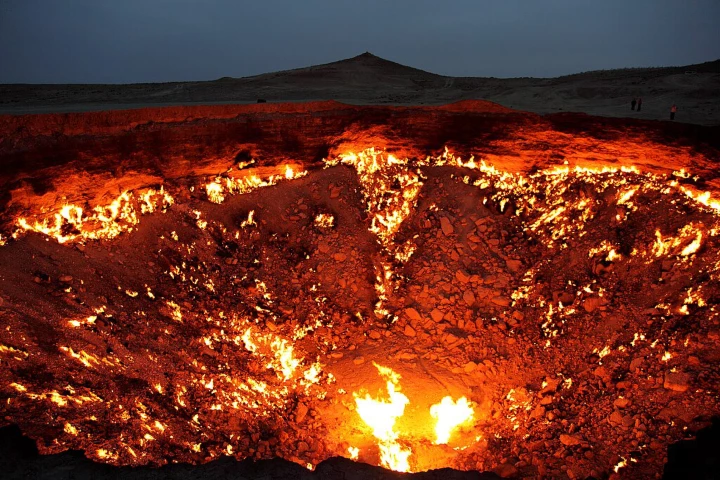 No Soviet records, no logs or official drilling reports – just a 100-foot (30-m) deep, 226-foot (69-m) wide pit of relentless fire that’s burned for 50-plus years in Turkmenistan’s Karakum Desert called the Door to Hell.
 -
 Did you know you emit gases through your skin? These vapors, which include CO2 and volatile organic compounds, can provide insights about your metabolic status, disease states, and overall health. A new wearable can help make sense of it all.
 -
 In one of the most amusing citizen science projects we've ever seen, Australia's top research agency is asking its citizens to hit the gas and flag their flatulence in hilarious detail over three days, tracking toots on the Chart Your Fart app. Superb.
 -
 Contrary to elementary school science class, it turns out that heat may not be necessary to make water evaporate. Scientists at MIT have made the surprising discovery that light alone can evaporate water, and is even more efficient at it than heat.
 -
 Bubbles aren’t known for their long lifespans, usually only giving a few seconds of childlike joy before they pop. A team of French scientists has developed a new way to make bubbles last longer, with the record holder surviving for well over a year.
 -
 Scientists have recreated in the lab some of the wild weather that might be found on Jupiter and Saturn. Using extremely high pressures and laser shock waves, the researchers produced helium rain which has been hypothesized to fall on these planets.
 -
 In September 2020, astronomers announced the discovery of phosphine in the atmosphere of Venus, a possible sign of life. But a new study has found that a different gas could explain the signature – one that's more common and doesn’t indicate life.
 -
 Astronomers at Ohio State University have taken the mean temperature of cosmic gas at different distances and ages, and found that it’s roughly 10 times hotter today than it was 10 billion years ago, thanks to the evolution of galaxies and clusters.
 -
While Mars may be the most likely place we might find life beyond Earth, it's not alone. High in the atmosphere of Venus, astronomers have made the startling discovery of a gas called phosphine – a strong contender for a sign of microbial life.
-
 Astronomers have mapped out a huge invisible region of the galaxy next door. Hubble has detailed the size and structure of Andromeda's gas halo – and found that it’s already bumping up against that of the Milky Way, in advance of a cosmic collision.
Load More