
Galaxy
-
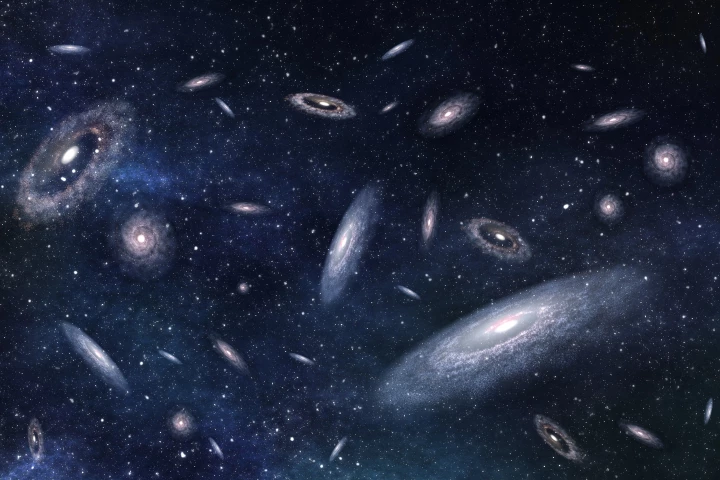 A new collaborative project dubbed the COSMOS-Web field has compiled the most comprehensive cosmic map ever, including images of the early universe as far back as 13.5 billion years.
 -
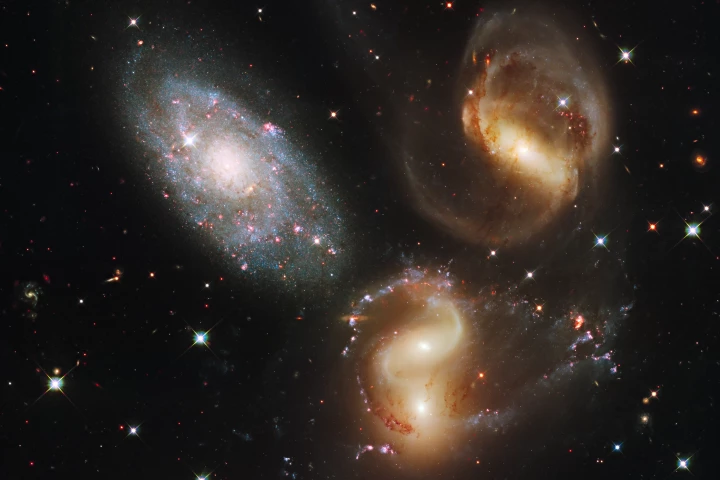 Astronomers have clocked a cosmic collision at 3.2 million km/h (2 million mph). A new instrument has spotted a galaxy crashing through a group of others at incredible speeds, creating a shock wave that’s changing the region completely.
 -
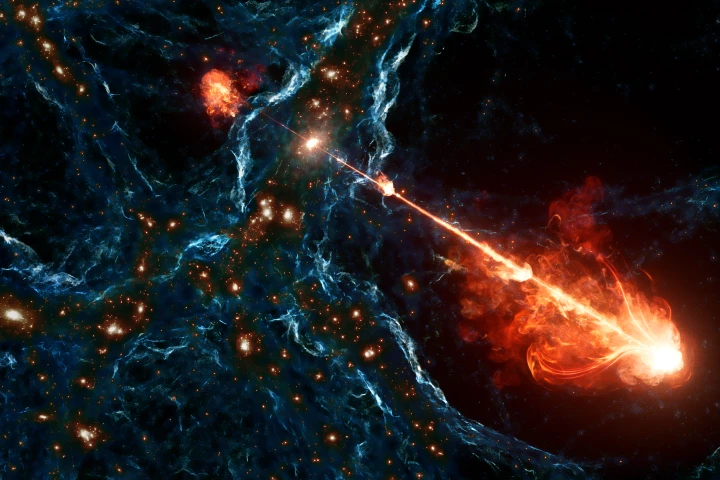 Astronomers have spotted an absolutely colossal cosmic chimney that stretches as far as 140 Milky Ways lined up side by side. These jumbo jets are being blasted from a supermassive black hole.
 -
 Earth’s seasons change as we orbit the Sun – but can the climate also be affected by the solar system’s changing position in the Milky Way? A new study suggests an ice age about two million years ago may have been triggered by an interstellar winter.
 -
 Despite a century of searching, dark matter remains a no-show. A new paper proposes an alternative hypothesis, showing how gravity could exist without mass and produce many of the same effects we ascribe to dark matter.
 -
 The James Webb Space Telescope has captured direct images of galaxies being born at the cosmic dawn. This is the first time this has ever been witnessed by astronomers, confirming models for galaxy formation.
 -
 Astronomers have produced the largest 3D map of the universe, including an interactive VR video. In the process, they’ve uncovered some tantalizing hints that our understanding of physics, including the ultimate fate of the cosmos, could be wrong.
 -
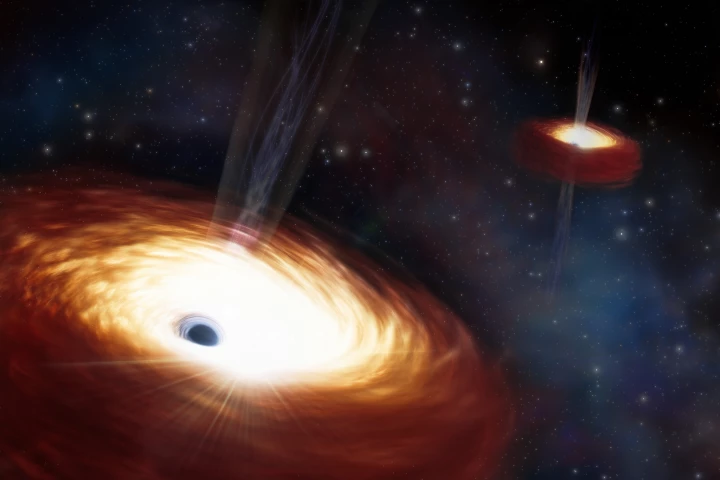 We’ve all regretted taking too long to make a move, but at least it wasn't 3 billion years. That’s how long the sexual tension has been building between two slow-dancing supermassive black holes, whose eventual congress could rock the entire universe.
 -
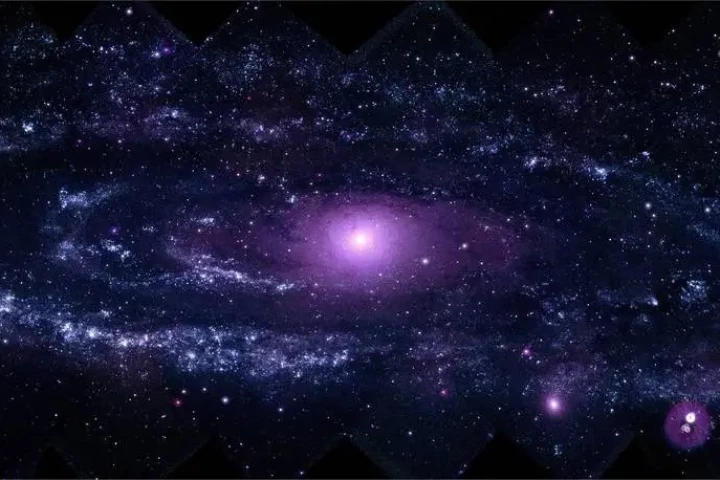 NASA has officially selected a new mission – the Ultraviolet Explorer, or UVEX. By scanning the skies in UV light, it will be able to study the hottest objects and fleeting events like supernovae, and create a detailed new map of the cosmos.
 -
 A supermassive monster lurks at the center of our galaxy, and astronomers have now discovered that it’s spinning so fast it’s warping the very fabric of spacetime into a football shape.
 -
 Astronomers have mapped out half the universe in X-ray light, using a space telescope called eROSITA. The new map, which contains almost a million X-ray sources, is the basis of dozens of new scientific papers, with many more to come.
 -
 Astronomers have discovered the most distant – and therefore earliest – known black hole. Hiding in a galaxy called GN-z11, this black hole is bigger than should be possible given the age of the universe.
Load More